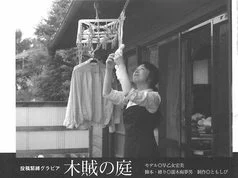
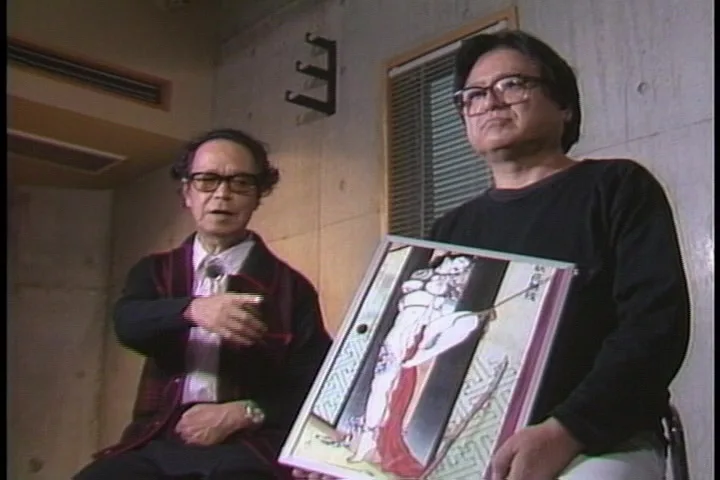
On September 9, 2013, Nureki Chimuo passed away at the age of eighty-three. Thirteen years later, his presence in the history of Japanese SM and kinbaku remains remarkably difficult to contain within a simple biography.
In 2010, I had the opportunity to meet him and watch him tie for a magazine shoot photographed by Kanno Kei. It was a colorful experience. After the shoot, while talking with Naka Akira, we recounted what had happened. He smiled, nodded, and after a pause said, “Mmmm, Sensei can be difficult.”
Nureki-san later recounted the meeting in his Talking Theater blog and remembered the event rather differently.
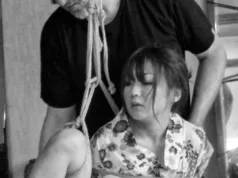
Even though interacting with him could be challenging, watching him tie was a revelation. His command of the scene, the apparent effortlessness of his tying, and the response of the model, a schoolteacher who had dreamed for years of being tied by him, left an impression I will never forget.
Nureki-san’s legacy is still felt in ways that may not be obvious to people tying today. His influence was not only about the way he tied, but also about the world he helped create through his rope seminars, Kinbiken, the extraordinary body of video he produced, his fiction and editorial work in magazines such as Uramado, and his extensive historical writing documenting subjects ranging from the central figures of Kitan Club to the development of Japanese bondage photography.
There are few areas in the emergence of postwar Japanese SM and modern kinbaku that he did not touch in some way.
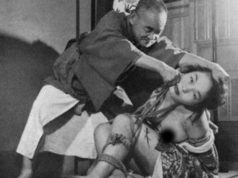
His long collaboration with photographer Sugiura Norio also helped establish one of the defining visual languages of Showa-era kinbaku, producing images whose influence remains visible in the work of bakushi today.
Nureki did not simply participate in the history of modern kinbaku. He helped shape its visual culture, articulated an understanding of bondage centered on the experience of rope itself, preserved memories of the postwar SM publishing world, and became one of the principal narrators through whom later generations came to understand that history.
Kawahara Azumi’s work offers an important perspective on that legacy. Nureki’s influence was so substantial that his recollections themselves became part of the historical landscape. They remain extraordinarily valuable, not because every memory should be treated as unquestionable fact, but because they preserve people, relationships, episodes, and cultural worlds that might otherwise have disappeared. His testimony deserves both gratitude and scrutiny.
That tension is, to me, part of what makes his legacy so important. Nureki was not merely a figure within the history of kinbaku. He was also one of the people who helped determine how that history would later be remembered.
In the years since his death, I have found myself returning to Nureki-san again and again.
Most recently, that has meant working through Talking Theater and building the Nureki Chimuo Archive, bringing together his recollections, historical writing, photographs, and the documentary traces of a life spent inside Japanese SM culture. Much of this work has only been possible through the translation work of DarkAngelAscends, whose careful translations have opened Nureki-san’s writing to a much wider English-speaking audience.
That work has changed the way I think about him.
The person I met in 2010 was difficult, fascinating, commanding, funny in unexpected ways, and utterly unlike the flattened historical figure that can emerge when a life is reduced to a few famous photographs and a list of accomplishments. Reading his writing now, I am reminded that memory is never simple. Nureki-san remembered people vividly, argued with the past, preserved details others overlooked, occasionally contradicted other accounts, and left behind an enormous record through which later generations can continue asking questions.
Perhaps that is the most meaningful part of his legacy.
He did not leave us a finished history of kinbaku. He left us material with which to keep discovering it.
Every time an old photograph is identified, an obscure magazine article is translated, a forgotten name is recovered, or one of his memories is compared with another surviving source, that history becomes a little richer and a little more human.
Thirteen years after his passing, I remain grateful that I had the chance to meet him and to watch him tie.
I am even more grateful for what he left behind.
For the rope. For the photographs. For the stories. For the arguments. For the memories. For the enormous, complicated record of a culture that might otherwise have disappeared piece by piece.
Remembering Nureki Chimuo means more than remembering an important bakushi.
It means continuing the work of remembering the world he helped create.
Further Reading: Nureki Chimuo on Kinbaku Today
For readers who would like to explore Nureki Chimuo’s life, work, influence, and historical legacy in greater depth:
- Why Nureki (Still) Matters
An overview of Nureki’s importance as a bakushi, writer, editor, filmmaker, historian, and chronicler of postwar Japanese SM culture. - The Life and Work of Toyokazu Iida (Nureki Chimuo): In Response to a Newly Discovered Interview Transcript
Kawahara Azumi’s important reassessment of Nureki’s life and influence, including a critical examination of his role as both participant in and narrator of postwar SM history. - Nureki, Kinbiken, and the Aesthetics of Kinbaku
A look at Nureki’s approach to kinbaku, his relationship to Minomura Kou, the Kinbiken seminars, and the aesthetic values that shaped his work. - Kinbaku in Context: Reading Nureki’s Kinbiken
- A closer reading of Nureki’s Kinbiken material, placing his teaching, aesthetics, and approach to rope within the broader historical and cultural context of Japanese kinbaku.
- Bondage Specialist: Nureki Chimuo
A translated recollection by Hiromi Saotome of working with Nureki and photographer Sugiura Norio. Translation by DarkAngelAscends. - Nureki Chimuo’s Talking Theater
Translated by DarkAngelAscends Vol. 1 · Part 2 · Part 3 · Part 4 - Nureki Chimuo Archive
The growing Kinbaku Today research archive bringing together Nureki’s writings, recollections, historical materials, and translations for continued study.