At the end of one of my workshops a couple raised an interesting question about Yukimura-style rope play and consent. I think there are some very important issues that the question raised, which also gets to the heart of what, I think, makes Yukimura-style rope different from some other styles that I have been exposed to.
That said, this is not a definitive statement on Yukimura-ryu. It is the product of my own reflection on what I learned from my time with Yukimura sensei and a dozen years of teaching his style and tying.
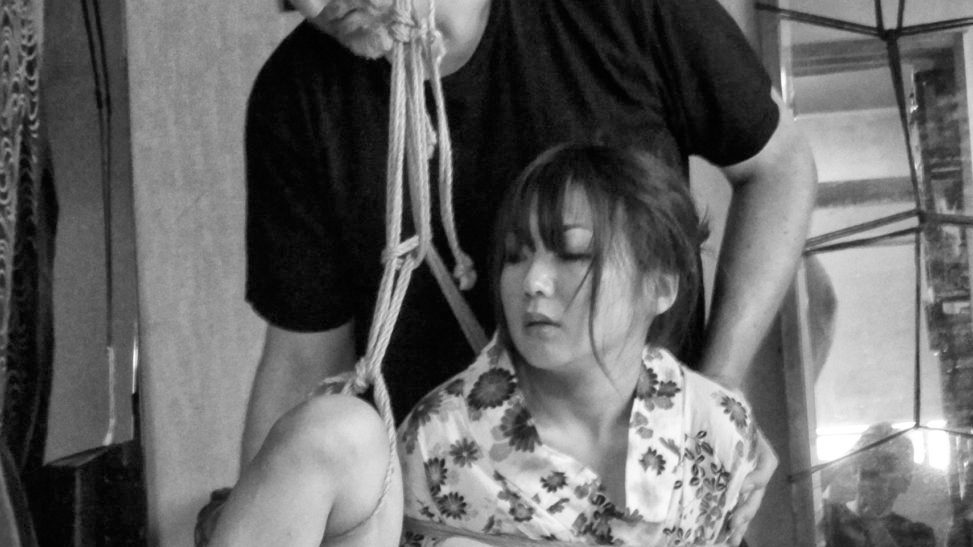
Perhaps the most important element is the idea of what Yukimura called 縄遊戯, Nawa Yūgi, or a rope game. That frame is the context in which everything happens and is a vital part of understanding what it means to tie in Yukimura’s style.
First, and foremost, the game is always consensual.
It must be clearly understood by all involved that what happens within the space of the game is already agreed to and not an effort to bring in desires, actions, or elements that have not been previously agreed to. That doesn’t just include actions. It also includes emotions, vulnerability, and exposure.
One core element of Yukimura-style play is that it is grounded in eroticism. What does that mean exactly? It means that we are playing with eros. We are playing with feelings and arousal. We are playing with exposure and vulnerability. It means that when we get consent, we get consent for the feelings we are bringing to the scene and how they are going to play into the story we want to tell.
We ask questions like, “How do you feel about me having sexual or erotic feelings toward you as we tie?” and “How do you feel about me having sexual or erotic responses to your rope?”
That happens before the game starts.
What does being grounded in eroticism not mean? It doesn’t mean that there will necessarily be sexual activity. There may be if that is decided beforehand, but it is not assumed. It does not mean there are no boundaries or limits on what can be done. Eroticism, in this context, needs to be understood and agreed to.
When it comes to erotic play in rope, there are two simple rules. Anything other than a yes is a no. And if you aren’t sure, don’t do it.
Second, it is important to understand that the rope game is fantasy-based and the space where you construct a story with the person you are tying.
Those fantasies and stories are animated by desire and in Yukimura’s teaching, that desire comes from the person being tied, not the person tying. In that sense, the rope game is about discovery: finding the person you are tying’s desire, coaxing it out of them, and playing with it. The person tying becomes a storyteller and this is where things start to get more complicated.
The story is guided by the person tying, but not controlled by them. The person being tied doesn’t necessarily enter the scene with a fully formed fantasy. As you tie, the fantasy develops and that can take time. When we tie, we are playing not just with our bodies, but also with our imaginations. The development of that fantasy is delicate. As Yukimura would say, “If you rush in too forcefully, you destroy that fantasy.”
Within the frame of the rope game, a fundamental concept in the story is resistance.
In Yukimura style, this is seen as a natural part of the dynamic. When the person tying begins, the person being tied may experience a natural feeling of resistance. This is not necessarily bratting or struggling. It can be something much subtler: a slight tensing of the body, a hesitation, or a pulling away. At other times, resistance can be deliberately expressed as part of the game.
Resistance is also not something to be eliminated or overcome at the beginning. It is something to be drawn out, played with, and explored. The art of Yukimura-style rope is not about overcoming resistance, but about creating the conditions in which resistance, and the person tying’s response to it, become part of the pleasure.
There is a cycle or flow to this style of tying. Resistance is what creates opportunities for invitation, which elicits a response. That response shapes the next action and the resulting interaction generates a story that neither participant fully determines in advance.
The person tying must be sensitive enough not to destroy that story by imposing too much, too quickly. The story must have the space to breathe, to unfold on its own terms, as it emerges from the interaction. It is a story that is co-authored and shaped by both participants.
The resistance is not a failure of control. It is part of the relationship that makes control erotically meaningful.
But this is, we must always remember, part of the game. It happens within the context of an agreement to engage in this way. It is not trying to convince the person being tied to do something they rejected or were not enthusiastic about during negotiations. It is play. It is a game. It is not force, overpowering, or coercing.
It must be clearly understood by everyone involved that the boundaries and nature of the game have been agreed to beforehand. The fact that we are playing with resistance or reluctance does not create permission to introduce actions, desires, or experiences outside those agreements. Consent remains present and can always be withdrawn.
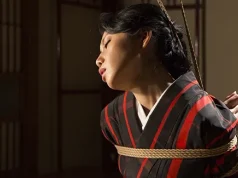
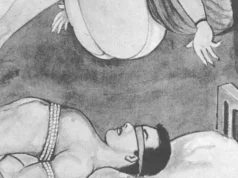
There is something particularly Japanese about this, which I don’t think is well understood in the West. When we look at movies during the Pink Eiga period (1970s) or early Japanese SM magazines from the 1950s and 1960s, a pattern emerges. In these works, resistance is often connected to the shame and embarrassment of acknowledging erotic desire. This interplay between reluctance and desire became an important element of the erotic narratives that helped shape Japanese SM culture.
That shame is an essential part of that resistance and also exactly what we play with in the rope games and stories we create. It is not a bad feeling of shame, it is playful and, in a basic sense, liberating. There is something reflected in these early works that makes resistance, and the delicate interplay between resistance and desire, a central psychological aspect of Japanese erotic rope play.
It is embedded in the stories, it structures a generation of films, and it is something felt deeply by many who enjoy getting tied.
Playing with resistance within the rope game is fundamentally different from violating someone’s consent. It is exploring something that has already been agreed to, grounded in the desire of the person being tied, and shaped by their continuing participation.
It is playing with fantasy. It is telling a story.
And when done well, it can create magic.