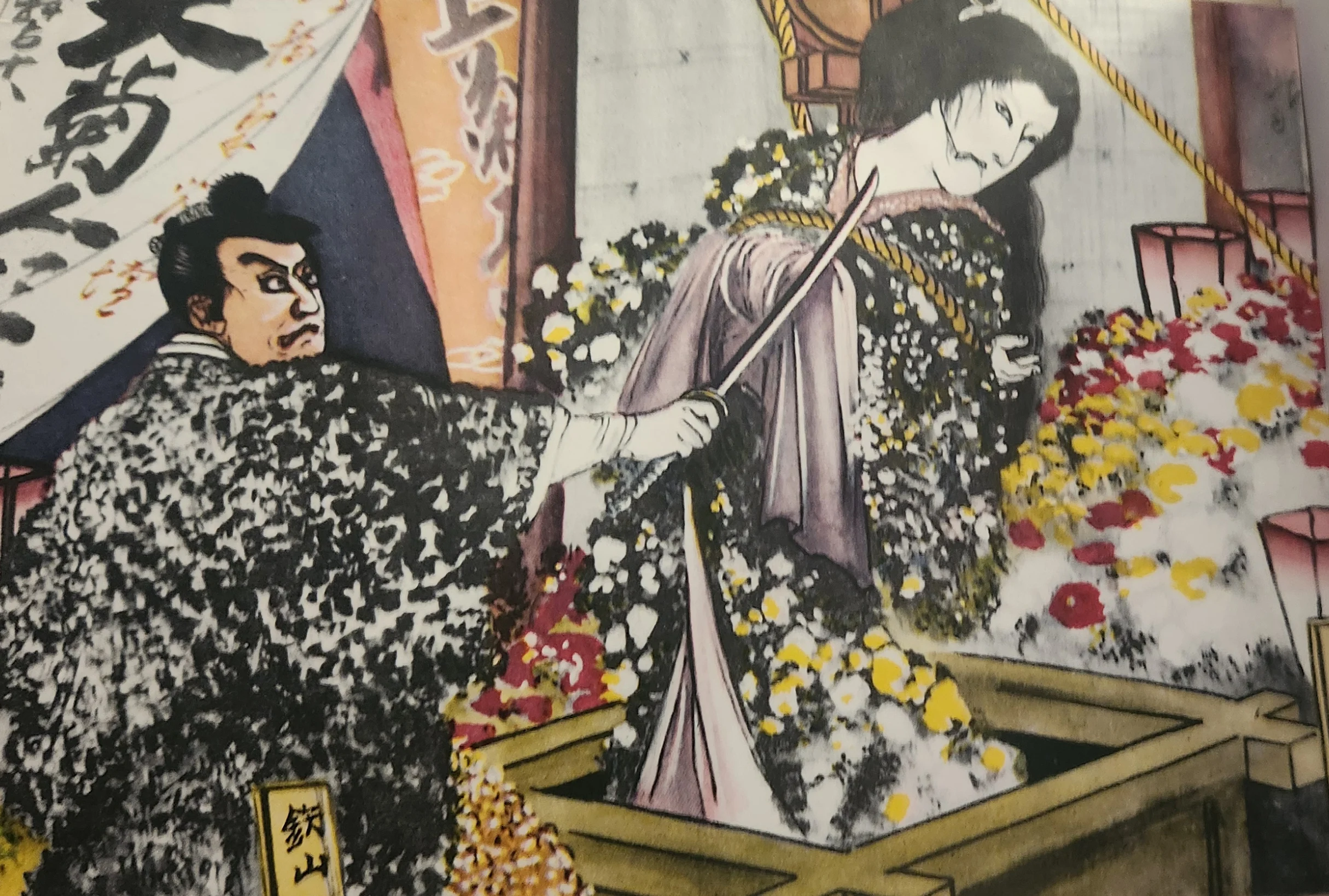
September: Chrysanthemum Figures
九月 菊細工
真一文字に斬られて落つや菊の井戸
Cut cleanly in a single stroke, she falls into Kiku’s well.
The chrysanthemum displays of Dangozaka in Hongō, together with the morning glories of Iriya, were once among the famous sights of Tokyo, or rather, of the city that had succeeded Edo.
Around 1872–1873 (Meiji 5–6), five plant nurseries at Dangozaka began showing chrysanthemum figures [菊人形, kiku ningyō], charging an admission fee of only two rin. This was the beginning of the attraction. By the autumn of 1913 (Taishō 2), however, admission had risen to twenty sen.
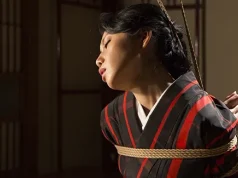
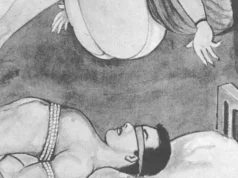
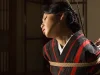
At the time, chrysanthemum figures modeled on the faces of famous actors were especially popular. I can still vividly remember displays depicting such celebrated Meiji actors as Ichikawa Danjūrō and the fifth-generation Onoe Kikugorō, particularly scenes connected with chrysanthemums, such as the torture of Okiku in Banchō Sarayashiki [The Dish Mansion at Banchō].
Among the craftsmen regarded as masters of figure-making in those days was the first Yasumoto Kamehachi, grandfather of the cartoonist Yasumoto Ryōichi, as well as Yamamoto Fukumatsu. From the end of the Meiji period into the beginning of Taishō, there was Ōba Tokujirō, who lived in Nezu Yaegakichō. Today, there is Taguchi Toshihide of Yanaka Hatsunechō, commonly known as “Menroku” [面六], among others.
The technique of entwining chrysanthemums around the bodies of these figures is highly specialized. The torso itself is constructed from a bamboo basket framework, into which living chrysanthemums, still attached to their roots, are planted. Because the flowers must remain alive while forming the figure, it is said that the labor and ingenuity involved are quite extraordinary.