Kinbaku is routinely introduced today as “the Japanese art of rope bondage.” The phrase sounds descriptive, even respectful. It distinguishes kinbaku from crude restraint, emphasizes its visual sophistication, and appears to grant the practice a cultural dignity that pornography or BDSM alone would not possess. Yet this elevation comes at a cost. Calling kinbaku an art form often does more than acknowledge its aesthetic qualities. It cleans the practice for public consumption by muting the sexual, commercial, theatrical, and sometimes deliberately vulgar culture from which it emerged.
This is the artwashing of kinbaku: the selective rewriting of an erotic subculture as a sanitized artistic tradition. The term artwashing is usually applied to corporations, institutions, or urban development projects that use cultural prestige to obscure less respectable realities. Here I use it somewhat differently: to describe the way artistic prestige can sanitize the history of an erotic practice itself.
Artwashing does not require the claim that kinbaku is falsely called art. Kinbaku clearly can be artistic. It has produced powerful photography, illustration, performance, writing, and embodied experiences. Its practitioners have developed distinctive approaches to line, tension, posture, timing, exposure, vulnerability, and emotional communication. The problem begins when “art” is used not to describe one dimension of kinbaku but to purify it. The rope remains visible while the desire that animated it is discreetly erased.
Kinbaku has not been transformed from pornography into art. It developed in cultural spaces where pornography, art, performance, commerce, fantasy, technique, and community were already entangled. Artwashing occurs when later institutions retrospectively impose boundaries that the historical culture does not justify.
The Respectable Ancestor
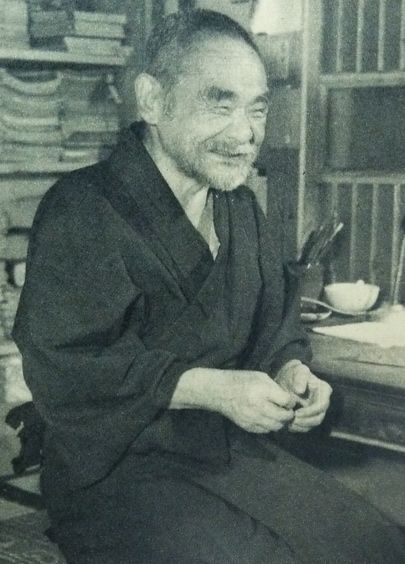
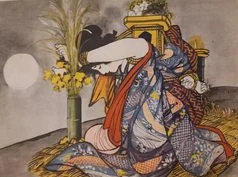
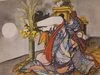
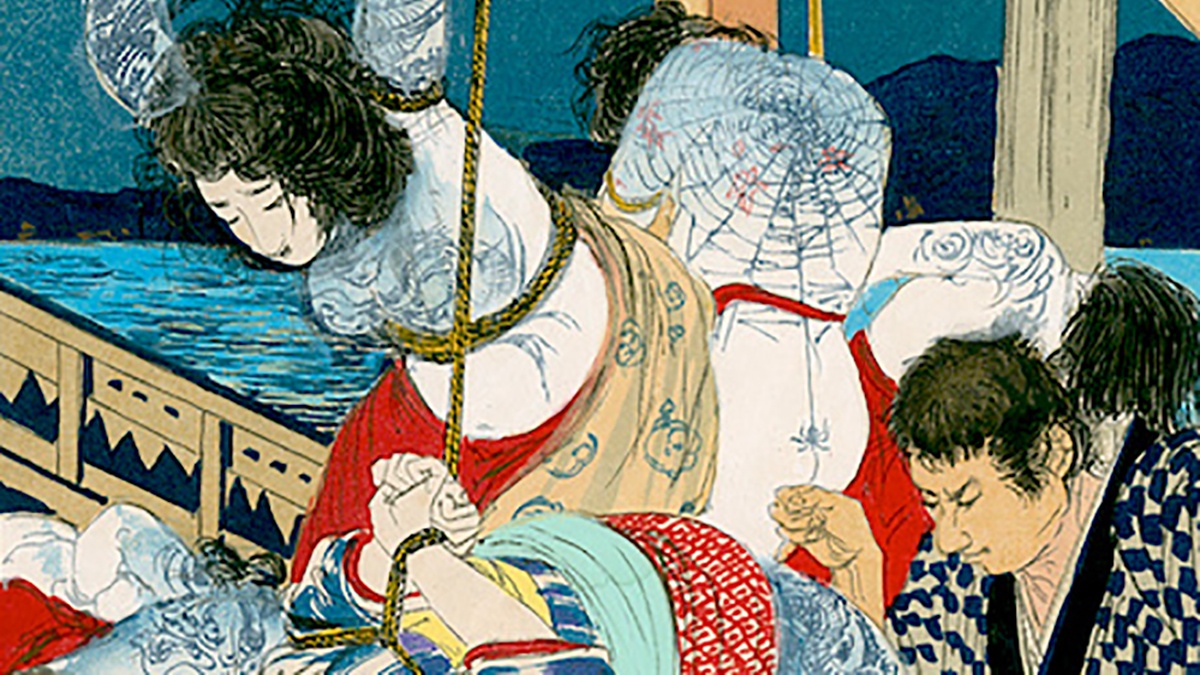
Historical artwashing often begins with Itō Seiu. A painter and researcher fascinated by punishment, theater, historical restraint, and erotic suffering, Itō is frequently identified as a foundational figure in modern kinbaku. His work provides an attractive origin story because he can be described first as an artist. Kinbaku is thereby granted a respectable genealogy: it descends from Japanese painting, theater, ukiyo-e, and historical restraint rather than from pornography or sexual fetishism.
But Itō’s importance cannot be separated from his fascination with cruelty, humiliation, spectacle, and eroticized suffering. To call him an artist is accurate. To invoke his art while suppressing its sexual and sadomasochistic content is not. His images were not elegant knot diagrams accidentally mistaken for pornography. Their force came from the collision of beauty and distress, theatricality and exposure, historical fantasy and erotic fixation.
The familiar claim that kinbaku evolved directly from the samurai restraint system of hojōjutsu performs a similar cleansing operation. Hojōjutsu may have contributed techniques, visual references, and historical mythology, but kinbaku was not simply a martial discipline gradually becoming more decorative. Modern erotic bondage developed through representation: painting, illustration, photography, fiction, theater, magazines, and live performance. It was not merely an old method of arrest transformed into a meditative craft.
One reason this genealogy has proved so durable is that it gives kinbaku antiquity and cultural pedigree. Samurai lineage functions almost like a museum frame. Once attached, it makes erotic bondage appear less like a modern sexual culture and more like an inherited Japanese tradition. Historical continuity replaces historical complexity.
Kawahara Azumi’s criticism of the 2020 Kyoto kinbaku symposium identified one version of this process: a history of rope elevated through art, tradition, and academic discourse while the postwar worlds of SM, pornography, fetishism, commerce, and sexual desire receded from view. What I call artwashing describes the broader cultural mechanism behind that transformation. Kawahara diagnosed the historiographical problem; artwashing names the process by which cultural prestige makes such a purified history possible.
The Magazine World Kinbaku Emerged From
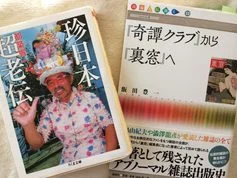
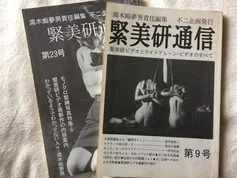
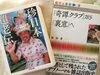
Modern kinbaku did not emerge primarily in galleries, museums, or formal art schools. It flourished in the unruly ecosystem of postwar erotic publishing. Magazines such as Kitan Club brought together bondage photography and illustration, fiction and fantasy, technique, confessional writing, and reader correspondence. Their audiences shared overlapping interests in sadomasochism, fetishism, cross-dressing, corporal punishment, and erotic restraint. Kinbaku became increasingly visible through precisely the kind of material later accounts often classify as marginal, pornographic, or embarrassing.
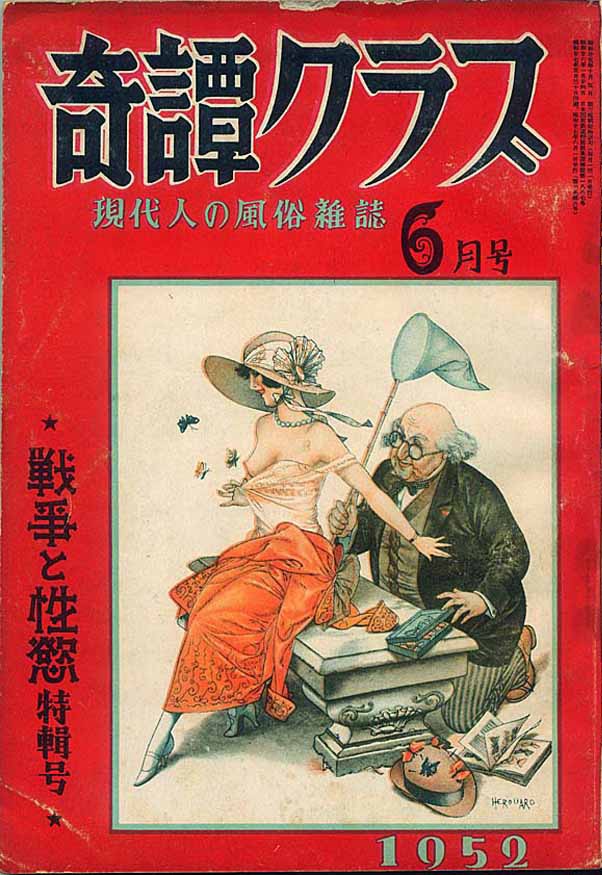
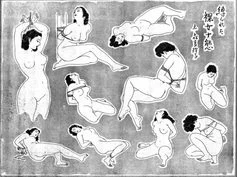
This magazine culture matters because it shows that kinbaku was not originally divided into clean categories of art, technique, and sex. A photograph might be documentary, instructional, erotic, theatrical, and aesthetically ambitious at the same time. An illustration might function as fantasy, historical speculation, masturbation material, and artistic composition. A technical discussion could exist beside fiction or readers’ letters without anyone needing to rescue it from its surroundings.
Figures such as Nureki Chimuo and photographer Sugiura Norio developed their work within this mixed environment. Their collaborations cannot be adequately understood by extracting a handful of visually elegant photographs and presenting them as isolated fine-art objects. Their images belonged to a larger imaginative world of scenarios, characters, emotional states, and sexual expectations. They also belonged to particular publication contexts and relationships with readers.
The magazine page was not merely an inferior gallery wall awaiting eventual recognition. It was the native habitat of the work.
To remove kinbaku from this context is to alter its meaning. The model’s expression becomes “emotional intensity.” Exposure becomes “vulnerability.” Sadism becomes “tension.” Fetish becomes “aesthetic preference.” The vocabulary does not necessarily lie, but it translates the work into terms institutions can accept without acknowledging its erotic charge.
Aestheticization, however, is not the same as artwashing. Erotic magazines themselves often sought beauty, formal sophistication, and artistic effect. Artwashing begins when aesthetic value is used to deny the erotic, commercial, or sadomasochistic conditions in which that aesthetic was produced.
From Sexual Spectacle to Performance Art
The same transformation occurs with live kinbaku. Postwar rope performance developed partly through strip theaters, underground entertainment, SM shows, adult venues, and commercial spectacles. Performers such as Osada Eikichi helped establish live bondage as a recognizable form, but these performances were not simply proto-gallery installations waiting for curators to discover them. They were erotic entertainment.
Contemporary presentations often replace that history with the more respectable vocabulary of “connection,” “energy,” “ritual,” “trust,” and “movement.” These ideas can describe real dimensions of rope. They can also become euphemisms that neutralize its sexual content. A performance involving restraint, pain, nudity, authority, helplessness, and erotic attention may be presented as an abstract exploration of human connection, as though the ropes wandered onto the body during a symposium on relational aesthetics.
The transformation is especially visible when kinbaku enters galleries, fashion photography, dance festivals, or museum programming. The same bound body considered pornographic in an adult magazine can become culturally valuable when enlarged, carefully lit, printed on expensive paper, and accompanied by a curatorial statement.
This change reveals that “art” is not simply a property inside the object. It is also a passport issued by institutions.
The Western Invention of Purified “Shibari”
The international spread of Japanese rope produced another form of artwashing. In some Western rope communities, a rhetorical distinction emerged in which “shibari” signified beautiful, connective, or artistic rope, while “kinbaku” was associated with more overtly erotic bondage.
This distinction does not map neatly onto Japanese usage, where the terms overlap and vary by practitioner and context.
This does not mean the words shibari or kinbaku are inherently dishonest. They can mark particular approaches, schools, or historical orientations. But it is worth asking what work they are doing in any given context. Would the same space, audience, or customers be equally comfortable if the word used were simply bondage? If the answer is no, the terminology may be doing more than describing the practice; it may be making it respectable by distancing it from bondage.
Where this distinction took hold, it became culturally useful. “Shibari” could circulate in yoga studios, wellness spaces, arts centers, photography workshops, and social media, carrying associations of beauty, mindfulness, intimacy, and personal growth that the word “bondage” did not. For some practitioners, these terms genuinely describe what they seek. In other contexts, however, they provide reputational distance from pornography, domination, sadomasochism, and sexual deviance.
This process also reshaped technique. Highly patterned ties photograph well, circulate easily online, and can be admired without knowing the relationship between the people involved. They make rope legible as visual craftsmanship. By contrast, the less visible dimensions of kinbaku, including timing, fear, shame, anticipation, cruelty, erotic authority, and the shifting psychology between partners, are harder to display and more difficult to sanitize.
The same search for prestige can operate through national identity as well as vocabulary. Orientalism performs a related cleansing function. Once kinbaku is framed as an essentially Japanese tradition, national origin itself can confer aesthetic and spiritual prestige. Western audiences (and sometimes Japanese exporters) are prepared to grant an Eastern practice the benefit of aesthetic and spiritual depth that they withhold from domestic pornography or BDSM. The same bound body that would register as commercial kink in a Western context can be re-described as the expression of an ancient sensibility, a martial heritage, or a uniquely Japanese sensitivity to line and space. In this way, orientalism does not merely exoticize kinbaku; it can also legitimize it by obscuring the modern erotic culture from which it emerged.
The result can reproduce kinbaku’s visual vocabulary while shedding much of the erotic culture that historically gave that vocabulary meaning.
Beauty as an Alibi
Artwashing often depends on beauty. If an image is formally elegant, viewers may treat its erotic or political conditions as secondary. In bondage imagery, aesthetic admiration can obscure questions about labor, authorship, consent, compensation, and power. Artwashing therefore operates not only on historical memory but on the material conditions of image-making itself.
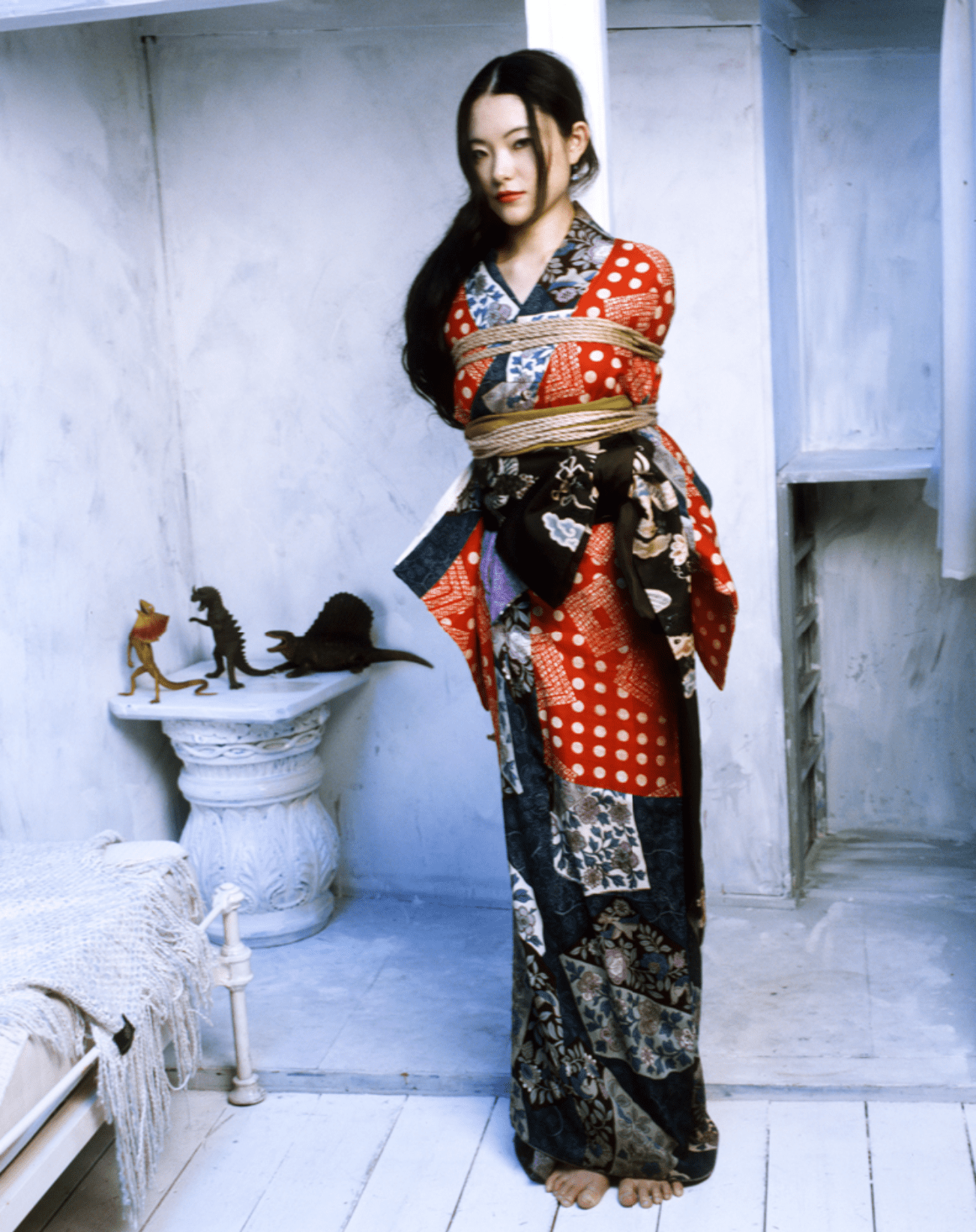
Kaori, 2004
The career of photographer Nobuyoshi Araki demonstrates the danger. Araki’s bondage photography has been celebrated internationally within contemporary art, yet his former model Kaori publicly accused him of exploitation and mistreatment. The controversy raised a larger question: whether artistic prestige can help conceal unequal conditions of production.
The point is not that troubling conditions automatically invalidate an image as art. It is that “art” can become an alibi. Institutions may praise transgression inside the frame while ignoring power outside it. The bound woman becomes a symbol of beauty, mortality, Japan, desire, or vulnerability, while the actual model’s work and testimony disappear.
Kinbaku is especially susceptible to this because its imagery turns asymmetry into composition. One body is displayed while another often remains clothed or outside the frame; one name may become famous while another is reduced to “the model.”
Erasing Pornography Erases Community
The dismissal of pornography creates another historical distortion. Erotic magazines were not only commercial products. They were gathering places for isolated readers who might have had no public language for their desires. Letters, reports, fiction, photographs, and editorials helped create communities around fantasies and practices that could not easily be discussed elsewhere.
When historians extract the “artistic” images from these publications and disregard the rest as pornography, they erase the social world that made the images possible. They preserve the artifact but discard the audience. They keep the famous photographer and lose the readers, models, anonymous contributors, editors, collectors, and enthusiasts who sustained the culture.
This matters because kinbaku was never created solely by a succession of male masters. It emerged through networks of production and response. Its history includes the people who posed, corresponded, fantasized, purchased magazines, attended performances, organized gatherings, and tried what they encountered in print.
Artwashing restores kinbaku to history only after removing many of the people who actually made that history.
Kinbaku Does Not Need to be Rescued
The answer is not to deny kinbaku’s artistic value. Nor should every rope practice be required to emphasize sex, pain, or sadomasochism. Kinbaku has never been a single immutable activity. It changes as people carry it into new relationships, bodies, countries, media, and institutions.
But kinbaku does not need to be rescued from pornography in order to matter. It does not become more profound when its sexual history is hidden. Its artistic achievements are not diminished by the fact that they were created in erotic magazines, adult theaters, private sessions, commercial studios, and fetish communities.
Indeed, much of kinbaku’s power comes from refusing the boundary between art and obscenity. It can be beautiful without becoming respectable. It can be technically sophisticated and sexually explicit. It can produce genuine intimacy while also staging domination, humiliation, fear, objectification, or pain. It can be commercial without being meaningless and pornographic without being aesthetically empty.
A more honest history would not ask whether kinbaku is art or pornography. It would ask why modern culture so often requires one to be purified before it can be valued as the other.
Artwashing offers kinbaku legitimacy by cutting away the parts most likely to disturb respectable audiences. But those discarded parts are not merely historical debris. They are the source of its power. Remove them, and the ropes may remain beautifully arranged, but the history that made the practice meaningful is erased.