May: The Dancing Boys’ Day Carp Streamer
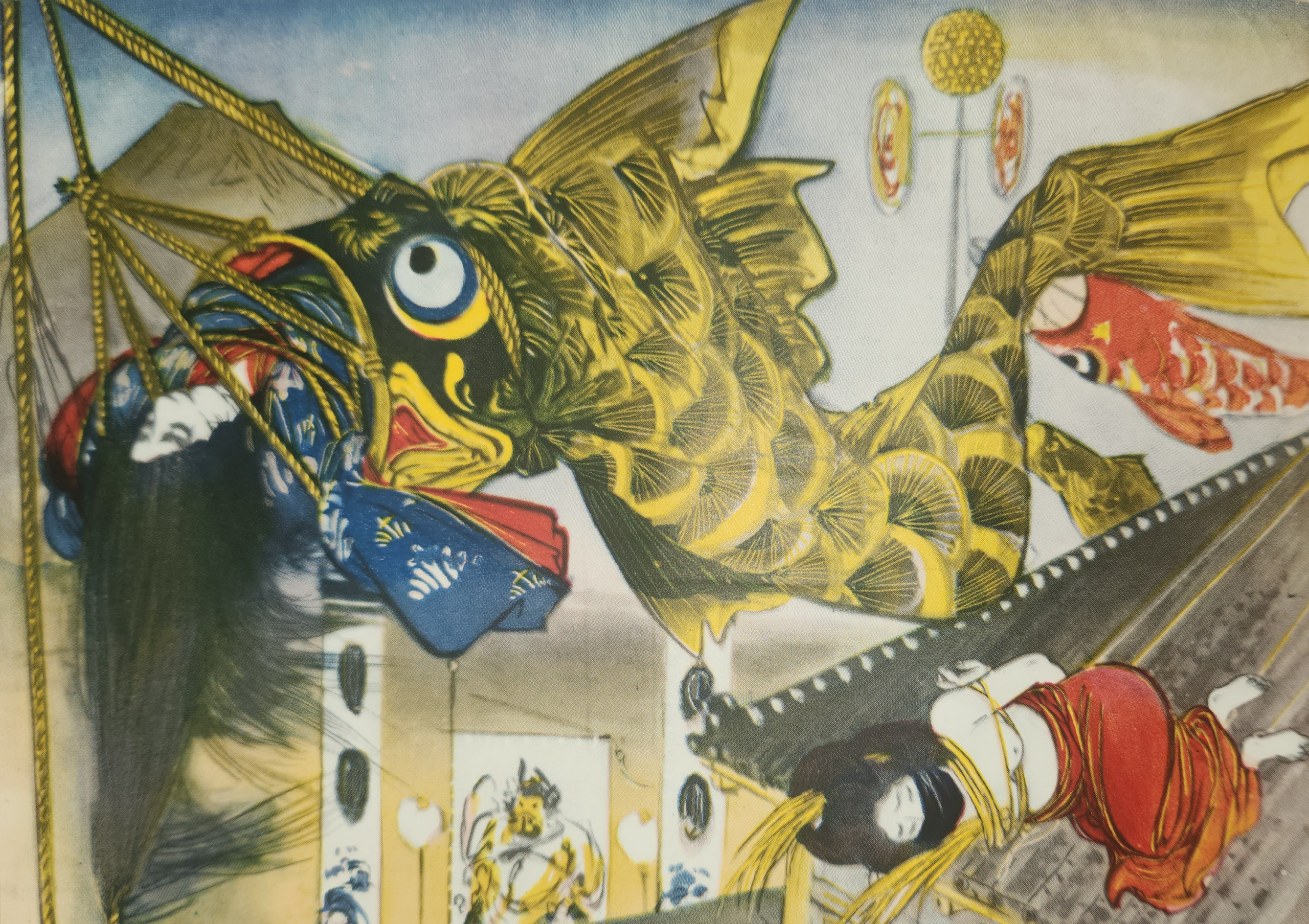
Carp streamer, how fortunate that you were born a woman.
In the early summer of Jōkyō 4 [1687], a strange carp streamer was erected in Koishikawa Sekiguchi Suidō-chō, astonishing the people who saw it.
It stood at the residence of a certain Toki, a hatamoto retainer, near what is now Edogawabashi. The Edogawa was a branch of the Tamagawa Aqueduct and was known as the Otomegawa, or “restricted river.” During the former shogunate, navigation upon it was prohibited.
The carp living in this river were popularly called purple carp, because their scales carried a purplish hue. Fishing for them was forbidden.
The mother of one of Toki’s serving women lived in a back-alley tenement in Koishikawa Aoyagi-chō. She became gravely ill. Having loved carp all her life, the mother declared that she wished to eat carp once more before she died.
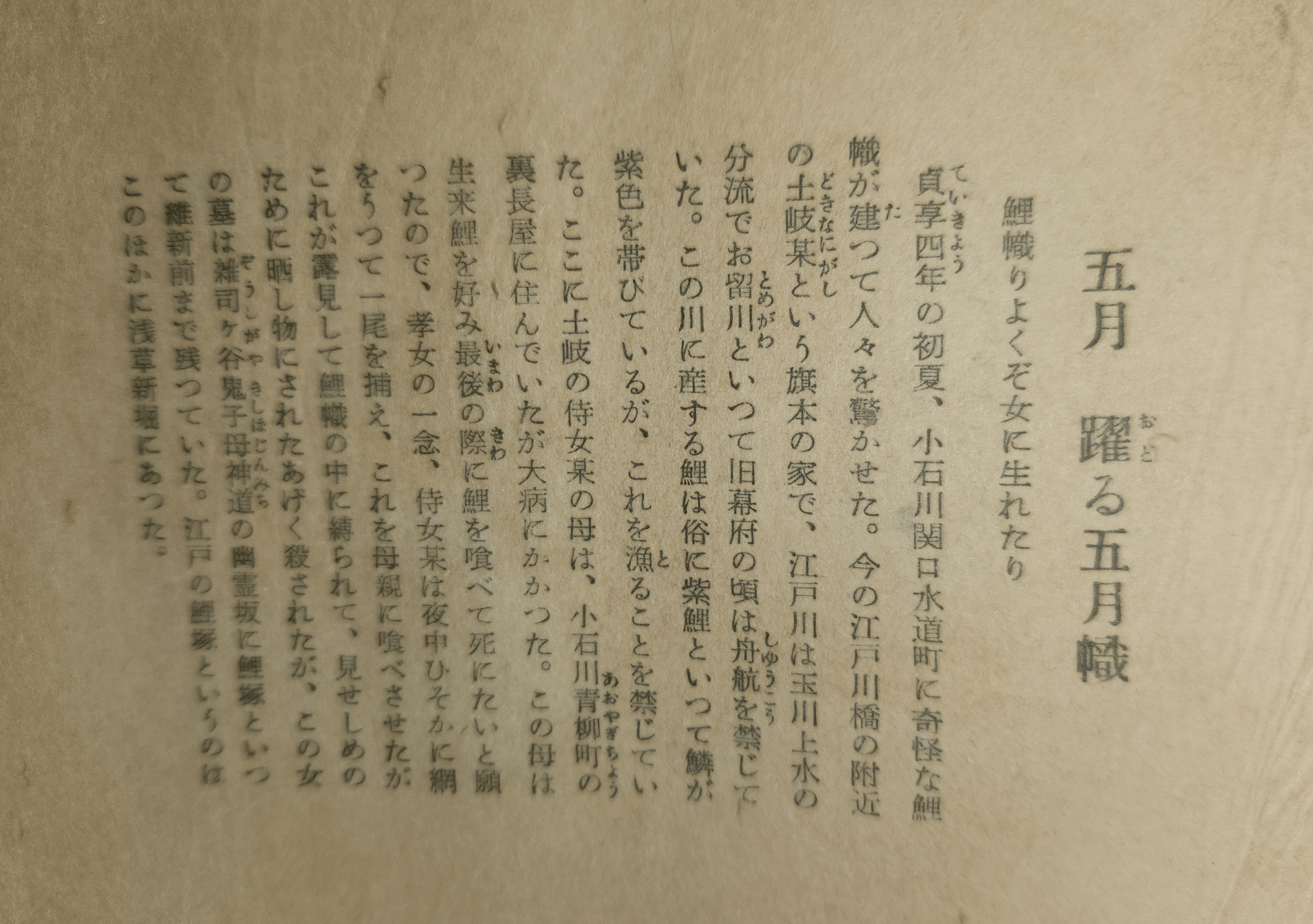
Driven by filial devotion, the serving woman secretly cast a net into the river at night, caught a carp, and fed it to her mother. Her act was discovered, however. She was bound inside a carp streamer and publicly exposed as a warning to others. After this humiliation, she was put to death.
Her grave, known as the Carp Mound, was said to have remained until shortly before the Meiji Restoration on Okarei-zaka, along the road to Kishimojin at Zōshigaya.
There was also another place in Edo called the Carp Mound, located at Shinbori in Asakusa.