Translator’s Note: When we explore the history of Kinbaku and Japanese SM (the two are inseparable, in reality), we have a tendency to focus on the legends of bondage themselves. Names like Minomura Ko, Nureki Chimuo, Akechi Denki and many others.
But equally important are the models, both amateur and professional, that help shaped the content and the shape of the culture of Japanese SM. From Kitan Club to Roman videos, and to the modern era of Japanese AVs, each model provides a unique canvas in expression and feeling, and without them, Japanese SM may have never evolved out of primarily reader submission magazines.
Hiromi Saotome is a legendary model in the Japanese SM world. First staring in adult films in 1983, she participated in one of her first magazine shoots in the same year, for a magazine called SM Mania. The production involved herself, Nureki Chimuo, and Sugiura Norio.
These are the translations of her blog, located here (https://note.com/saotome6) talking about her history with Nureki. It is my honor to have them published on Kinbaku Today.
By Hiromi Saotome
September 19, 202
“Kitan Club,” Japan’s first magazine dedicated to SM. Starting out as a postwar “kasutori” magazine, this publication saw its editorial direction changed by a single enthusiast editor, Toshiyuka Suma. His passion resonated with many fellow enthusiasts, who responded, cheered him on, and supported him. From among them, professionals emerged who went on to lead the SM industry. One such figure was Nureki Chimuo. (Once “Kitan Club” was on steady footing, Suma-san left the editorial department. As he was a key figure in the SM industry, I will discuss him in detail in a separate chapter.)
Nureki Sensei (whose pen name at the time was Aoyama Mieyoshi) was an avid reader of “Kitan Club” (hereafter referred to as “Kiku”), and his career began when he submitted his own novel, “The Traveling Actor of Pleasure and Torment.” It was 1953, when he was 23 years old. From then on, publisher Minoru Yoshida told him, “As long as you change your pen name, I’ll publish as much as you want, so please write about your unusual tastes.” Nureki Sensei subsequently contributed a steady stream of modern and period novels, articles, and first-person narratives to support “Kitan Club,” resulting in the creation of dozens of pen names. Incidentally, “Nureki Chimuo” was also one of these pen names, making its first appearance in 1973 in “SM Select” (published by Tokyo Sanshisha).
The story of “Kiku” goes beyond Nureki Sensei alone, and since the topic is quite deep, I will address it in a separate chapter.
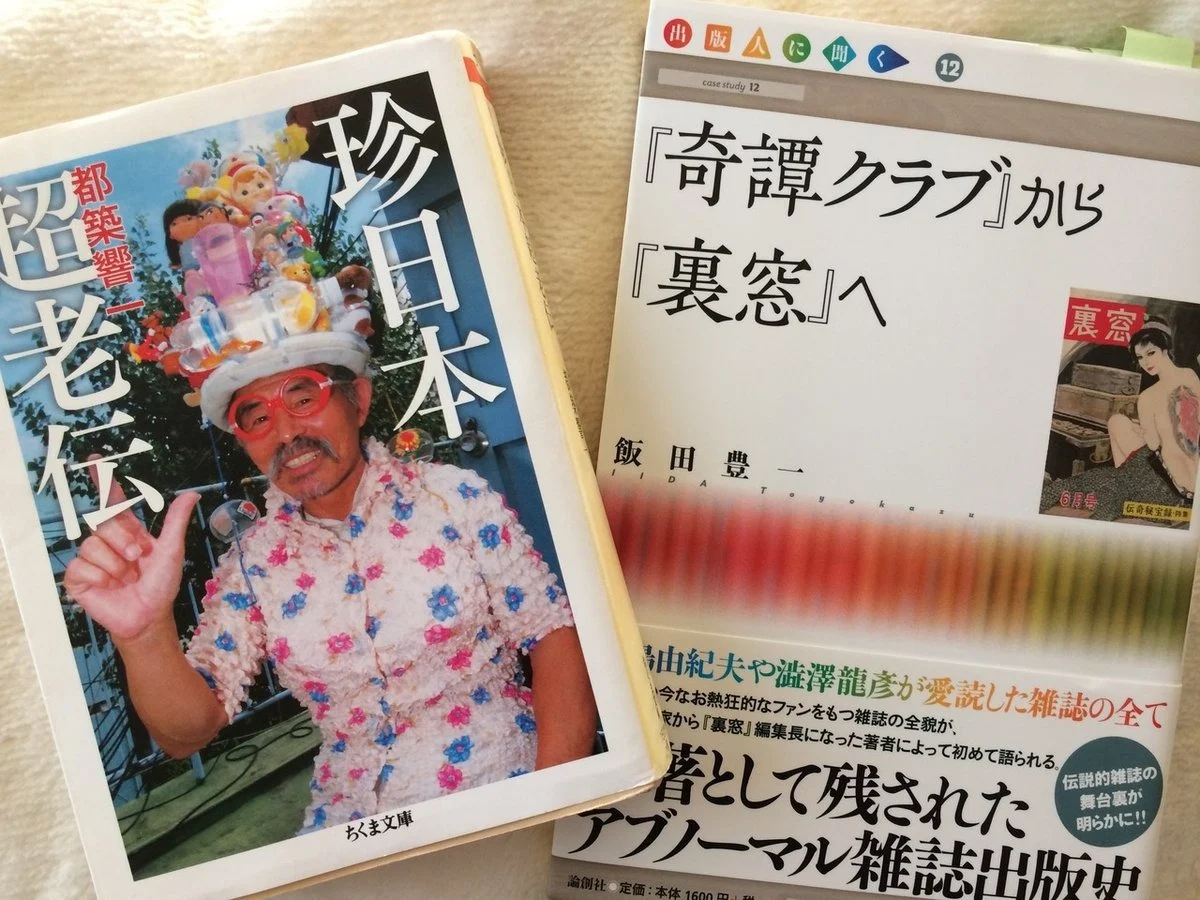
For details on Nureki Sensei’s upbringing and other work, I recommend reading “Chin Nippon Choroden” (Chikuma Bunko) by Kyoichi Tsuzuki and “Oral History: From ‘Kitan Club’ to ‘Uramado’” (Ronsosha), both of which provide thorough accounts.
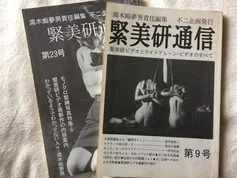
After contributing to “Kiku” and working as a writer, Nureki Sensei met Suma-san and became the editor of “Uramado” (Kubo Shoten), a publication on par with “Kiku,” eventually rising to the position of editor-in-chief in 1962. He fought against the 1960s crackdown on “obscene books” and played a leading role in the SM magazine scene. It was precisely because of this background and track record that he remained steadfast in his commitment to niche magazines.
In 2005, my long-cherished wish, a photoshoot marking the return of the “Nureki and Sugiura Duo,” was realized in “Mania Club” (Sanwa Publishing). After the shoot, I was supposed to conduct an interview, but I was so overcome with emotion that I burst into tears. At that moment, Nureki said, “I’m glad it worked out, Saotome. Your wish came true. You really wanted to work with the two of us, didn’t you? I’m so happy. But now that it’s over, you must feel a little lonely, right?”
Hearing those words, which hit me like a second blow, I burst into tears all over again. The realization that something I’d never be able to do again had truly come to an end, and the sadness that I might never see these two again, overwhelmed me. Nureki Sensei saw that I was unable to continue the interview and took the lead in guiding the conversation.
Nureki: “Since Saotome is the model today, I brought rope specifically for her. After all, the rope you use depends on the model. Saotome likes new hemp rope, the rough kind. Right? (I nod). And she prefers the slightly thinner type. The editorial department didn’t tell us anything about today’s shoot, not the outfits or the atmosphere, did they? That’s a problem. These details are important. We have to choose the rope based on the costumes and props. Even if it works well for Saotome, it’s no good if it doesn’t match the atmosphere. Take a juban, for example, if she’s wearing one, a thin rope will just get lost in the fabric. Since we have to tie the rope while calculating how it’ll look, it’s really a hassle.”
Regarding the reunion of their partnership after about 20 years, Nureki said, “It happens instantly. It’s that ‘Ah, yeah’ kind of synergy. That’s just how it is between two masters (laughs). No one else will say it, so I’ll say it myself (laughs).”
Editorial Department: “From your perspective, Nureki Sensei, what do you think of today’s SM magazines?”
Nureki: “Back in the day, everyone on the editorial staff was a true enthusiast. That’s why they put their passion into making the magazines. One the other hand, there was a sense that SM was something that belonged in the shadows, that it had to be kept quiet. We must never forget that sense of shame.”
Saotome: “What do you think is essential to the fetishism of SM?”
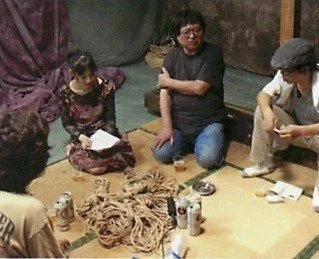
Nureki: “It’s about cherishing literary quality. And, as the saying goes, ‘what is hidden is beautiful’.”
This is an excerpt from the interview, but I heard some truly moving words. In his later years, Nureki Sensei described himself as a “bondage specialist” or a “bondage robot.” This is because he doesn’t take a dominant position. Instead, he ties the ropes exactly as his partner desires and as they imagine. It’s likely because he can intuit exactly what is expected of him.
In the “Tomoshibi Project,” Nureki Sensei returned to his roots to showcase his rope-tying art. In the next installment, I’ll write about the photo shoot, which was imbued with his very soul.