Summer Rice-Planting Song
夏の田植唄
The area extending from present-day Tama-no-I in Sumida Ward to the vicinity of the iris gardens retained traces of its old character until the early Meiji period, having formerly served as a falconry ground for successive Tokugawa shoguns.
It is well known that during the Ansei era [1854–1860], Kodaka Izaemon of Horikiri Village cultivated a variant of a flowering plant from Enshū known as hanakatsumi, producing the form of flowering iris [hanashōbu] familiar today.
In that same Horikiri Village there was once a large landowner named Urano. He was the sort of man who might be compared to Sanshō the Steward, cruelly driving people as though he were a demon or a beast.
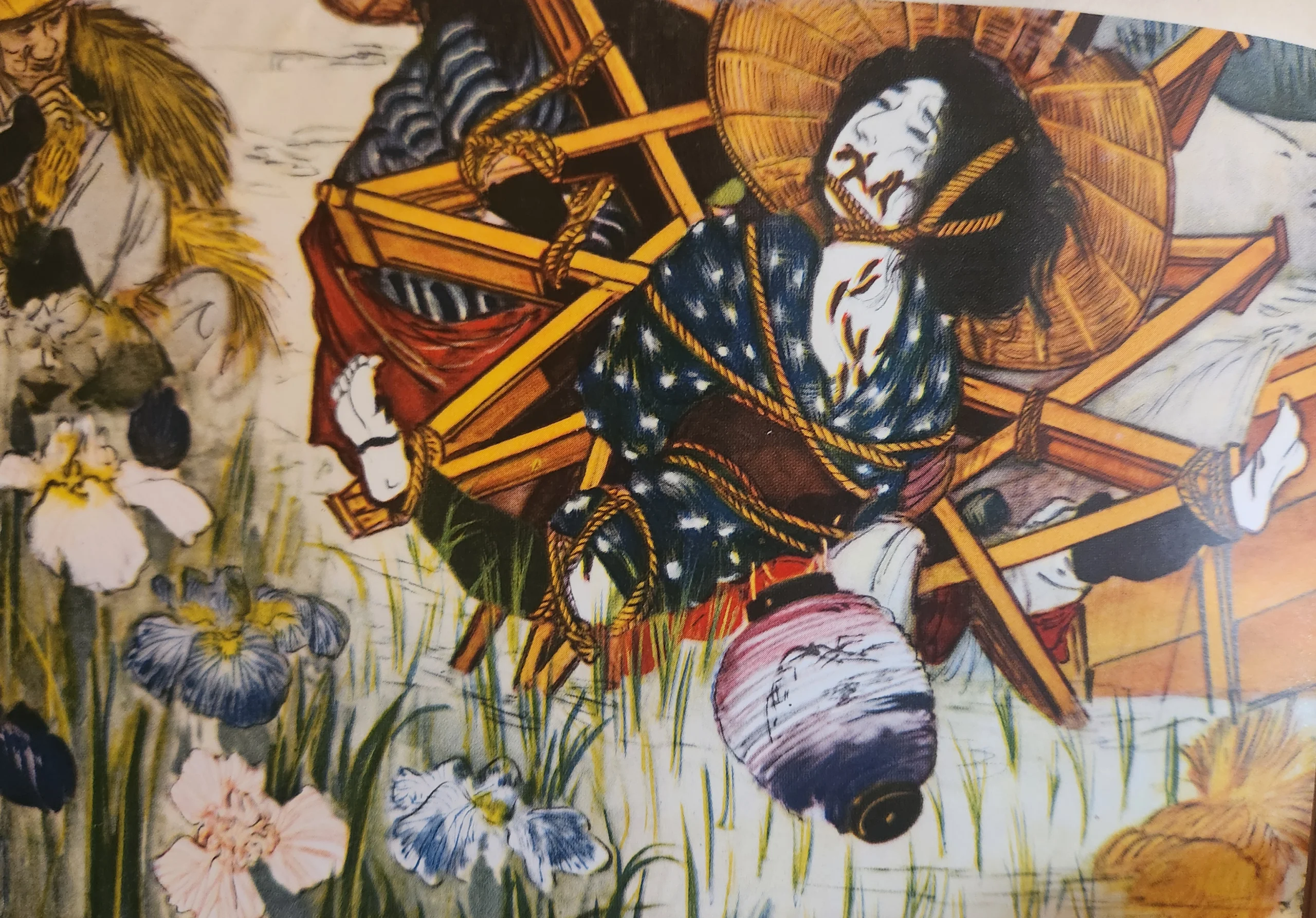
On one occasion, he had hired a woman named Oyo from Ōhata. Her productivity at rice planting failed to improve, and he decided that this must be because she had been fooling around with a man.
He therefore bound her to a waterwheel and thrust her into a rice paddy filled with leeches. As the leeches sucked her blood and she screamed and cried, he is said to have stood watching her with apparent amusement.
This heartless treatment eventually came to the attention of the Terajima Village authorities, and the incident became a police matter.