Fuzoku Soshi
September 1953
← Back to magazine archive
Issue Details
- PDF pages
- 174
Summary
The September 1953 issue of Fūzoku Sōshi is one of the clearest examples of the magazine consolidating bondage, seme, sexual pathology, crime, historical punishment, same-sex desire, and reader-oriented erotic knowledge into a recognizable SM-centered world. Across 150 PDF pages, the issue combines color illustration, bondage photography, instructional diagrams, confessional fiction, pseudo-medical case studies, crime reportage, historical narratives, and correspondence columns. It does not yet separate artistic bondage, erotic fantasy, pathology, and violence into clean modern categories. Instead, it places them in constant friction, allowing rope to function at once as technique, image, narrative device, evidence, and erotic symbol.
Read full summary Close full summary
Table of Contents 26 items
-
Training Illustrations: Six Scenes
Summary
A six-scene illustrated feature depicting women restrained with rope in stylized domestic and theatrical settings. The sequence emphasizes the visual arrangement of bodies, bindings, furnishings, and costume as part of staged bondage imagery.
-
Beautiful Binding
Summary
A photographic feature presenting “beautiful binding” as an aesthetic practice, with models shown in carefully composed rope-restraint scenes and poses. The accompanying text discusses visual appeal, model presentation, settings, and examples such as punishment and dressing-table arrangements.
-
Photograph of a Corpse at an Execution Site
Summary
A crime-scene photograph shows the nude body of an unidentified murder victim discovered on the grounds of Yasukuni Shrine. The accompanying commentary interprets lividity, the absence of clothing, and bindings as evidence that the victim was strangled elsewhere and transported before being abandoned; the case remained unsolved.
-
Punishment Illustrations
Summary
Ōya Reiko’s illustrated feature depicts women subjected to restraint and corporal punishment, including binding to a chair and other forms of physical discipline. The presentation treats punishment as a visual motif through sequential, highly stylized drawings.
-
The Humiliated Young Lady
Summary
A fictional first-person account by a young woman who is drawn into degrading encounters with domineering men. The narrative focuses on sexual coercion, humiliation, class and gender power, and the protagonist’s lasting psychological distress and conflicted memories.
-
Fifteen Ways to Tie the Female Body
Summary
An illustrated instructional article by Itō Seiu describing fifteen methods of restraining a woman with rope. Across detailed text and sequential drawings, it explains bindings involving the wrists, ankles, torso, thighs, and suspension, while discussing their practical effects and risks.
-
Bloom of Humiliation
Summary
An erotic fiction narrative follows Yumiko, a young stage performer, as encounters with men in theaters, entertainment districts, and private rooms expose her to escalating sexualized scrutiny, coercion, and humiliation. The story emphasizes the transformation of public performance and male spectatorship into intimate domination.
-
Insect Torture and Women
Summary
A fictional first-person narrative in which a woman recounts escalating encounters involving bondage, coercive sexual dominance, and the use of insects as instruments of fear and sensation. Illustrated scenes emphasize restraint, bodily vulnerability, humiliation, and the psychological dynamics between the narrator and Kazuko.
-
Festering Skin
Summary
An illustrated erotic confession follows a young office worker whose intense relationship with her female colleague Sumiko develops from attraction and companionship into possessiveness, sexual jealousy, and coercive experimentation. The accompanying images depict intimate encounters and women subjected to elaborate restraint and bondage.
-
The Quagmire of Pleasurable Abuse
Summary
This illustrated first-person erotic narrative portrays a woman drawn into a destructive cycle of sexual domination, infidelity, financial dependence, and emotional manipulation involving several partners. Its scenes and dialogue emphasize restraint, humiliation, coercive sexuality, and the entanglement of pleasure with abuse.
-
Interrogation in the Criminal Investigation Room
Summary
A fictionalized criminal-investigation narrative depicts police interrogations in which suspects and witnesses are pressured, threatened, and physically abused while officers pursue murder and robbery cases. The article critiques coercive policing, unreliable confessions, and the institutional use of violence in criminal investigations.
-
Secret Manual of Shudō
Summary
A historical and literary examination of shudō reconstructs male-male erotic customs through classical and Edo-period writings, discussing terminology, courtship, sexual practices, relationships, and social conventions. The essay also considers how male same-sex culture was represented in popular literature and visual imagery.
-
The Woman I Tied
Summary
A fictional first-person crime narrative follows a repeat burglar who abducts and binds women during break-ins, reflecting on his motives, encounters with victims, and escalating violence. The story presents his eventual apprehension, imprisonment, release, and further offenses in a grim portrait of criminal psychology and predatory behavior.
-
Male-Colored Apartment
Summary
An illustrated erotic fiction serial set in a Ginza apartment inhabited by men whose relationships, dress, mannerisms, and sexual identities challenge conventional gender roles. The newcomer Jiro is drawn into the apartment’s theatrical, sexually charged social world, encountering performers, effeminate residents, cross-dressing imagery, seduction, jealousy, and same-sex desire.
-
The Distorted Bedroom
Summary
A psychologically charged erotic fiction piece about a painter whose troubled marriage is complicated by jealousy, infidelity, sexual dissatisfaction, and his wife’s relationships with other men. The narrative uses confession, confrontation, and shifting emotional perspectives to explore marital resentment and possessiveness.
-
Reiko’s Twelve Months
Summary
The opening installment of Reiko’s twelve-month erotic series, centered on a moon-themed encounter in which Reiko is placed in a vulnerable, restrained setting and subjected to sexualized attention. The illustrated feature combines seasonal imagery, traditional dress, and bondage-oriented erotic fantasy.
-
Tsuruya Nanboku
Summary
A biographical and critical account of the Edo-period kabuki playwright Tsuruya Nanboku IV, focusing on his career, theatrical works, and reputation for grotesque, uncanny, and sensational dramatic effects. Anecdotes and illustrations contextualize Nanboku’s distinctive style within the history of kabuki.
-
Corpses at Execution Sites
Summary
An illustrated forensic study of corpses found at execution or violent-crime scenes, combining case descriptions, photographs, and discussion of wounds, body position, blood, clothing, and other physical evidence. It also explains postmortem phenomena such as rigor mortis, drying, decomposition, and insect activity as aids to determining cause and timing of death.
-
Foul-Smelling Hell
Summary
A first-person erotic narrative portrays a woman’s degrading encounters in a household or workplace where foul odors, dirty clothing, bodily fluids, and forced bathing-room chores become instruments of sexual humiliation. The accompanying illustrations reinforce themes of nudity, coercive sexuality, and fetishized bodily disgust.
-
Lesbos Correspondence
Summary
A Lesbos correspondence feature presents a woman’s account of developing same-sex desires amid a troubled family background and socially constrained romantic life. The exchange treats female homosexuality as a private but communicative community concern, inviting advice and connection through the magazine.
-
Grabbing Torture and Buttock Beating
Summary
An illustrated sexological discussion of “grabbing” and beating the buttocks as erotic practices. It describes purported physiological and psychological effects, variations in technique, and anecdotal examples involving couples, with photographic and illustrative demonstrations.
-
Cryptogamic Plants
Summary
A narrative case-style account of two women whose relationship involves gendered clothing, disguise, intimate contact, and developing same-sex desire. The article frames such concealed relationships as “cryptogamic plants,” emphasizing secrecy, social concealment, and the tension between private desire and public gender norms.
-
Sorrowful Masochism
Summary
An illustrated memoir and case-style account of a young woman’s masochistic sexual fantasies, including recurrent desires for restraint, humiliation, and imagined violent encounters with men. The article combines narrative testimony with staged photographs and drawings depicting bondage and self-binding, framed through the period’s language of sexual pathology.
-
The Great Kantō Earthquake
Summary
A richly illustrated, dramatic account of the 1923 Great Kantō Earthquake follows the moment of the shock, the spread of fires across Tokyo and Yokohama, collapsing buildings, and the experiences of survivors. It combines disaster reportage with scenes of panic, separation, rescue, death, displacement, and the difficult relief and recovery that followed.
-
The Princess’s Nenbutsu Sermon
Summary
A fictional period tale follows a princess and her attendants traveling through the rain-soaked Kiso mountains, where they encounter a roadside teahouse, villagers, and a gang of mountain bandits. The ensuing confrontation emphasizes coercion, violence, sexual vulnerability, and the precarious position of women and dependents in a rigidly hierarchical society, with a nenbutsu gathering forming part of the story’s setting and motif.
-
A Perverse Chronicle of Customs
Summary
This historical customs essay surveys practices surrounding infanticide, abortion, child abandonment, and attempts to prevent or terminate pregnancy, drawing on older Japanese examples and changing social attitudes. It discusses methods involving exposure, drowning, drugs, and folk practice while contrasting customary behavior with ethical, religious, and legal condemnation.
Highlights
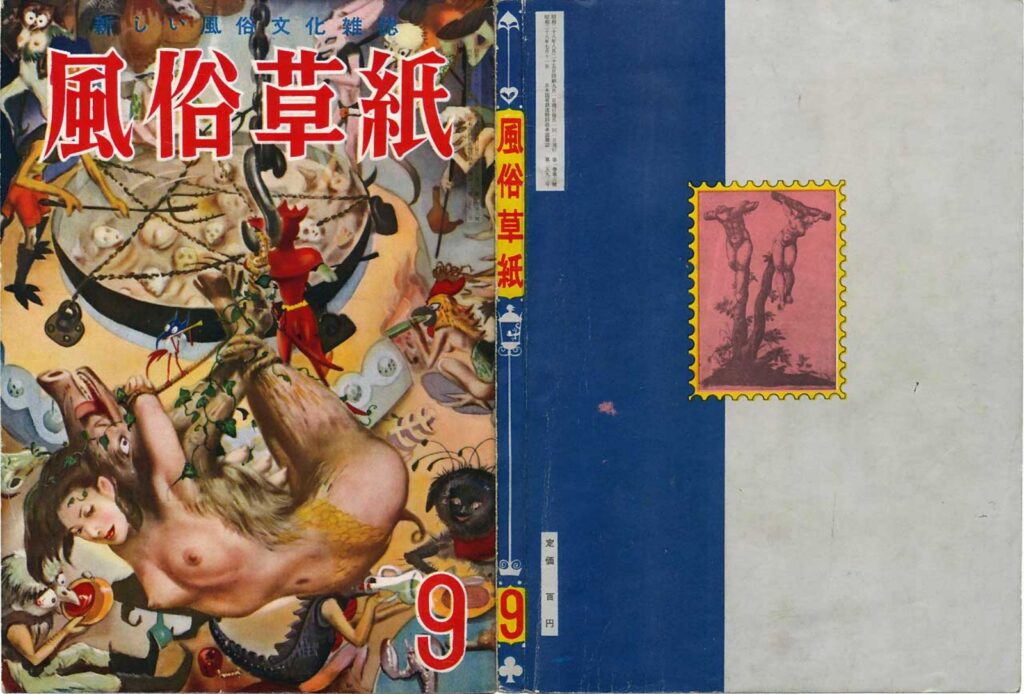
- The cover and opening color plate establish a world of fantasy, grotesquerie, female exposure, and upright bondage to a wooden post (PDF pp. 1–3).
- Kita Reiko’s “Six Scenes of Binding Pictures” arranges women in kneeling, inverted, suspended, and compressed positions as a visual taxonomy of rope restraint (PDF pp. 4–6).
- “Beautiful Tight Binding” introduces staged bondage photography and explicitly frames tight restraint as an object of aesthetic appreciation (PDF p. 7).
- The photographic sequence labels techniques and scenes including ushirode, punishment, and mirror torment, moving from floor restraint to gagged display (PDF pp. 8–10).
- A crime-scene photograph of a partially unclothed corpse shows how the issue places bondage imagery beside forensic and documentary material (PDF p. 11).
- Kita Reiko’s “Pictures of Ordeal” presents women tied to furniture, exposed, and subjected to implements in stylized paired compositions (PDF p. 12).
- “Fifteen Ways of Binding the Female Body,” attributed to Itō Seiu, systematizes seated, kneeling, inverted, suspended, and exposure-oriented restraints (PDF pp. 23–29).
- “Flowering in Humiliation,” Part Two uses pulp melodrama to build a story around capture, coercion, degradation, and female vulnerability (PDF pp. 30–38).
- “The Woman and the Insect That Torments Her” blends fetishism, bodily disgust, obsession, and purported personal testimony (PDF pp. 39–45).
- “Burned Skin” frames bodily injury and sexual danger through the autobiographical voice of a young woman (PDF pp. 46–51).
- “The Mire of Ecstatic Abuse,” Part Three uses 悦虐 as a narrative category linking bondage, cruelty, submission, and imagined pleasure (PDF pp. 52–57).
- “Interrogation in the Criminal Investigation Room” turns police questioning, confinement, and coercive authority into a semi-documentary punishment narrative (PDF pp. 58–64).
- “The Woman I Bound” places abduction, rope technique, and criminal confession within the genre of the “strong-robber secret tale” (PDF pp. 70–77).
- The issue’s queer material includes “Male-Colored Apartment,” “The Distorted Bedroom,” and Lesbos Correspondence, spanning male homosexuality, troubled marriage, and women’s same-sex reader communication (PDF pp. 78–92 and PDF pp. 114–117).
- Kita Reiko’s “Reiko’s Twelve Months: Moon,” the spanking feature, the Great Kantō Earthquake narrative, and the concluding historical material show bondage embedded in season, bodily punishment, disaster, and cultural memory (PDF pp. 92–150).
Contributors
Named contributors represented in this issue:
English Translations from This Issue
- Fifteen Ways to Tie the Female Body — Itō Seiu
- Reiko’s Twelve Months: Part One, Moon — Kita Reiko