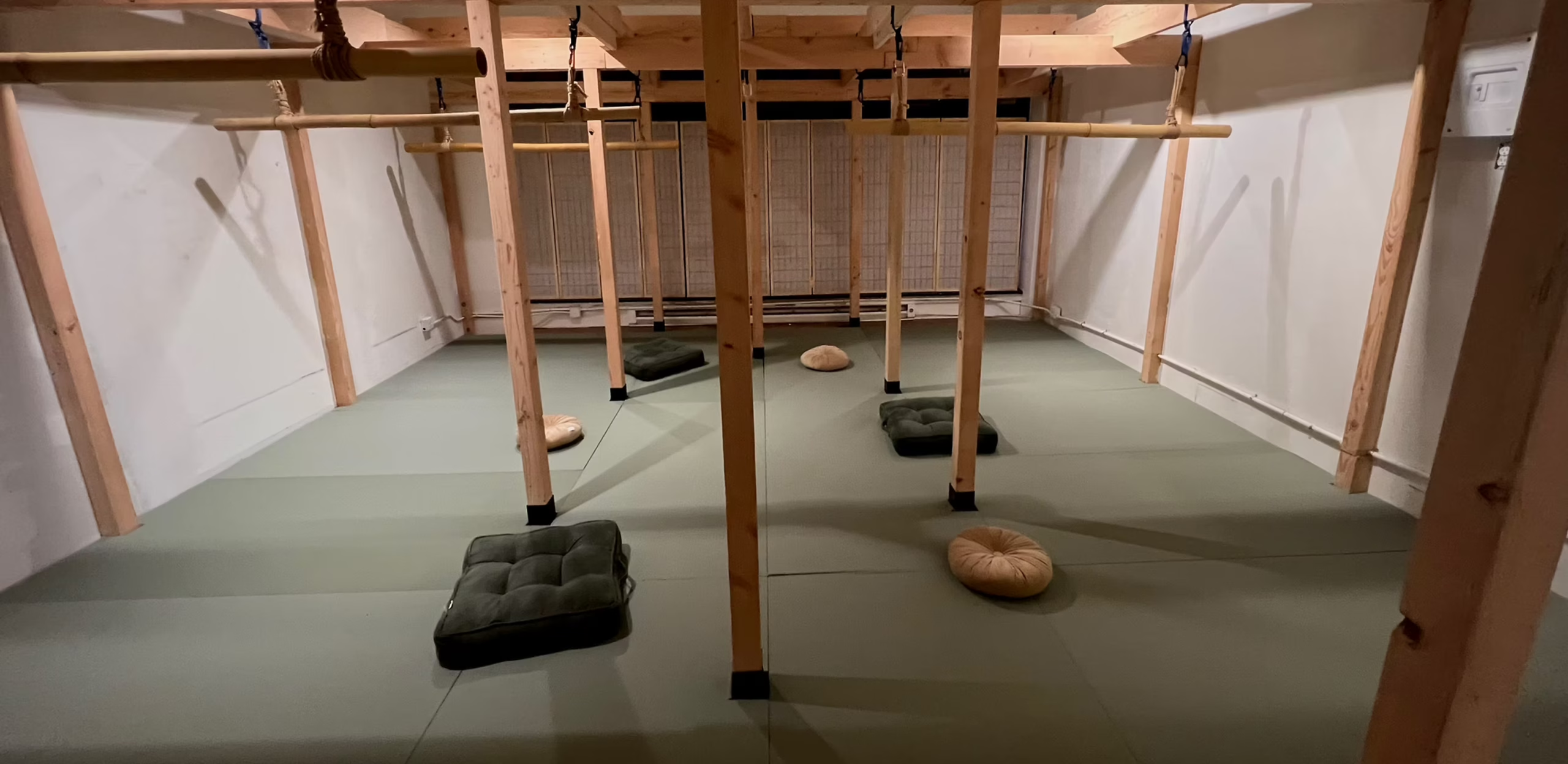
This past weekend I visited Flower and Snake in Seattle, a studio run by Mr Goat and Goatskid, a couple with long experience tying and being tied. The main room is large enough for six or seven pairs to work at once. A smaller room in front doubles as a gallery for bondage photography and a place to sit.
We talked about what our rope rooms look like, what we are trying to do with them, and how they sit inside current trends in shibari education. The methods are not identical. The aim is. Both of us want rooms where people can feel they belong.
As Mr Goat described how Flower and Snake works, I said, “Oh, so it’s similar to a Japanese rope bar.”
There was a pause. He did not know UBU, Arcadia, Titty Twister, Milky Way, or the other Tokyo rooms that function first as social spaces and only then as places to tie.
I have always thought of those bars as something like the heartbeat of the Tokyo rope community. Friendships start there. Rope gets talked about at length. People are introduced. News moves from person to person. The cover buys time in a room that is already open. You can order a drink, watch, talk, or tie.
Some of my strongest memories of those rooms are not of special events. They are of quiet nights with only a handful of people. Someone tying in a corner. Two people talking at the bar. Learning a new dirty word in Japanese. A person arriving, recognizing someone, and sitting down. Eventually a conversation about rope starts, or someone shows a small detail, or plans get made for another night. Nothing had to happen for the evening to feel worthwhile. The place itself was enough of a reason to be there.
You do not go because there is an event. Usually there isn’t one.
That difference looks simple. I think it matters.
In the United States we still treat most rope rooms as venues with a purpose attached: class, workshop, jam, performance, party, discussion group, even a board-game night. Something has to be happening before the doors open and people are given a reason to come.
I have tried the other thing at LA Rope. I call it Open Practice. No lesson, no performance, no agenda. People can practice, experiment, talk, or simply spend time with other rope people. It is, by far, the least-attended thing I offer.
Flower and Snake runs into the same problem. Put a theme, a workshop, or a party on the calendar and people have a reason to show up. How do you invite people to a room whose main purpose is to exist?
That is the difference between a space and a place.
A space supplies the physical conditions: mats, suspension points, light, room to move. An event gives people a reason to enter the space.
A place accumulates relationships, habits, memories, conversations, rituals, and a sense that the room is theirs. People go not only because something special is scheduled, but because being there has value in itself.
A great deal of contemporary rope culture has become eventized: workshops, intensives, performances, conventions, ticketed classes, visiting instructors. Those things matter. I make many of them. Communities cannot live only on special occasions.
What I keep returning to are the nights when nothing in particular is happening.
Unstructured time makes room for conversations that would not happen in a class. People can meet without having to find a partner or finish a tie. Knowledge moves informally. Someone comes only to socialize, watches another person working, and a conversation starts. Someone shows a small detail. Another person joins. Plans get made. Friendships deepen. Over time, those ordinary interactions may be what turn a collection of people who attend the same events into a community.
Part of the difficulty is that we have trained people to think of rope rooms as programming. A class, a jam, or a party lets someone decide whether that particular thing is worth the drive, the money, and the evening. “Come hang out” asks for a different commitment. There is no promised outcome. In a city where getting across town can take an hour or two, that is harder to justify.
There is also something slightly vulnerable about arriving without a purpose. A workshop tells you what you are supposed to do. A jam implies that you will tie. What does it mean to walk into a rope room simply because you want to be around rope people?
We may not yet have the habit.
I have spent years thinking about what should happen in a rope space. Flower and Snake made me wonder whether that is the wrong question.
The better question may be how a rope space becomes somewhere people begin to think of as theirs.
I do not want only more opportunities to do rope. We already have those.
I want a place where rope people can be.