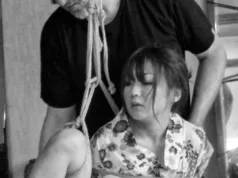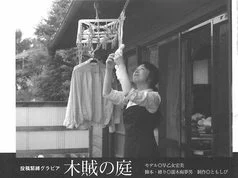
On September 9, 2013, the world of rope lost one of the most influential figures in the history of kinbaku. Nureki Chimuo was more than a rope practitioner. He was an author, editor, director, and, in collaboration with photographer Sugiura Norio, a visionary who helped define one of the most recognizable visual styles of late Shōwa-era SM.
Rope practitioners frequently wrote for magazines throughout the Shōwa period, but Nureki’s contributions stand apart for both their volume and their intensely personal character. He wrote as someone who deeply loved rope, although that love remained firmly rooted in the erotic culture of SM. He also understood the commercial machinery surrounding it. Across books, articles, photo reports, and memoirs, he documented not only the aesthetics and experience of Japanese rope but also the publishing and production ecosystem that brought its images to the public.
Even while working extensively in Japan’s adult-video industry, Nureki retained a sense of personal devotion to rope and was rarely reluctant to express his opinions about how it should, and should not, be practiced.
The combination of his enormous output and strongly held convictions has profoundly colored later understandings of modern kinbaku. As Azumi Kawahara has argued, Nureki’s accounts must be read not simply as records of historical events but as narratives shaped by how he wished those events and their participants to be remembered. Kawahara calls the resulting body of assumptions the “Iida historical perspective,” using Nureki’s real surname.
It is therefore easy to confuse Nureki’s influential perspective with historical accuracy. Above all else, in both his rope and his writing, Nureki was a storyteller. His accounts blur recollection, interpretation, speculation, and literary construction. They elevate certain figures while minimizing others, compress complicated events into memorable episodes, and sometimes sacrifice precision to narrative force. This does not make them unimportant. It makes them sources that must be read critically, compared with contemporary publications and archival evidence, and understood as part of the history they helped create.
Why Nureki Still Matters
More than a decade after Nureki’s death, rope has changed considerably. Many contemporary communities have developed more explicit vocabularies around anatomy, risk, consent, negotiation, trauma, and unequal power. Teaching has become more systematic, international exchange has accelerated, and rope now circulates through workshops, performances, queer communities, online education, and global networks that Nureki could not have anticipated.
Yet these developments do not make him obsolete. In some ways, they make him more important.
Nureki’s value does not rest on the idea that he possessed the final or most technically advanced form of rope. It rests on the seriousness with which he treated rope as a complete erotic practice. For him, rope was not merely a set of techniques, a visual style, a performance medium, or a prelude to another sexual act. It was an encounter shaped by desire, embarrassment, trust, power, imagination, and the particular pleasures of restraint.
That emphasis remains vital because technical progress can produce its own distortions. As methods become more sophisticated, rope can be reduced to engineering: cleaner patterns, more difficult suspensions, greater speed, sharper photographs, and increasingly codified systems of instruction. These advances have real value, especially when they improve safety and communication. But they can also encourage practitioners to mistake complexity for depth. Nureki reminds us that an intricate tie is not necessarily an affecting one, and that technical mastery alone does not create intimacy, eroticism, or meaning.
He also offers an important counterweight to the sanitization of kinbaku. As rope has entered galleries, theatrical spaces, and international workshops, it has often been reframed as art, movement, meditation, or spiritual connection. Nureki did not deny beauty, but he resisted separating beauty from eroticism, awkwardness, shame, obscenity, and appetite. His rope remained entangled with SM. Reading him now reminds us that kinbaku does not need to become respectable in order to become ethical, nor does it need to deny its sexual origins in order to possess artistic or emotional depth.
At the same time, his work points toward an ethics centered on the person being tied. He insisted that the desire to be bound should be treated as real rather than dismissed as victimhood or pathology. Yet his writing also reveals how readily he interpreted women’s silence, expressions, and bodily responses through his own erotic expectations. That tension, respect for desire without denial of projection or power, remains one of the central problems of rope today.
Reading Nureki does not tell us exactly how rope should be practiced now. His methods, assumptions, and cultural context belong to another period, and some require criticism rather than imitation. What his work offers is more useful than a rulebook. It gives us questions:
What is the rope doing beyond holding the body? Who is the experience for? When does technique serve connection, and when does it become display? What is lost when kinbaku is separated from SM, embarrassment, sexuality, or fantasy? What happens when the person tying begins to believe that skill makes them inherently wise?
These questions cannot be settled by technique alone. Nureki’s continuing importance lies in his insistence that rope is never merely rope. It is a way of arranging bodies, desires, stories, and power.
The Importance of Nureki Chimuo’s Talking Theater
The publication of Nureki Chimuo’s Talking Theater in English, translated by DarkAngelAscends and edited by Daniel Koosed, makes available something rarer than a technical manual or conventional memoir. It gives English-language readers sustained access to Nureki’s voice: digressive, opinionated, self-mocking, erotic, theatrical, and frequently contradictory.
Across these essays, he does not merely describe how rope was tied. He reveals how he thought about rope, how he looked at images, how he constructed fantasies, how he understood models and collaborators, and how he distinguished living SM from its empty imitation.
This matters because much of the international transmission of kinbaku has occurred through photographs, workshops, demonstrations, and technical lineages. Those forms preserve valuable knowledge, but they can also detach visible rope from the culture of imagination that gave it meaning. A tie can be reproduced while the sensibility behind it disappears. Talking Theater restores part of that missing interior world.
The title itself provides a key to Nureki’s understanding of rope. For him, “theater” was not merely decorative language. His life in SM was intertwined with his work as a playwright, performer, editor, and storyteller. He repeatedly treats rope encounters as intimate dramas in which clothing, setting, anticipation, embarrassment, fantasy, and the relationship between participants matter as much as the final arrangement of the rope.
This theatrical understanding leads to one of the book’s central lessons: rope is not located solely in the finished tie. It exists in the situation created around it. Nureki often cares less about whether a pattern is technically impressive than about what happens while it is being applied. He values hesitation, anticipation, the transformation of ordinary clothing, the gradual alteration of posture, and the emotional charge produced between two people. The pleasure lies not only in completion but in process.
His discussions of old photographs make this point repeatedly. Nureki can find more erotic intensity in a small, blurred, black-and-white image with almost no exposed skin than in highly explicit contemporary material. What moves him is not informational completeness but suggestion. Hidden bodies create space for fantasy. Clothing can heighten rather than conceal eroticism. An uncertain expression can communicate more than a professionally performed pose. Without human feeling, even the most explicit image becomes anatomically clear but erotically mute.
For modern kinbaku, this is an important corrective. Digital photography and social media have made rope imagery more abundant, polished, and instantly legible. Yet abundance can flatten mystery. Talking Theater asks whether showing everything may leave too little for the imagination to do, and whether the pursuit of an impressive image can overwhelm the private emotional reality from which meaningful rope emerges.
The work also reveals that Nureki’s rope was fundamentally rooted in SM. He does not present restraint as an abstract movement art or neutral technical discipline. His language returns continually to shame, punishment, helplessness, fantasy, fetishism, and erotic transformation. The translator’s notes are especially valuable because Japanese terms such as S, M, mania, and seme do not map neatly onto contemporary Western BDSM terminology. Preserving those differences helps prevent readers from forcing Japanese rope into categories developed elsewhere.
At the same time, Talking Theater complicates any simple image of Nureki as a commanding sadist. He questions his own motives, admits the primacy of fetishistic pleasure, and mocks the inflated authority of people who call themselves rope masters or trainers. His self-presentation is boastful but repeatedly punctured by comic deflation. He is willing to describe himself as foolish, vulgar, undisciplined, or merely a man obsessed with rope.
The essays also illuminate the difference between commercial production and personal rope. Nureki spent decades tying for magazines and adult video, and he understood the pressures of deadlines, sales, editors, photographers, and audience expectations. Yet he repeatedly contrasts that machinery with encounters in which time, privacy, affection, and shared obsession permit something more emotionally complex to occur.
Talking Theater therefore shows modern kinbaku as the product of overlapping worlds: magazines, fiction, photography, theater, adult video, private relationships, collector culture, and communities of enthusiasts. Its history belongs not only to celebrated rope practitioners but also to writers, editors, photographers, models, readers, archivists, and fans.
The essays unfold as conversation rather than systematic doctrine. Nureki changes direction, contradicts himself, exaggerates, revises his memories, responds to readers, and follows associations wherever they lead. That instability should not be intellectually edited away. It reveals kinbaku as a living culture whose values were debated rather than fixed.
For that reason, Talking Theater should be read both sympathetically and critically. It is not a technical manual, neutral testimony, or universal ethic. It gives us access to one influential man’s desires, prejudices, insights, blind spots, and methods of meaning-making. That is precisely what makes it historically important.
DarkAngelAscends’s translation does more than convert one language into another. It restores an intellectual and emotional archive that has largely remained inaccessible to readers outside Japan. Translation cannot eliminate every cultural gap, but it allows those differences to become objects of study rather than remaining invisible.
What Talking Theater ultimately tells us is that modern kinbaku cannot be reduced to knots, patterns, or lineages. It is a culture of attention. Rope provides the material structure, but fantasy, emotion, theatricality, and relationship give that structure life.
Nureki does not offer the final word on what kinbaku is or should become. He offers something more provocative: a record of a practitioner continually asking why a particular rope, image, expression, garment, or encounter makes him feel anything at all. Reading him now invites modern practitioners to ask the same question of their own rope.