Kitan Club
April 1955
← Back to magazine archive
Issue Details
- PDF pages
- 311
Summary
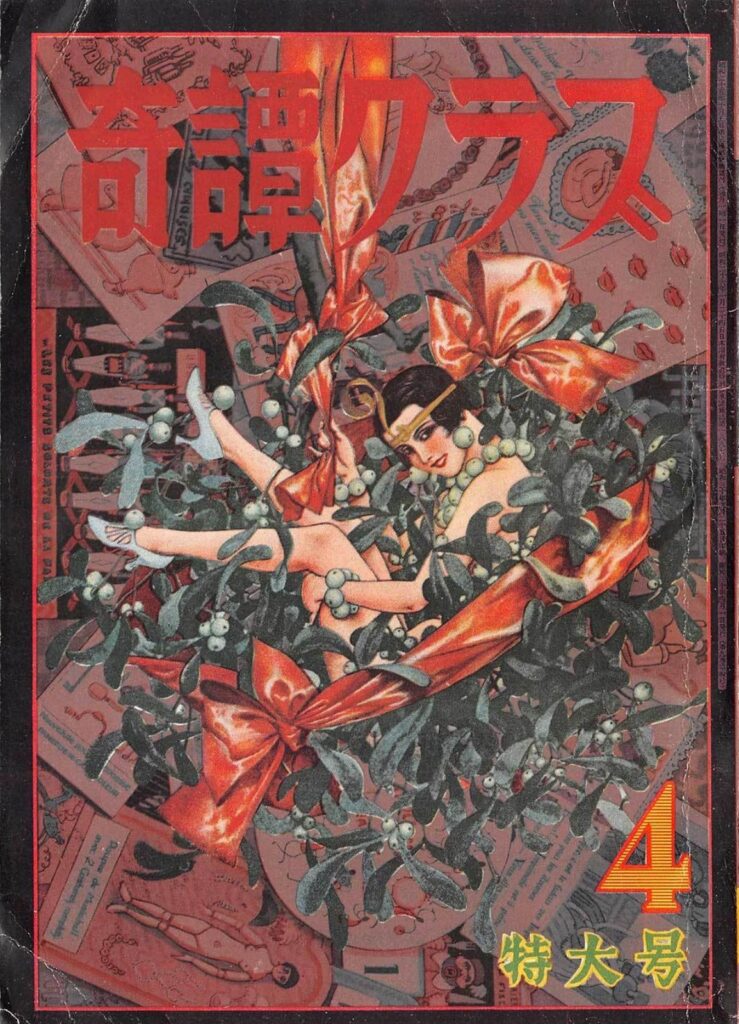
The April 1955 special expanded issue of Kitan Club is a large and unusually varied publication combining a substantial opening pictorial section with historical research, confession-contest selections, serialized fiction, memoir, translated European material, medical and sociological writing, fetish case studies, illustrated narratives, reader-oriented departments, editorial notices, and extensive back matter. Its editorial identity depends on the close placement of visual spectacle and purported investigation. Bondage photographs and fantasies appear beside historical documents, maps, medical accounts, autobiographical testimony, translation, criticism, and articles framed as research. The issue consequently presents unconventional desire not as a single genre but as a field that can be pictured, narrated, classified, historicized, confessed, and debated.
Read full summary Close full summary
Table of Contents 58 items
-
African Curiosities
Summary
An illustrated feature titled “African Curiosities” presents a series of African-themed erotic tableaux involving unusual bodily positions, restraint, and scenes of physical domination.
-
Finger Puppets
Summary
Itō Seiu’s “Finger Puppets,” part of a series on unusual spectacles, depicts a crowded, dramatically arranged scene in which human bodies are presented as objects of manipulation and visual curiosity.
-
Complex Love
Summary
“Complex Love” presents a portrait of a gagged and apparently restrained woman whose expressive eyes suggest an unheard message addressed directly to the viewer.
-
Cold Stone Cell
Summary
An erotic illustration depicts a frightened, nude woman kneeling in a cold stone cell with her wrists tightly bound overhead against the wall.
-
Hanging from the Pillar
Summary
An erotic illustration shows a woman bound with rope to a pillar, her arms raised above her head and her body arranged in a helpless suspended posture.
-
Modern-Style Fantasy of a Household
Summary
This erotic illustration presents a modern fantasy inspired by the traditional Hitotsuya motif, depicting a woman restrained across a household-like setting surrounded by domestic and theatrical objects.
-
Blood-Stained Hair Rope
Summary
An illustrated historical erotic narrative set amid the Boshin War, in which a woman is captured, bound, and subjected to violent treatment by opposing forces.
-
Female Prisoner
Summary
An illustrated scene depicts a young female prisoner bound behind bars while male guards approach, emphasizing confinement, surveillance, and helplessness.
-
Sacrifice
Summary
An illustrated sacrificial scene shows a young woman restrained and displayed before male figures at a waterfall, combining ritualized sacrifice with eroticized captivity.
-
Illustrated Mandala of Seppuku
Summary
Sugihara Kōji’s illustrated “mandala” presents an eroticized seppuku tableau featuring nude and clothed figures, a sword, and ritualized violence.
-
Dream of a Masochist
Summary
This dream sequence depicts a masochistic fantasy of women subjected to restraint, gagging, and domination by male and female figures.
-
Beautiful Captives
Summary
“Beautiful Captives” combines two erotic illustrations with Japanese narrative text portraying women bound, chained, gagged, and held captive in dramatic settings including a ship or maritime scene.
-
White Slave
Summary
An illustrated erotic captivity narrative follows a young woman lured into an urban trafficking ring, sold into sexual exploitation, and subjected to binding, punishment, and other forms of coercive control.
-
Ligation Photo Album
Summary
A photographic portfolio presents staged scenes of women restrained with rope in varied ligation positions, emphasizing visual display and physical immobilization.
-
Rear Suspension
Summary
A practical photographic feature demonstrates rear suspension, showing a model secured with her arms bound behind her back and suspended from overhead ropes.
-
Binding
Summary
A photographic feature presents a woman bound in a seated pose, accompanied by a caption reflecting on the discomfort and discipline involved in being tied.
-
Rope and the Female Body, Part Four
Summary
The fourth installment of “Rope and the Female Body” presents a sequence of staged photographs showing women bound with rope in varied curled, folded, and reclining positions.
-
Queen, Please Offer Your Feet
Summary
A staged photographic feature presents Queen Rumi Kasuga commanding a male slave to offer his feet and submit to foot trampling, emphasizing female authority and male servility.
-
Blinded and Struck
Summary
This photographic portfolio depicts a woman blindfolded and tightly bound outdoors, including to a tree, while another woman appears to supervise or participate in the staged captivity scenario.
-
Human Chair
Summary
A staged photographic feature portrays a dominant woman using a submissive person as a human chair amid scenes of kneeling, bodily control, and servile positioning.
-
Dog Training
Summary
A staged erotic scene depicts a clothed female “owner” training a nude male “dog” on a rope leash, including a command to wait for food.
-
Bound Nude Beauty
Summary
A photographic feature presents a nude woman subjected to elaborate rope bondage, including restrained limbs, torso binding, and gagging or sensory restriction.
-
In the Park
Summary
A staged outdoor bondage sequence shows a woman tied up in a park, worrying about passersby and asking to be released when someone approaches.
-
Collection of Cruel Women
Summary
An illustrated feature presents a collection of cruel or disciplinary women, depicting scenes of school punishment, piano instruction, imported women, strict teaching, and other staged female-dominance scenarios.
-
It Falls!
Summary
A staged photographic vignette titled “It Falls!” shows a female model tumbling down a staircase in a dramatic scene of peril and physical vulnerability.
-
Notes on Meiji-Period Newspapers
Summary
Azuma Shin surveys Meiji-period newspaper reports and related popular imagery, reproducing sensational stories involving marriage, domestic conflict, women’s sexuality, prostitution, crime, punishment, bodily exposure, and sexual scandal while commenting on their historical context and changing social meanings.
-
Gibs and Corset
Summary
An erotic narrative explores a married couple’s experimentation with plaster casts, corsets, and other restrictive medicalized garments, blending bodily control with marital sadomasochistic desire.
-
Yukata Sōshi
Summary
This episodic erotic narrative centers on summer yukata, hot-spring and lodging-house encounters, voyeuristic observation, and scenes of women being restrained or humiliated indoors and outdoors.
-
Stepmother Abuse
Summary
A coercive fantasy recounts an adopted girl’s mistreatment after her father remarries, depicting a cruel stepmother’s domestic confinement, forced exposure, binding, and corporal punishment.
-
My Seppuku
Summary
An eroticized first-person account of female seppuku imagery and abdominal cutting, emphasizing blood, pain, self-inflicted injury, and the narrator’s fascination with the scene.
-
Ten Months in Captivity
Summary
A first-person memoir of ten months in prison describing institutional routines, exercise and sports, films, fellow prisoners, correspondence, sexual frustration, and reflections on relationships with women after confinement.
-
Blood-Stained Hair Rope, Part Four
Summary
The fourth installment of a serialized illustrated work that combines historical discussion of Japanese women’s hairstyles with erotic scenes of hair, rope restraint, abduction, and punishment.
-
Research Presentation on Nose Torture
Summary
A research-style presentation of nose torture describes experiments and techniques involving nose rings, cords, pulling, and restraint, accompanied by an instructional illustration.
-
A Year as an Abortionist
Summary
A serialized account of amateur erotic photography explains how to stage and photograph bondage scenes, covering models, tying methods, cameras, lighting, film, costs, and practical mishaps.
-
Cruel Women
Summary
A translated selection from Johannes R. Birlinger’s 1901 Das Grausame Weib surveys historical and sensational cases of women inflicting corporal punishment, abuse, and humiliation on men, children, and other women.
-
Ten Forms of Moxibustion for Women
Summary
An illustrated instructional feature presents ten forms of moxibustion applied to women, framing heat, pain, bodily exposure, and restraint as eroticized disciplinary practices.
-
From the Notebook of a Certain Masochist
Summary
A notebook-style account examines masochistic fantasies and experiences involving bondage, humiliation, animalization, forced service, and imagined or enacted physical discipline, accompanied by illustrative scenes and references to related erotic literature.
-
Regionality of Male Homosexuality
Summary
A sexological survey analyzes the regional distribution of male homosexuality in Japan using comparative data, maps, and discussion of urbanization, occupation, culture, climate, and social environment.
-
How I Punish Him
Summary
An erotic narrative depicts a series of staged punishment encounters involving rope bondage, gags, enforced poses, verbal commands, and escalating struggles between the participants.
-
I Want to Become a Model
Summary
Presented as a first-person confession, this feature traces a man’s exhibitionist desires from childhood through adulthood, including fantasies and experiences of appearing nude before others and wanting to become a model.
-
Solitude
Summary
A first-person confessional narrative explores a woman’s divided identity, profound loneliness, and masochistic desire through elaborate rope-bondage fantasies and scenes involving her husband and other imagined observers.
-
Kelp and the Boy
Summary
This erotic fiction follows a boy named Taichi through increasingly charged encounters involving kelp, nudity, restraint, and adult-directed fantasy, using the kelp as a distinctive fetishistic and bondage motif.
-
The Devil's Game
Summary
A sadomasochistic erotic narrative in which Shizuko is drawn into a series of coercive games involving captivity, restraint, humiliation, and violent punishment.
-
Yamato Nadeshiko
Summary
An illustrated sadomasochistic narrative depicting women subjected to institutional discipline, restraint, corporal punishment, forced exposure, and humiliating treatment in prison- and workplace-like settings.
-
Punishment Garment
Summary
An illustrated practical feature describes the construction and use of a restrictive “punishment garment,” presenting staged scenarios involving clothing, ropes, chains, exposure, and controlled positioning.
-
Memories of Punishment Pictures
Summary
A retrospective essay on punishment-themed pictures discusses the creation and recollection of erotic illustrations depicting restraint, immersion, suspension, electric shock, and other sensationalized scenes.
-
A Kiso Tale
Summary
A serialized erotic narrative set around the Kiso region follows violent encounters, captivity, and coercive punishment involving masters, servants, travelers, and bound women.
-
Modern Masochism Art Review
Summary
An extended critical essay examines masochistic imagery and gendered power in modern films, discussing imported cinema, staged scenes, costumes, spectatorship, and the psychological effects of visualizing female and male submission.
-
Commentary on the Strange Beauty of Illustrations
Summary
Yamaguchi Kōichi provides aesthetic and interpretive commentary on several erotic illustrations, explaining their composition, bodily poses, medicalized and disciplinary scenarios, and the visual techniques used to intensify masochistic feeling.
-
The Feast of the Milk Bath
Summary
A serialized erotic fantasy follows the brutal domination of male servants and schoolboys by powerful women, combining elaborate household scenarios, forced service, humiliation, corporal punishment, and recurring milk-bath imagery.
-
The True Face of a Bondage Model
Summary
A reportage profile of a professional bondage model follows her rope-bound photo sessions, including staged restraint, gagging, and other demanding poses, while discussing her appearance, working relationships, and experiences with photographers.
-
The Female Underwear Photography Maniac
Summary
A first-person feature examines a man’s intense interest in photographing women’s underwear, describing covert and staged photography, the pursuit of subjects, equipment, image collecting, and the fetishistic appeal of garments and glimpsed bodies.
-
Training
Summary
A dark erotic narrative follows a woman subjected to escalating training, coercion, bondage, humiliation, and sadistic control, presented through scenes of restraint, discipline, and psychological submission.
-
The End of Aestheticism
Summary
This prize-winning crime narrative investigates the death of a young woman whose body bears signs of elaborate restraint and sexual abuse, gradually exposing voyeuristic, cross-dressing, and psychologically disturbed behavior surrounding the case.
-
Night-Light Island
Summary
A serialized mystery-erotic novel follows detective Kenjiro as he investigates a suspicious island incident involving a missing or abducted woman, police inquiries, secret identities, and scenes of captivity, binding, and coercion.
-
Twenty Years of Pursuit: A Retrospective
Summary
A memoir-like retrospective traces the author’s decades-long engagement with “abnormal” sexuality, combining reflections on masochistic and fetishistic desires with anecdotes and historical-cultural examples involving female warriors, domination, and erotic imagination.
-
Illustrated Belly-Cutting Feature
Summary
An illustrated erotic fantasy presents a woman in a flight suit undergoing a ritualized belly-cutting or seppuku scene, with swords, restraint, and coercive imagery framing the episode as an idealized form of female submission.
-
Current Topics, Reader Communications, and Editorial Departments
Summary
A broad departmental section combining current-topic commentary, film and image-set discussion, reader letters, fetish- and practice-focused communications, club and publication notices, and previews of forthcoming issue content. It documents the magazine’s editorial network and participatory reader culture alongside its coverage of erotic visual media and SM practices.
Highlights
- The formal contents is printed within a red illustrated spread and includes both the opening pictorial features and the later paginated articles. (PDF p. 6).
- The opening illustrated sequence includes caricature, Itō Seiu's unusual-spectacle series, prison and suspension imagery, domestic bondage fantasy, and other punitive scenes. (PDF pp. 7–19).
- White Slave develops an illustrated captivity scenario immediately before the photographic portfolios. (PDF pp. 20–23).
- The bondage photography section presents gagging, suspension, kneeling restraint, rope studies, trampling, whipping, outdoor capture, and female-dominant role play. (PDF pp. 24–39).
- Notes on Meiji-Period Newspapers uses historical reports to examine crime, punishment, scandal, unusual customs, and sexual behavior. (PDF pp. 41–49).
- Gibs and Corset transforms orthopedic devices into a confession about restriction, dependence, and fetishistic fascination. (PDF pp. 50–54).
- Ten Months in Captivity continues a detailed prison memoir concerned with routine, surveillance, humiliation, punishment, and institutional authority. (PDF pp. 69–76).
- Itō Seiu's Blood-Stained Hair Rope connects restraint and cruelty with historical reports, legends, visual culture, and earlier punishment practices. (PDF pp. 77–80).
- A Year as an Abortionist combines clinical procedure, secrecy, bodily danger, professional experience, and photographic material. (PDF pp. 83–91).
- The translation of Johannes R. Birlinger's Das Grausame Weib surveys historical and literary representations of cruel women. (PDF pp. 92–96).
- From the Notebook of a Certain Masochist combines historical anecdotes, international sources, punishment traditions, and psychological commentary. (PDF pp. 101–109).
- Regionality of Male Homosexuality uses maps and tables to compare geographical patterns of male same-sex behavior in Japan. (PDF pp. 110–114).
- How I Punish Him develops an extended illustrated scenario of female dominance, restraint, interrogation, and humiliation. (PDF pp. 115–123).
- Solitude is a long psychological confession involving isolation, illness, medical treatment, examination, and emotional alienation. (PDF pp. 129–142).
- The Devil's Game continues beyond the first 150 PDF pages and develops its narrative of secrecy, domination, restraint, and danger. (PDF pp. 149–158).
- Later sections include extended illustrated narratives, discussion of masochistic art, bondage-model photography, fetish case studies, serial fiction, and substantive editorial back matter. (PDF pp. 159–311).
Contributors
Named contributors represented in this issue:
- Azuma Shin
- Dan Yoshikazu
- Furukawa Yūko
- Furuta Kichirō
- Futamata Shizuko
- Fuwa Kazuko
- Itō Seiu
- Iwase Yōichi
- Johannes R. Birlinger
- Karii Rei
- Kurihara Sōshin
- Miyako Mineko
- Mizushima Maru
- Mori Taichi
- Nakatani Reiichi
- Numa Shōzō
- Ōmura Mitsuko
- Ozawa Kazuo
- Samura Akira
- Shiga Yūji
- Shima Takashi
- Shirogane Kōji
- Sugihara Kōji
- Takarazuka Fumio
- Tokuyama Hajime
- Tsubouchi Ittetsu
- Yamada Masami
- Yamaguchi Kōichi