Fuzoku Soshi
April 1954
← Back to magazine archive
Issue Details
- Volume
- 2
- Issue
- 4
- PDF pages
- 265
Summary
The April 1954 issue of Fūzoku Sōshi is an unusually large and varied publication combining color illustration, staged bondage photography, imported erotic imagery, illustrated historical fantasy, serialized fiction, psychological and sexological essays, autobiographical testimony, roundtable discussion, clinical case writing, reader communications, book notices, and a long sequence of later fiction and confessional material. Its editorial identity depends on treating unconventional sexuality as several things at once: spectacle, artistic subject, personal experience, historical curiosity, psychological problem, and shared field of discussion. The issue moves from richly illustrated front matter into a dense literary body and concludes with correspondence, contributor-oriented departments, publishing information, and additional serialized material.
Read full summary Close full summary
Table of Contents 45 items
-
The Improper Aristocratic Lady
Summary
An illustrated erotic scenario follows an aristocratic woman from a lavish ballroom into a secret basement, where her captor threatens and torments her. The accompanying dialogue emphasizes captivity, pain, and sadistic domination.
-
The Virgin of the Rocky Shore
Summary
A photographic feature presents a woman in a green sweater and skirt seated amid fishing gear, nets, and a boat on a rocky shore. The staged outdoor setting combines nautical labor imagery with a posed erotic portrait.
-
Bound at the Wild Sea
Summary
A photographic bondage feature depicts a woman tied and exposed on a rocky seashore, with crashing waves, cliffs, and open landscape intensifying the scene’s perilous and masochistic atmosphere. The accompanying prose presents the bound woman as overwhelmed by the wild sea and emphasizes outdoor spectacle and sensory vulnerability.
-
White and Black
Summary
A black-and-white erotic photographic feature stages intimate and physically charged encounters between a white woman and a Black man. Its text foregrounds dramatic contrasts of light and shadow, interracial desire, bodily difference, and an atmosphere of forbidden or abnormal romance.
-
Burning Shanghai
Summary
A photographic erotic fantasy set against the imagery of wartime Shanghai, depicting a woman subjected to threatening interrogation and degrading treatment by a male captor. Captions emphasize coercion, humiliation, and the captor’s sadistic gaze.
-
Three Punishment Pictures
Summary
A three-part illustrated feature portraying punitive and sadistic encounters in a historical Japanese-style setting, including whipping, cutting threats, restraint, and domination. The accompanying dialogue foregrounds severe corporal punishment and female-controlled violence.
-
Infernal Punishment Pictures
Summary
A series of erotic illustrations imagines women subjected to grotesque punishments in an infernal setting, surrounded by demons and skeletons. The scenes draw on hell imagery, physical restraint, and theatrical depictions of suffering.
-
Human Flesh Market
Summary
An illustrated erotic narrative presents women restrained and displayed before groups of male spectators in a dark, theatrical setting. The scenes include bondage to poles, forced poses or dancing, and an explicitly depicted enema procedure.
-
Modern American Sadism Photograph Collection
Summary
A photographic portfolio presenting staged scenes of modern American sadism, including women subjected to suspension, gagging, restraint devices, and other bondage positions. The feature emphasizes the visual display of sadistic practices and specialized apparatus.
-
French Lesbian Photograph Collection
Summary
A multi-page photographic collection depicting French women in lesbian erotic encounters, including intimate embraces, seduction, undressing, and physically dominant or submissive poses. Accompanying captions frame the images as scenes of same-sex desire and romanticized erotic play.
-
Eight Mechanically Assisted Punishments
Summary
An illustrated feature presenting eight punishment scenarios using mechanical or structural devices, including rotating boards, stretching equipment, suspension arrangements, and other bondage apparatus. The captions frame these as staged erotic punishment tableaux.
-
Ten'ichibō Goes to Hell
Summary
An illustrated historical erotic narrative in which Ten’ichibō and other characters are captured, restrained, interrogated, and subjected to elaborate punishments and humiliations. The story combines period adventure, captivity, rope bondage, and scenes of sexualized coercion.
-
In'u Kumasu
Summary
This installment of a serialized SM novel follows a series of coercive encounters involving students, artists, and acquaintances who manipulate, restrain, gag, blindfold, and punish one another in domestic and bathhouse settings. The narrative emphasizes escalating sadistic control, humiliation, secrecy, and revenge among its interconnected characters.
-
The Sweet World of the Masochist
Summary
Kurata Tetsurō offers a reflective analysis of masochistic desire through several forms of erotic play, including bondage, direct physical pain, disciplinary scenes, and worship of an idealized woman. The accompanying illustrations depict male submission, restraint, female dominance, and ritualized bodily humiliation, while the text considers the psychological and social meanings of these practices.
-
Bondage and Punishment Miscellany
Summary
A multi-page roundtable brings together filmmaker Yoshino Jirō, writer Itō Seiu, photographer Yamashita Kyujiro, and writer Matsui Yoriko to discuss bondage, punishment, rope tying, women’s roles, erotic imagery, and their experiences in film and photography. The accompanying photographs and captions document staged restraint scenes, including rope bondage, suspension-like poses, and punishment imagery.
-
Mirror Demon Tale
Summary
A sadistic historical fantasy in which the mysterious Mirror Demon and the beautiful Komachi lure victims into an underground chamber and subject them to elaborate bindings, suspension, and torture. The illustrated narrative combines supernatural menace, grotesque transformations, and escalating struggles among the characters.
-
Loincloth Mania
Summary
An extended erotic essay on fascination with men’s loincloths, following personal encounters, underwear-washing scenes, and the narrator’s escalating interest in male bodies and loincloth display. The piece treats the loincloth as both a clothing fetish and a vehicle for voyeuristic and sexual fantasy.
-
Spring Chronicle of Masochistic Fantasy
Summary
A masochistic erotic fantasy set around young men and their social circle, depicting submission, humiliation, bondage, beatings, gagging, and enforced nudity. The narrative moves through imagined scenes of capture and discipline, emphasizing male submissive desire and coercive erotic spectacle.
-
Beautiful Young Sadist
Summary
An erotic narrative follows Hiroshi, a beautiful young man whose encounters with a dominant woman develop through staged seduction, restraint, humiliation, and sadistic punishment. The illustrated serial emphasizes female control and the protagonist’s conflicted fascination with submission.
-
The Techniques of Interrogation, Arrest, and Torture
Summary
An illustrated instructional feature surveys interrogation, arrest, and torture methods, including restraint with ropes, gagging, pursuit, and the use of implements. It combines practical descriptions with historical discussion of policing and punishment from the Tokugawa period through modern Japan.
-
Twenty-Man-Yen Prize Manuscript Competition: Interim Announcement
Summary
The editorial department announces the interim results of the 200,000-yen manuscript competition, listing selected submissions and their authors. It explains that the entries have undergone preliminary review and that final judging and publication decisions will follow.
-
Male Dressmaker
Summary
An illustrated serialized erotic narrative centered on Miko and encounters with a male dressmaker in and around a tailoring shop. Tailoring, clothing, exposure, teasing, and escalating sexual power and humiliation shape the story’s episodes.
-
Strange Tales of Homosexual Love, Part Three
Summary
A sensational, semi-documentary account of male same-sex desire, presenting anecdotes about relationships between men of different ages and social positions alongside commentary on sexual psychology. The article is accompanied by eroticized illustrations depicting its subjects and scenarios.
-
My Secret Record
Summary
An autobiographical confession by Itō Seiu describing his obsessive relationship with his wife, including episodes of illness, domestic restraint, sexual experimentation, and the production of photographs and drawings. The narrative presents bondage and marital eroticism as part of a private personal record.
-
East-West Masochists Compared
Summary
An essay compares Japanese and Western forms of masochism through anecdotes about erotic performance, spectatorship, gender roles, and imagined or observed encounters. It considers differences in masochistic psychology, behavior, social setting, and cultural expression, especially in postwar Japan.
-
Fūzoku Art Museum
Summary
A visual gallery presents historical and imported erotic illustrations and related imagery depicting sexualized restraint, domination, fetishistic attention to bodies and clothing, and theatrical erotic scenes. Captions frame the images as examples of changing sexual customs and erotic imagination, including prominent foot-focused fetish imagery.
-
Ecstatic Male Beauty
Summary
A photographic feature presenting nude male models in posed, physically expressive scenes, celebrating muscular bodies and masculine beauty for a sodomist-oriented readership.
-
Clinical Report on Deviant Sexuality
Summary
A clinical case-report series examining atypical sexual interests and behaviors, including foot fetishism, hair fetishism, female same-sex desire, and fetishistic attachment to objects. The accounts combine patient histories, erotic fantasies, compulsive conduct, and psychiatric or sexological interpretation.
-
The Psychology of the Man Who Torments a Conquered Woman
Summary
A psychological essay examines why some men torment, humiliate, or otherwise mistreat women they have sexually “conquered.” Through analysis and illustrative conversational examples, it links such behavior to insecurity, self-display, the desire to prove masculine superiority, and the pursuit of sadistic sexual excitement.
-
Modern Male Slaves
Summary
A serialized reportage-style study of men who submit to women as servants, pupils, or sexual slaves, including accounts of female-led discipline, humiliation, punishment, and domestic control. It frames these practices through contemporary sexual psychology and examples of male masochistic desire, including younger men drawn into such relationships.
-
Men Who Want to Be Watched, Women Who Want to Be Watched
Summary
A first-person account examining the intertwined desires to watch and be watched, tracing voyeuristic curiosity and exhibitionistic behavior through intimate encounters and memories. The piece presents these impulses as matters of sexual psychology and personal experience.
-
Nightly Demon
Summary
A first-person erotic memoir recounting recurring nighttime encounters, seduction, intimate touching, and escalating sexual excitement. Its confessional style emphasizes the narrator’s sensual responses and the atmosphere of repeated clandestine pleasure.
-
Thirteen Virgins
Summary
An illustrated erotic fiction centered on a woman who recounts her intense pursuit of a series of female partners, culminating in the appearance of a “thirteenth virgin.” The narrative uses confessional dialogue, seduction, and female-centered desire to explore erotic obsession and sexual experimentation.
-
The Defiled Amazon
Summary
An illustrated erotic story in which a woman’s bra becomes the focus of erotic attention, jealousy, and an increasingly intimate encounter. Through dialogue and scenes of seduction and bodily vulnerability, the episode explores lingerie fetishism and forbidden desire.
-
Wretched Women
Summary
A sensational survey of “wretched women” drawn from Japanese legends, historical anecdotes, and literary narratives. It recounts women associated with murder, torture, sexual cruelty, punishment, and execution, accompanied by lurid illustrations and reflections on female violence and transgression.
-
The Demon of Lust's Mad Banquet
Summary
An illustrated essay on demonic lust, witchcraft, occult rites, and sexually charged violence. Drawing on European and other transnational examples, it describes witches, satanic ceremonies, bodily torment, sacrificial imagery, and fantasies of collective erotic excess.
-
My Wanderings in Male Attire
Summary
An autobiographical account of a woman’s long fascination with wearing men’s clothing, beginning in childhood and developing through school, work, social outings, and romantic encounters. The narrative describes the excitement, secrecy, confidence, and erotic possibilities associated with male presentation, accompanied by staged illustrations of cross-dressed and intimate scenes.
-
Lesbos Correspondence
Summary
A multi-page reader-correspondence column in which women write about intimate relationships, same-sex desire, erotic experimentation, appearance, and encounters involving fetishistic or BDSM interests. The editor responds with advice and encouragement, fostering an exchange of personal experiences within the magazine’s women-centered erotic readership.
-
Apes, Beasts, and Rough Rope
Summary
An extended essay tracing the imagery and cultural meanings of rough-rope bondage in Japanese erotic art, literature, film, and magazine illustration. Drawing on historical examples and personal recollections, it discusses bound female bodies, rope arrangements, captivity and punishment scenes, and the changing treatment of these motifs in postwar visual culture.
-
Short People: Group Portraits
Summary
A serialized erotic narrative about newlyweds whose marriage is unsettled by the husband’s secret fetishistic collection, voyeuristic behavior, and controlling treatment of his wife. The story develops through domestic scenes of lingerie and stocking fetishism, surveillance, confinement, and bondage while exploring the psychological tensions of a fetishist’s marriage.
-
Lewd Rope and Youth
Summary
An illustrated feature on erotic tattooing that surveys tattoo practices, their historical development, and their associations with pain, beauty, and sexualized domination. It combines cultural commentary with sensational anecdotes about tattoo artists, clients, and tattooing scenes in Japan and abroad.
-
Sodomia Correspondence
Summary
A correspondence and advice column presenting readers’ autobiographical accounts and questions about same-sex attraction, adolescent sexual development, romantic relationships, and changing erotic preferences. Editorial replies interpret these experiences through contemporary psychological and social perspectives, accompanied by erotic illustrations.
-
Memoir of a Female Cross-Dresser
Summary
A first-person memoir of a male-bodied narrator’s life as a female cross-dresser, recounting youthful experimentation, same-sex desire, relationships, theatrical and nightlife experiences, and encounters with other gender-variant people. The article combines autobiographical testimony with observations on cross-dressing communities and postwar sexual culture, accompanied by photographs and illustrations.
-
Discipline Tale
Summary
An illustrated erotic fiction feature introduces Jirō, a red-haired Japanese-French mixed-race sexual sadist, who enters the bedroom of Miyoko, a sexually frustrated woman married to an impotent husband. The page presents the episode as a sensational tale of illicit desire and coercive sexual intrigue.
-
The Rainbow of the Enchantress
Summary
A serialized erotic narrative follows a married couple whose encounters with an alluring dance instructor and other figures become entangled with seduction, jealousy, bondage, and psychological disturbance. The story moves between domestic interiors, treatment or institutional settings, and staged scenes of restraint and coercive intimacy.
Highlights
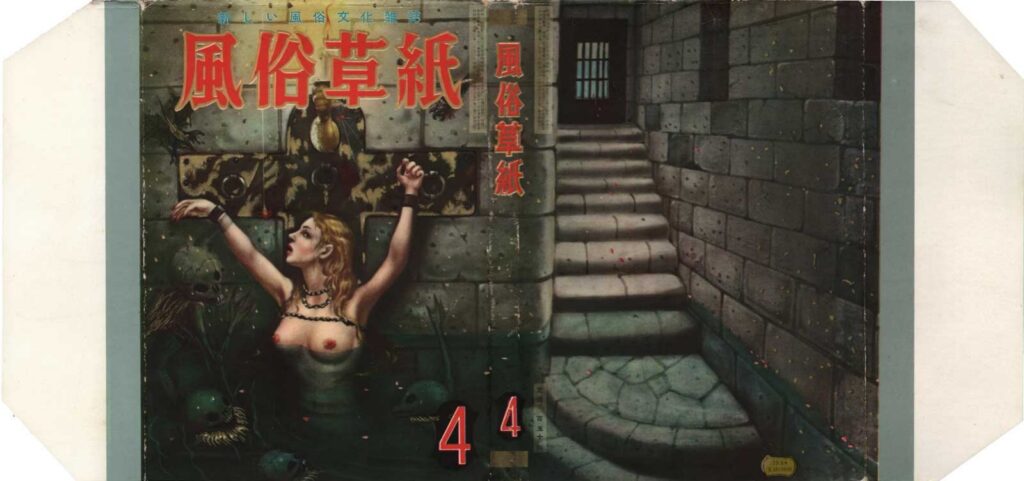
- The painted cover presents a restrained woman partially immersed beside a dark stone passage. (PDF p. 1).
- Nakagawa Ayako's color plate depicts a bound aristocratic woman threatened by a male tormentor. (PDF p. 3).
- The opening seashore sequence stages women restrained against wooden supports, rocks, surf, and rough coastal ground. (PDF pp. 4–8).
- Kita Reiko's Human Flesh Market depicts a nude woman suspended before spectators and presented as a commodity. (PDF pp. 18–19).
- The formal contents spread maps the issue's visual portfolios, fiction, essays, memoirs, correspondence departments, and later serialized material. (PDF p. 21).
- The French lesbian portfolio develops a domestic sequence of lingerie, dressing, undressing, physical intimacy, and seduction. (PDF pp. 23–27).
- Eight illustrated mechanical punishments use rotating boards, frames, clamps, stocks, boxes, and stretching devices. (PDF pp. 28–31).
- Ten'ichibō Goes to Hell is an extended Edo-period picture story involving captivity, punishment, animal attack, and escape attempts. (PDF pp. 32–38).
- The Sweet World of the Masochist classifies humiliation, inversion, crawling, direct punishment, and female domination. (PDF pp. 52–57).
- Bondage and Punishment Miscellany is a long roundtable on rope, photography, history, performance, and personal experience. (PDF pp. 58–69).
- Mirror Demon Tale combines historical fantasy, supernatural atmosphere, wooded pursuit, capture, and suspension. (PDF pp. 70–79).
- Loincloth Mania treats underwear as a catalyst for voyeurism, masturbation, memory, secrecy, and male same-sex desire. (PDF pp. 80–85).
- The Techniques of Interrogation, Arrest, and Torture surveys official restraint, questioning, prison procedure, and coercive policing. (PDF pp. 95–101).
- Itō Seiu's My Secret Record links medical treatment, personal crisis, confinement, and artistic development. (PDF pp. 121–125).
- East-West Masochists Compared contrasts cultural models of submission, female authority, cruelty, and erotic discipline. (PDF pp. 126–134).
- Clinical Report on Deviant Sexuality presents cases involving performance, prostitution, compulsion, humiliation, and public scandal. (PDF pp. 139–145).
- The Psychology of the Man Who Torments a Conquered Woman analyzes possession, male insecurity, aggression, and prolonged control. (PDF pp. 146–151).
- Modern Male Slaves examines men who submit to women and the social meanings of reversed erotic authority. (PDF pp. 152–161).
- Men Who Want to Be Watched, Women Who Want to Be Watched explores exhibitionism, voyeurism, and erotic self-display. (PDF pp. 162–167).
- Nightly Demon uses a supernatural nocturnal framework to explore erotic fear, temptation, and fantasy. (PDF pp. 168–170).
- Thirteen Virgins is a short narrative or case feature centered on secrecy, sexual innocence, and threatened initiation. (PDF pp. 171–173).
- The Defiled Amazon contrasts female strength with capture, exposure, and coercive treatment. (PDF pp. 174–177).
- Wretched Women is framed as a fictional sadist's record and catalogs imagined cruelties inflicted upon women. (PDF pp. 178–183).
- The Demon of Lust's Mad Banquet combines demonic imagery, sexual excess, and grotesque fantasy. (PDF pp. 184–189).
- My Wanderings in Male Attire is a first-person account of cross-dressing, disguise, public identity, and gendered social perception. (PDF pp. 190–196).
- Lesbos Correspondence provides a reader-oriented forum for female same-sex experiences, questions, and exchange. (PDF pp. 197–203).
- Apes, Beasts, and Rough Rope recalls coercion, imprisonment, harsh restraint, and degradation in an early-Shōwa setting. (PDF pp. 204–215).
- Short People: Group Portraits presents case-oriented sketches of people of unusually short stature. (PDF pp. 216–223).
- A late illustrated narrative develops through seduction, manipulation, bodily control, and coercive relationships. (PDF pp. 224–231).
- Sodomia Correspondence collects communications concerning male same-sex desire, terminology, experience, and isolation. (PDF pp. 232–237).
- A female cross-dresser's memoir combines photographs with discussion of clothing, public identity, work, and gender presentation. (PDF pp. 238–251).
- The Rainbow of the Enchantress introduces a serialized tale of manipulation, danger, and sexual coercion in the closing section. (PDF pp. 253–265).
Contributors
Named contributors represented in this issue:
- Editorial Department
- Hie Shōgo
- Higa Yuki
- Hiiragi Fuyuo
- Itō Seiu
- Kageura Makoto
- Kita Reiko
- Kiyama
- Kojō Hideo
- Kurata Tetsurō
- Matsui Raiko
- Mitani Shōsuke
- Miyake Ichirō
- Mizutani Yukio
- Nagaoka Yaichirō
- Nagatsuka Hiroji
- Nakagawa Ayako
- Ōyama Akira
- Sakanoue Nobuhiko
- Shimamura Haruo
- Suzuki Tetsuo
- Takahashi Tetsu
- Takeno Eisuke
- Yamanaka Tetsuji