This 2016 WEB Sniper memorial interview centers on Eiji Koide, chairman of Taiyo Tosho, who describes a relationship with Haruki Yukimura that began in the late 1980s as a commercial collaboration and developed into friendship and a teacher-student relationship. Koide says that before Yukimura formally developed and taught what became known as Yukimura-ryū, Koide was the first person he taught rope to and was later given the rope name Haruwarabe (春童). The interview also touches on a network of figures important to Japanese SM publishing and kinbaku: Chimuo Nureki, whose criticism of Yukimura’s early American-bondage-influenced rope Koide portrays as an important catalyst in Yukimura’s development of a more Japanese style; Akira Naka, whom Koide remembers attending Nureki’s Kinbaku Beauty Research Society as a young participant; Steve Osada, identified by the editors as another Yukimura student; and actress Shinobu Kasagi, whom Koide identifies as Yukimura’s fourth or fifth student and says received the name Harubina (春雛). The interview is especially valuable because Koide portrays Yukimura not as an already accomplished rope master arriving in Tokyo, but as a filmmaker and photographer who, in Koide’s recollection, learned rope rapidly through repeated practice, professional production, models, and exposure to older Japanese SM figures.
Special Interview with Taiyo Tosho Chairman Eiji Koide
Text: WEB Sniper Editorial Department
A Tribute to Haruki Yukimura
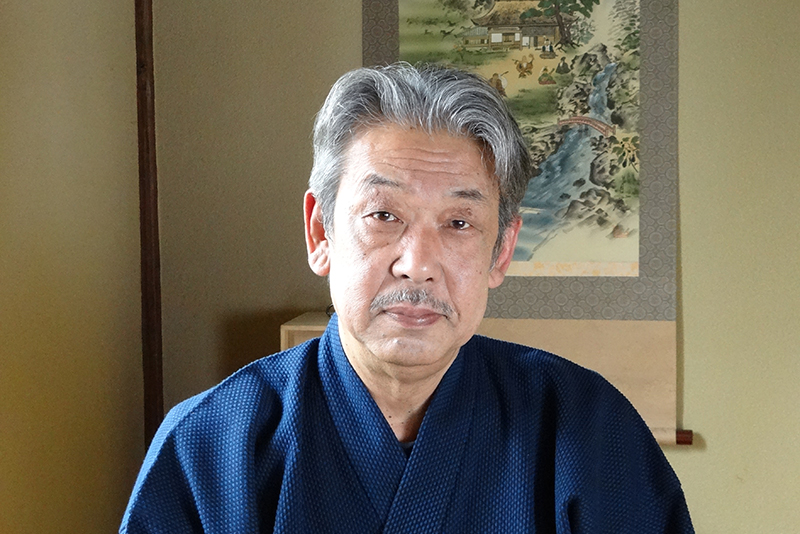
To mourn the death of Haruki Yukimura, we have asked people who knew him closely to share their memories. Our second guest is Eiji Koide, chairman of our company, Taiyo Tosho, who was Yukimura-ryū’s first student and received the rope name Haruwarabe.
Although the two were originally connected professionally as client and contractor, they also became teacher and student, as well as friends whose families socialized together. Koide looks back on their long relationship, which began at the end of the 1980s.
Editorial Department: Mr. Yukimura taught what he called “Yukimura-ryū” kinbaku to many people, including people from overseas. Steve Osada, for example, was one of them. But we have heard that, before he began doing anything resembling a formal apprenticeship system, Chairman Koide was the first person he taught kinbaku to. I understand the two of you were extremely close. Could we begin with how you first met Yukimura?
Koide: At first, there was an American company called Harmony that handled American bondage DVDs, although in those days they were VHS tapes, as well as photo books and things like that. The president of Fiction Inc., Mr. Orui, Izuru Horiuchi of Futami Shobo, and I, the three of us, were importing their products into Japan.
Editorial Department: Around what year was that?
Koide: About twenty-eight years ago, around 1988. As things developed, we started talking about whether we could make bondage productions using Japanese women. Japanese girls at the time didn’t have especially good figures, but we decided to start a series called BONDAGE FANTASY.
We used models such as Junko Kano and Marina Matsumoto, but the problem was the bondage. We just couldn’t do the tying very well. So I asked someone, “Could you introduce me to a director who knows how to tie?”
The person I asked was rather unreliable, and the person he introduced me to was Amatsu, meaning Haruki Yukimura.
Editorial Department: …
Koide: I was told, “A man named Hiroshi Amatsu came up from Osaka just last month and has started living in Ebisu.”
In Osaka, Amatsu had worked on Kansai local television, investigating supposedly haunted locations and doing reporting jobs. After that, because he liked erotic material, he came to Tokyo thinking he would become an adult-video director. But he had no work. About a month after arriving, he met me.
The thing was, Amatsu was a liar. When I asked him, “Can you tie?” he said, “I can do anything.”
Editorial Department: [laughs]
Koide: So I had him watch Harmony’s American bondage productions, and I think the first thing we shot was with Junko Kano. It was a production called BIZARRE! I’ll Torment You Bondage.
But at that time Amatsu couldn’t tie at all. I thought, “I’ve been tricked.”
Still, he was a very good person, and he worked extremely hard. And he had an excellent aesthetic sense. There is no question that he was an ideal director and cameraman for shooting bondage.
But as far as tying went, he couldn’t do it at all.
Editorial Department: So at that point he was essentially production staff.
Koide: I asked other cameramen to do things too, but Amatsu was better.
And he was a horny guy. I was fooling around a lot in those days too, so I’d often go to Ebisu, and Amatsu and I would pick up girls, bring them back, and fool around.
Eventually Amatsu got involved with a woman I’ll call S, and she became something like both his mistress and his secretary. I think that was the beginning of his history with women in Tokyo.
Editorial Department: [laughs]
Koide: He kept tying S as a model, over and over again, and that’s how he got better.
By the third or fourth production, he had already become reasonably skilled.
Some time after that, we started a live kinbaku event called Y’s Play Bondage.
For the first event, I invited Chimuo Nureki-sensei, whom I knew well.
Nureki used to say that S&M Sniper was a fraud and that Million Publishing was a gang of con artists. Even though he said things like that, for some reason he was quite fond of me. He’d tell me, “You don’t find many perverts like you,” and he invited me to every meeting of the Kinbaku Beauty Research Society.
Akira Naka was coming around then as a young kid.
When we did the first Y’s Play Bondage, Nureki absolutely tore into Amatsu.
Amatsu’s tying was originally in an American-bondage style, so no matter how you looked at it, it wasn’t Japanese-style bondage. Nureki, on the other hand, was much more oriented toward Japanese styles.
So Nureki ridiculed him mercilessly in front of the audience.
I think Amatsu must have been frustrated by that. He studied incredibly hard afterward and gradually became capable not only of bondage but of Japanese-style tying as well.
From that progression, Amatsu and Taiyo Tosho created a Japanese-style series called Hijō Nawa Banashi.
We made a lot of productions there that were centered entirely on rope.
But Amatsu’s greatest performance, his absolute best bout, was when he tied an actress named Mary Jane Kawai.
That one was incredible.
I’ve forgotten how many decades I knew Amatsu, and I’ve seen all sorts of his tying, but that particular time felt as though a god had descended into him.
It was beautiful, and the tormenting was incredible too.
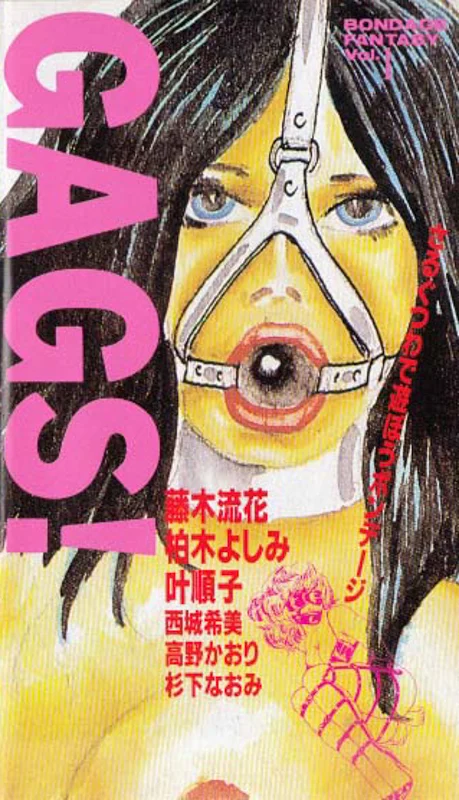
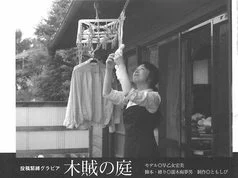
Director: Haruki Yukimura
Produced: 1990
Manufacturer: Taiyo Tosho
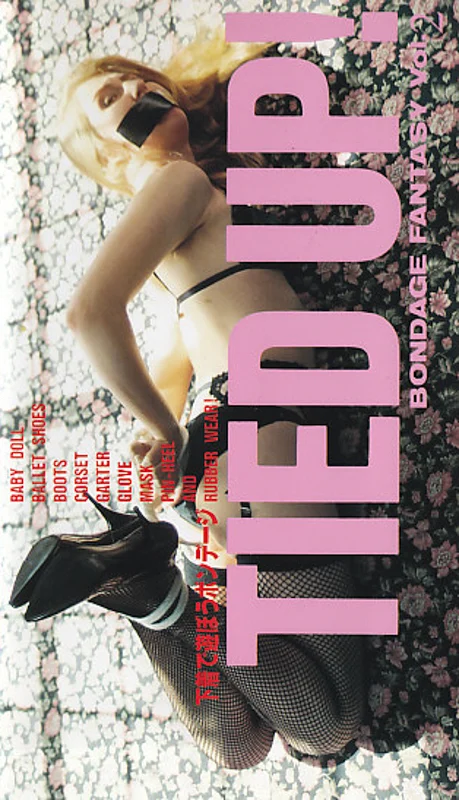
Director: Haruki Yukimura
Produced: May 1990
Manufacturer: Taiyo Tosho
Director: Haruki Yukimura
Release date: September 20, 1995
Manufacturer: Taiyo Tosho
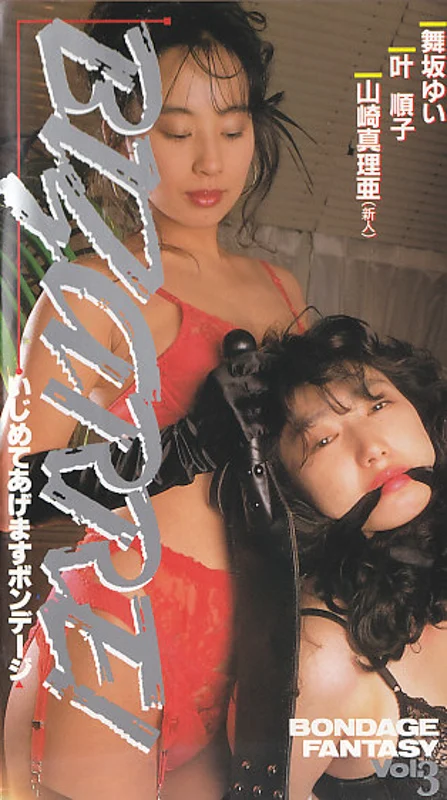
Director: Haruki Yukimura
Release date: June 1, 1990
Manufacturer: Taiyo Tosho
Editorial Department: Amatsu became involved in adult-video production after moving to Tokyo, but according to his official profile, he had apparently contributed work to S&M Sniper in 1982, before he was using the name Haruki Yukimura.
Koide: Really? I didn’t know that.
Editorial Department: He came to Tokyo in 1988, and by 1990 he had begun working for VIP and Cinemagic. So he had already been shooting bondage for Taiyo Tosho before that.
Koide: That’s right, before that.
After all, I’m the one who introduced Amatsu to Cinemagic.
Taiyo Tosho collaborated with Mr. Yokohata to make SM productions. The first was Bodycon Slave. From around the third production onward, we started having Amatsu direct the dramatic material.
That became a series called Bodycon Kidnapping Story.
After that, he began shooting frequently for Cinemagic.
But Nureki was still the rope artist.
I was about the only person who recognized Amatsu as a rope practitioner. The people around him still didn’t recognize him that way.
Editorial Department: They regarded him primarily as someone who made films.
Koide: Right. I think Yokohata and everyone else thought he was basically useless when it came to rope.
Editorial Department: And from there he acquired the technique very rapidly.
Koide: It really was rapid.
Editorial Department: For many readers, I imagine the image of Yukimura is of someone who appeared personally on camera and directly tied the women himself.
Koide: That came much later.
A woman I’ll call A used to come as a model for Y’s Play Bondage. There was Junko Kano and there was A.
Then S was discarded, and A became the next woman.
But there was no way Amatsu could ever be satisfied with just one woman. He’d have two, three, four women at the same time, and he’d tie them.
So he got a tremendous amount of practice tying.
A had a strong sex drive too, and she would bring other girls along because she was a lesbian.
The apartment in Ebisu became something like a den full of young women, with people having sex around the clock.
He tied constantly in that environment, and that’s how he improved.
Then, when he was appearing in productions, tying alone started leaving him with nothing to do, so he began touching the women.
Once he began touching them, eventually he exposed himself on camera.
And then the videos stopped selling.
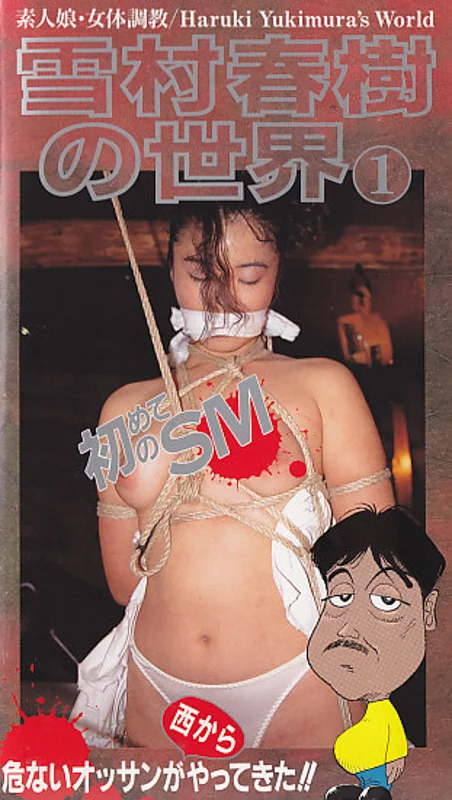
Produced: 1991
Manufacturer: Taiyo Tosho
Editorial Department: Taiyo Tosho released the World of Haruki Yukimura series in 1991. By this point your relationship with Yukimura had already become quite close.
Koide: Things had settled down to some degree by then, because two or three years had passed.
We started working together almost immediately, and at first I don’t think he was even able to take much other work because he was doing so much work for us.
We just kept shooting the Bondage Fantasy series.
Amatsu continued saying until the end that it was Taiyo Tosho’s money that put his two children through school.
The productions sold that well.
Editorial Department: Taiyo Tosho certainly released a large number of his works during that period.
Koide: Out of thirty days in a month, he was probably on a Taiyo Tosho set for around fifteen of them.
Editorial Department: And you were also going to the sets yourself, weren’t you?
Koide: I was there most of the time.
Editorial Department: So how did you go from that situation to learning rope from Amatsu?
Koide: At first, I was actually better at it than he was.
Editorial Department: [laughs]
Koide: No, seriously.
Then suddenly he became much better.
Eventually he started saying, “Koide-han, you should tie too.”
By then his method had become one of tying while exchanging jō, emotional or erotic feeling, with the woman.
He’d tell me, “You have to tie her while touching her. Exchange feeling with her.”
But all I wanted to learn was the technique.
If you put a woman I’ve never met before in front of me and tell me, the first time I meet her, “Exchange feeling with her,” I can’t do that. I’m not a male performer.
Editorial Department: [laughs]
Koide: That’s how I began learning from him.
I was his first student.
Shinobu Kasagi was his fourth or fifth student.
A little before that, he had begun calling what he taught Yukimura-ryū.
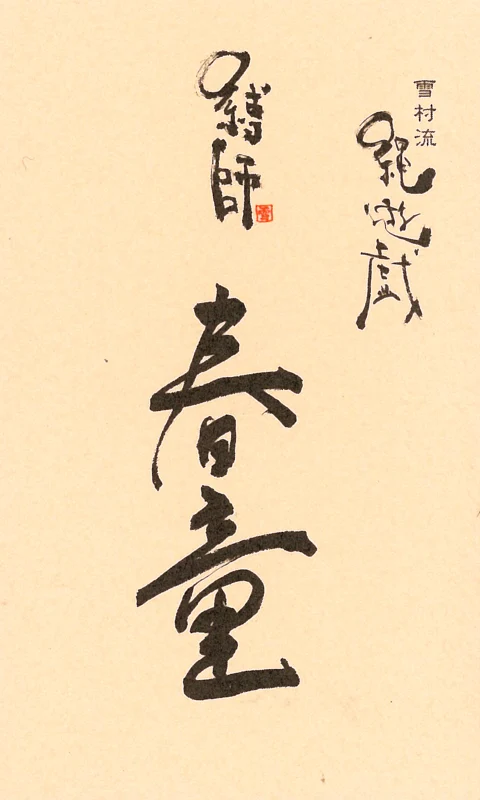
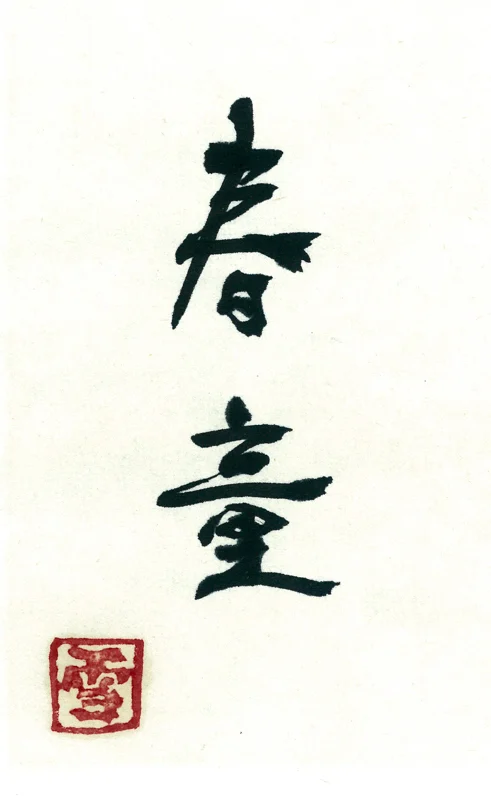
Kasagi was given the name Harubina, and he gave me the name Haruwarabe.
He had very beautiful handwriting.
But his handwriting back then and his handwriting later in life were completely different.
I wonder if that’s what happens to the handwriting of someone who is dying.
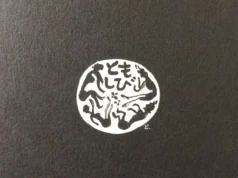
This is how he wrote back then. And this other one is from around 2006.
It had become much thinner.
And his handwriting right before he died was thinner still.
It became more linear and increasingly slanted upward toward the right.
The writing gradually became more spare and withered.
It looked as though it had been written by a different person.
Editorial Department: Almost as though the unnecessary elements were being stripped away.
Koide: Yes. His tying was the same.
Editorial Department: It seems to have become simpler.
Koide: In the past, he’d use ten or twenty ropes and boldly suspend a woman in the air.
But toward the end, he’d work on a single futon.
He would tell me, “Koide-han, you’ve got to tie a woman on one futon. You’re going to have sex on one futon anyway.”
He made me do it too.
During roughly the last two and a half years, he’d say, “Koide-han, one zabuton. Do it on a single zabuton.”
Editorial Department: Finally, could you tell us something about Yukimura as a person, apart from Yukimura the kinbaku artist?
Koide: Our families were close, so we traveled together a lot.
Guam, Saipan, Thailand, Osaka…
Those were prosperous times.
Whenever Amatsu had free time, he played with his children. They’d go swimming or play baseball.
He absolutely doted on his children.
So despite the sort of environment they grew up in, his children turned out surprisingly straight and well-adjusted.
There were always all sorts of strange women around, and I imagine the children had to put up with a lot.
As for Amatsu himself…
Apart from that, mostly what I remember is seeing him having sex.
Editorial Department: [laughs]
Koide: Somehow, I still can’t really picture him as dead.
I wish I could have said goodbye to him one last time.
Text: WEB Sniper Editorial Department
Original interview can be found here: http://sniper.jp/300special_issue/3013tribute_to_yukimura_haruki/_5_6.html