Kita Reiko, the principal artistic name used by Suma Toshiyuki, emerged as one of the most important visual figures in Japanese SM publishing during the early postwar years. Working for magazines including Kitan Club and Fūzoku Sōshi, and continuing to produce SM imagery into the 1970s, Kita inherited a visual culture shaped by historical punishment, erotic art, and the influential work of Itō Seiu. Yet his illustrations increasingly treated bondage as something more than a representation of punishment. Rope, posture, costume, landscape, and the arrangement of the body became subjects of visual exploration in their own right. These five images do not tell a simple story of one tradition being replaced by another. Instead, they show different ways Kita Reiko negotiated the space between older punishment imagery and the emerging visual language that would eventually become associated with modern kinbaku.
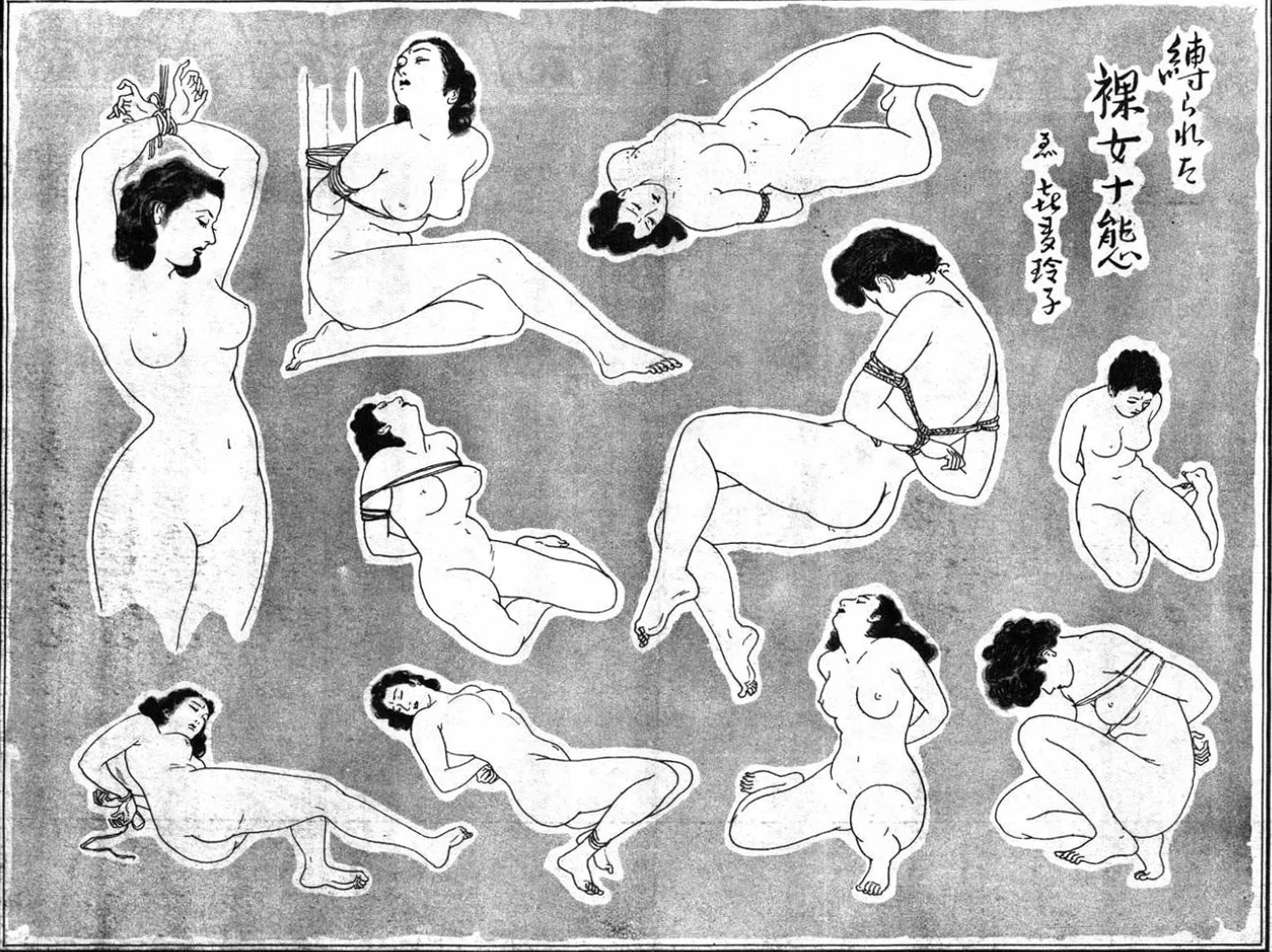
1“Ten Poses of Bound Nude Women” (縛られた裸女十態), Kitan Club, July 1952
Rather than depicting a single punishment scene, Ten Poses of Bound Nude Women presents ten restrained figures together as a field of variations. The viewer is invited to compare posture, silhouette, the position of the limbs, and the placement of rope across different bodies. That almost systematic presentation is what makes the page particularly significant. Bondage has become the subject of visual investigation itself, rather than simply one element in a larger story. Appearing at a pivotal moment in Kitan Club’s development as an increasingly SM-oriented magazine, the image demonstrates the new possibilities Kita Reiko was finding in the bound body as an independent artistic subject.
View “Ten Poses of Bound Nude Women” in Kitan Club, July 1952
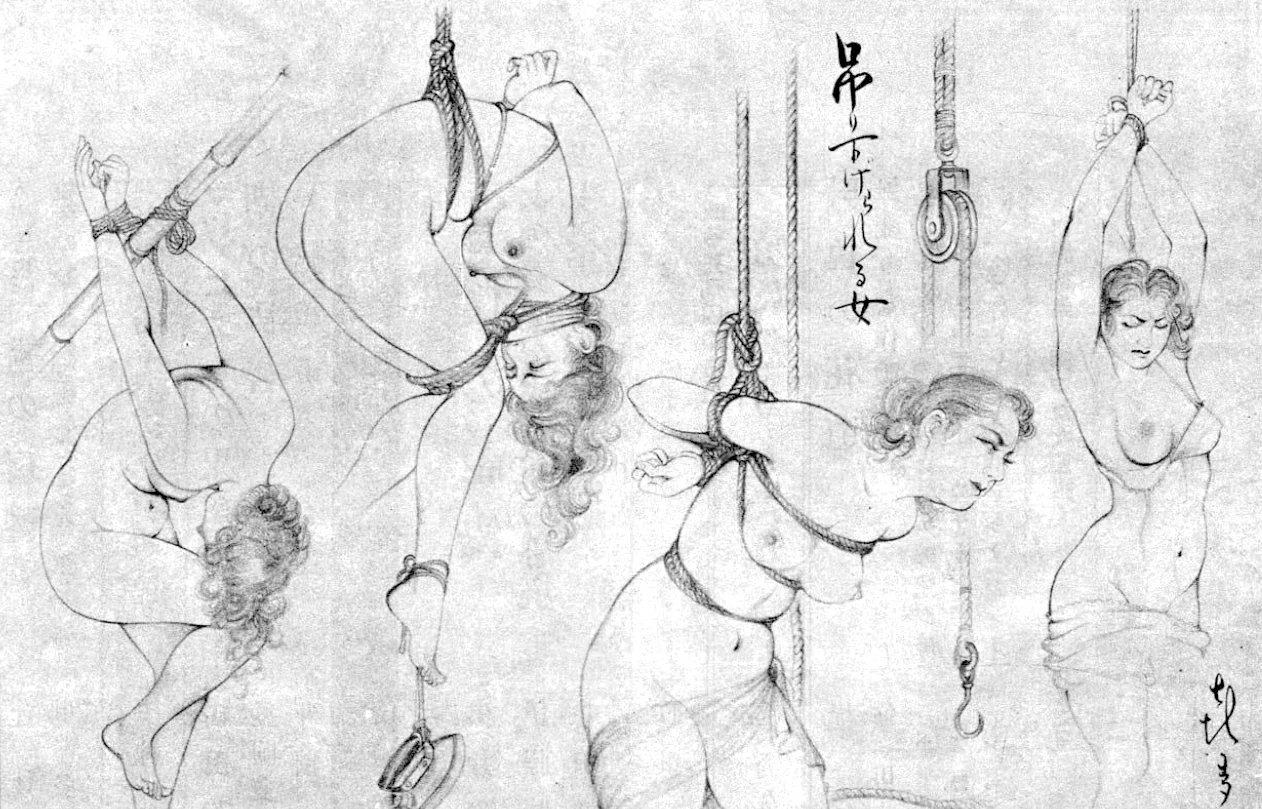
2The Suspended Woman (吊り下げられる女), Kitan Club, January 1953
In The Suspended Woman, Kita reduces the scene to a single suspended figure and allows the mechanics of the pose to dominate the composition. Elevation, balance, gravity, and the relationship between rope and body provide the image with its structure. There is relatively little narrative context compared with conventional scenes of punishment: what matters most is the unusual physical arrangement of the restrained body itself. Its presentation as a frontispiece reinforces that autonomy, giving bondage imagery the status of a featured visual attraction rather than an illustration subordinate to prose. The result is an early example of the sculptural approach to restraint that would become increasingly important in later kinbaku imagery.
View Frontispiece: The Suspended Woman in the Kitan Club January 1953 archive
3Kita Reiko’s Twelve Months: Part One, “Moon” (玲子十二ヶ月・月), Fūzoku Sōshi, September 1953
“Moon” places Kita Reiko in direct conversation with an earlier tradition. Itō Seiu had already used the twelve-month cycle to organize images of restraint and punishment around seasonal themes, and Kita adopts a comparable calendar structure for Reiko’s Twelve Months. Yet the effect is distinctly different. In “Moon,” seasonal atmosphere, the female body, and rope are integrated into an erotic composition rather than simply providing the setting for an act of punishment. The image therefore shows Kita neither abandoning Itō’s precedent nor merely copying it. He takes an established framework and redirects it toward a more intimate and aestheticized treatment of restraint, revealing how prewar motifs could be reworked for the postwar SM magazine.
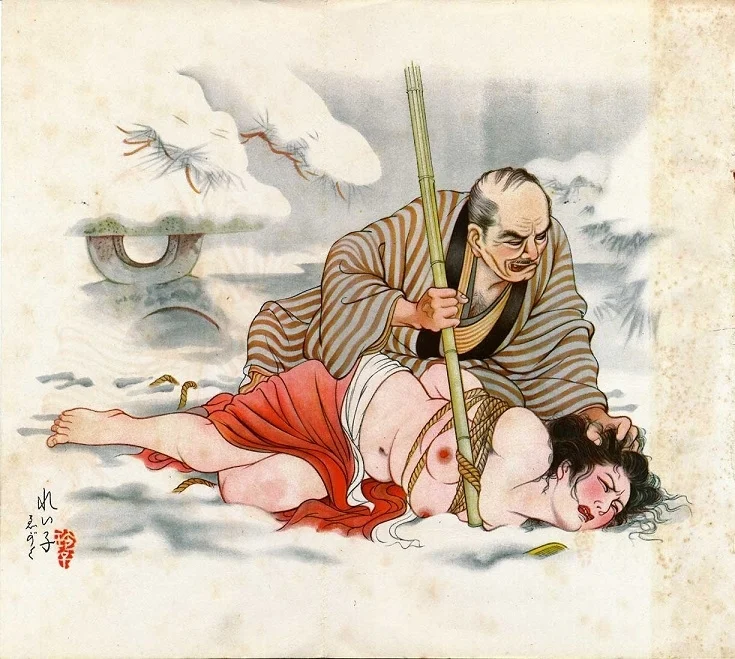
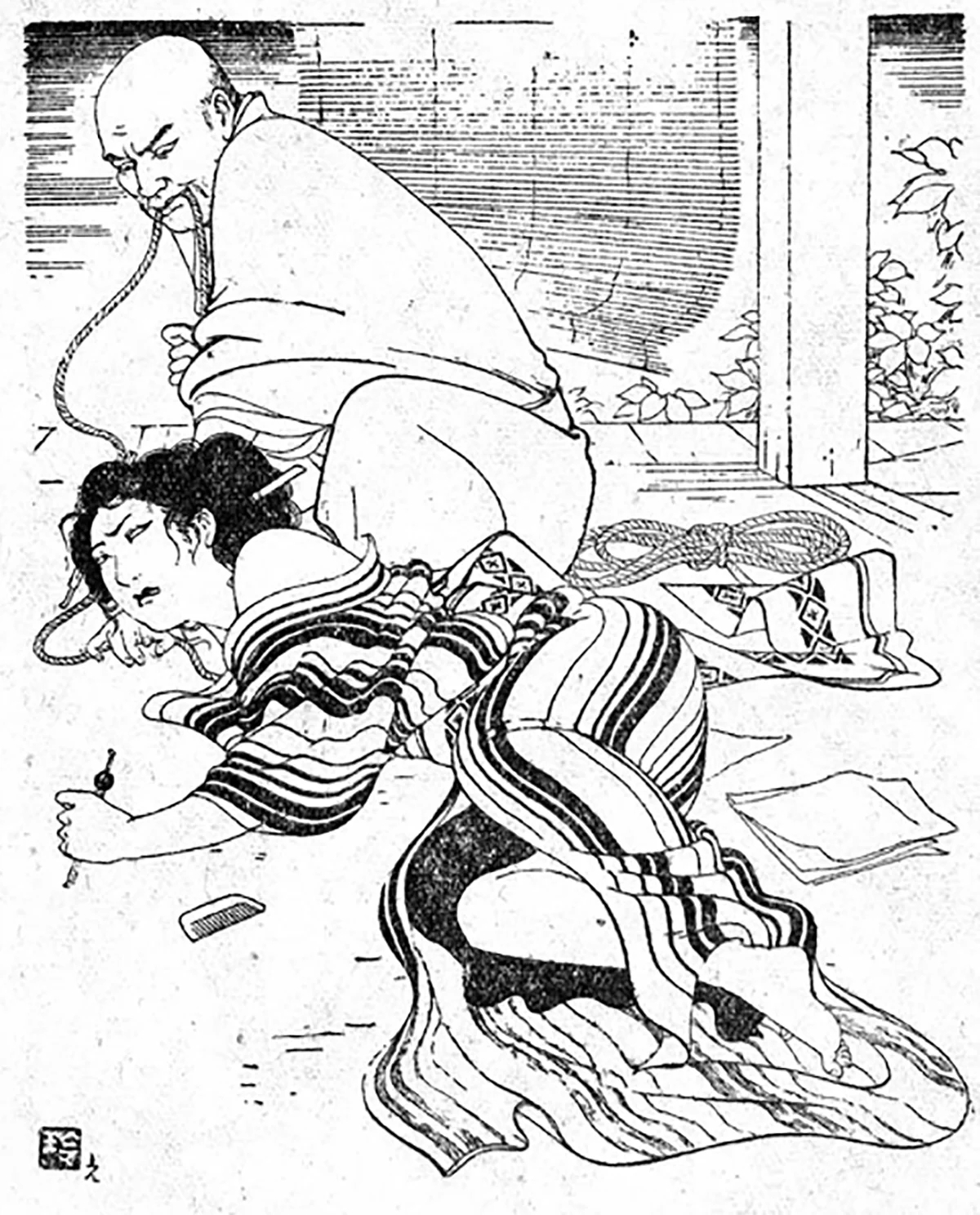
4Yukizeme (Snow Torture) Fūzoku Sōshi, January 1954
This January 1954 color plate shows another side of Kita Reiko’s work. An older man in traditional clothing dominates a bound, kimono-clad woman with a long bamboo pole against a wintry landscape, deliberately recalling the imagery of historical punishment. Here Kita does not remove the narrative or historical setting. He intensifies it. Rope, costume, bamboo, gesture, landscape, and color combine to create an elaborate theatrical tableau. The significance of the image lies in this fusion of old and new: recognizable punishment iconography remains present, but it has been reorganized for the erotic visual culture of a postwar SM magazine. Kita demonstrates that historical imagery could be retained while its purpose and audience were being transformed.
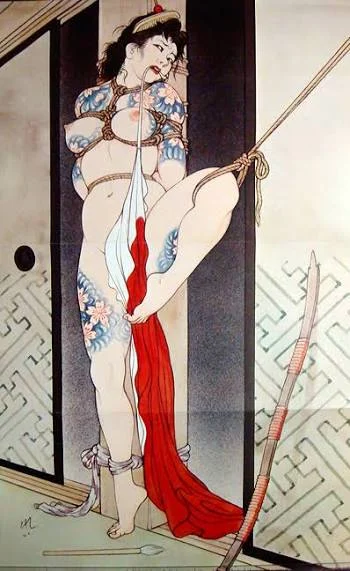
5“One-Leg Suspension” (片足吊り, descriptive title), SM King, 1974.
This later illustration shows how persistent Kita Reiko’s interest in the formal possibilities of restraint remained more than twenty years after his early Kitan Club work. The figure is constructed around a striking asymmetry: one leg remains low while the other is drawn outward and upward, creating a diagonal rope line that pulls against the strong vertical structure behind the body. The rope is relatively economical, yet it determines the posture and visual balance of the entire composition. Patterned fabric, vivid color, and a carefully staged interior give the work a decorative richness different from Kita’s early monochrome drawings, but the underlying concern with silhouette, tension, and bodily arrangement remains unmistakable. Rather than presenting a clean break between early punishment art and later kinbaku, this image shows how some of Kita’s earliest visual experiments continued to develop across decades of Japanese SM publishing.