I would like to acknowledge Ugo-san for his valuable input on this article.
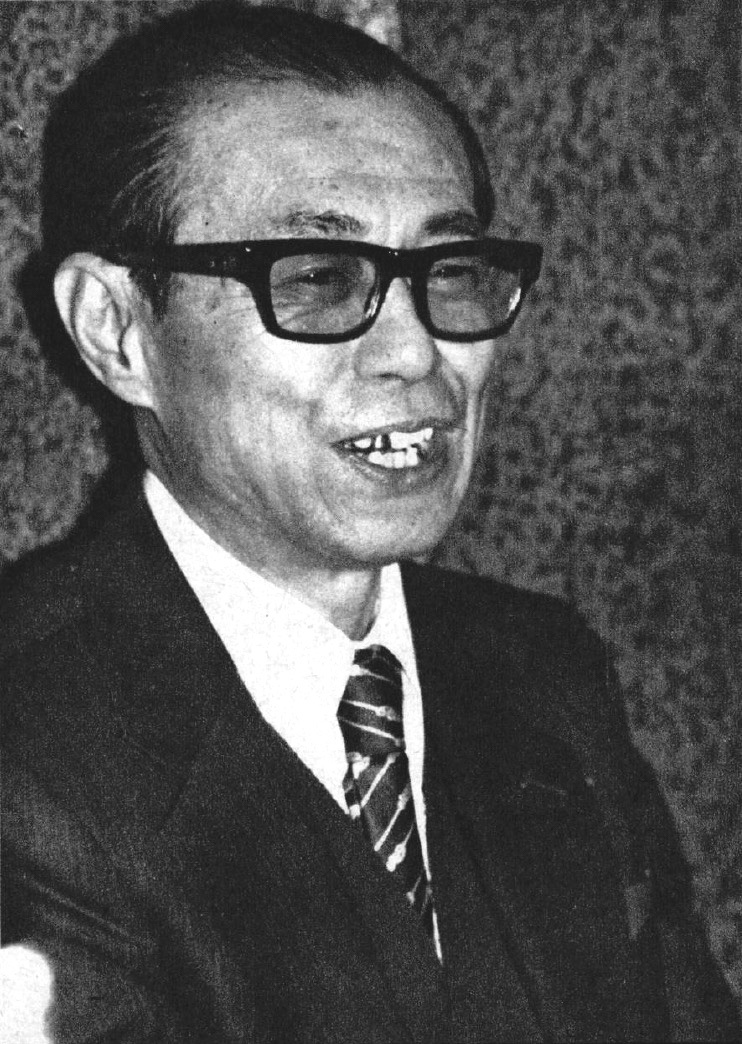
This is the story of a man and the times he lived through. In the grand scheme of things, he could easily have been forgotten, if not for others using one of his names after his death a quarter century ago.
Eikichi Tsukada was born on 15th March 1925 in Ashikaga City, Tochigi Prefecture, around 85km north of Tokyo, a hub for silk and textile manufacturing with then a population around 35,000. His mother had been a geisha during the Taishō era as conversationalist and host performing traditional arts, often for wealthy clientele and festivals, and it was her maiden name Osada he used for adult-themed work, always written in katakana, suggesting foreign origin, in all probability to disguise his activities.
Eikichi’s mother was said to have married and divorced repeatedly, changing her surname each time. The legal name on the family register is Tsukada, from, presumably one of his biological mother’s married names and possibly his father’s. However, for his printing business, his legal family name was Nagata, and he appeared to differentiate by using this for business, and Osada for SM-related activities. It is unclear what happened to his father, who may have perished during the war, but he remained very close to his mother, later with a Buddhist altar to her memory in his small living space 6 tatami mats in size.
There being no record of service, following World War Two Eikichi Tsukada attended Hosei University, Tokyo, and was stimulated by the works of Takashi Tsujimura, Tetsuzo Tsukamoto and others in magazines such as Liberal, Kitan Club and Uramado. Clearly enthused by sadomasochism and erotic suffering from a young age, he also loved to read Tatsuhiko Shibuzawa’s translations of the Marquis de Sade’s Justine, ou Les Malheurs de la Vertu and L’Histoire de Juliette ou les Prospérités du vice.
Shibuzawa had evaded conscription, so it’s also probable Eikichi Tsukada, 18 years old when student deferments against conscription into the military ended in 1943, and boys over 15 were pressed into service by 1945, did the same.
Liberal was the first post-war Kasutorizasshi adult magazine published on cheap, low-quality paper depicting sadomasochism and bondage between 1946 and 1955. It was often withdrawn for failing censorship.
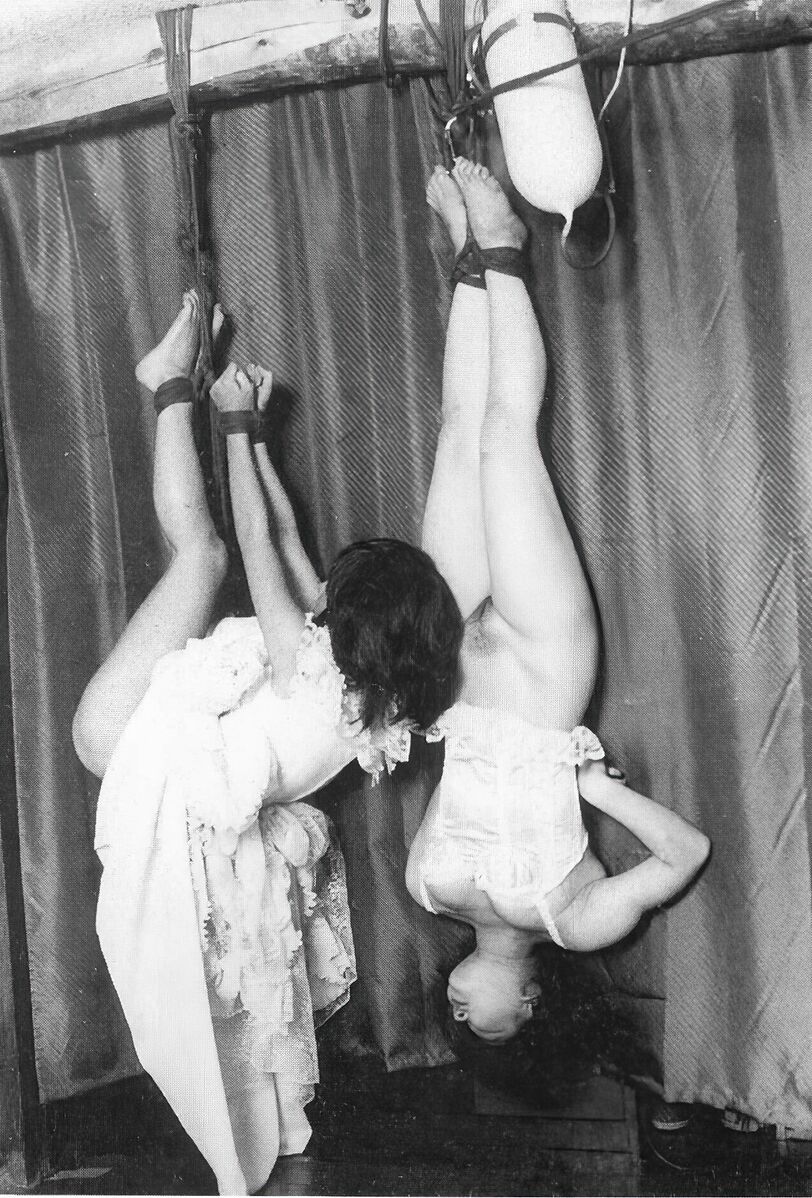
Kitan Club was published between 1947 and 1975, initially suffering until 1952 when the occupying United States led Supreme Commander for the Allied Powers Civil Censorship Detachment was dissolved, coinciding with the start of reader submissions on improved paper, and in A5 format.
The Marquis de Sade’s Justine and Juliette weren’t translated by Shibuzawa into Japanese until 1954, suggesting Eikichi Tsukada’s interest at university as a late student of 27~31 years of age logically within the period 1952~1956.
Having quit Kitan Club, Toshiyuki Suma became editor of Uramado, launched, initially under the title Kappa in 1956, combining sadomasochistic stories, some penned by Nureki Chimuo, and images, some with eg. Irving Klaw’s, and western models, including Bettie Page.
After university, Eikichi Tsukada worked for a sewing machine manufacturer before becoming a printer of trade magazines in Shimbashi, Tokyo with a presumably older relative. He married, and later lived with his wife near Ogikubo station, west of Shinjuku, Tokyo. Together they had a daughter. Common in honorific Japanese society, his family was never involved with, and his wife disapproved of his SM and rope bondage interests.
It is important to understand the time for context. Although there had existed a handful of erotic themed cafes in Tokyo during the Ero-Guro period of the 1920s and 30s, a few small striptease theatres began operating in Japan again almost immediately World War Two ended.
While Ito Seiu founded his Seme theatre group around 1925, suspended due to the war, in February 1947, Nobu Morikawa’s group incorporated nudity in the play Young Master Motchan and The Model at Joban-za, Asakusa, Tokyo. Toyoyoshi Hata opened Fifth Floor Theatre at Teitoza, Shinjuku later in 1947, where review shows combined comedians, singers, burlesque, topless dancers and Taijiro Tamura’s sadomasochistic themed show The Gate of the Flesh. By 1948 strip shows began spreading among the general public. Million Fu Theatre, Asakusa was putting on high-kick routines with dancers wearing split-crotch underwear, and in 1951 Ito Seiu wrote and directed two highly influential shows there – Maiden in Snowy Hell and Virgin Girl Tortured by Fire and Water. By the end of the 1950s, the slowly growing handful of strip clubs were hosting such diverse shows as topless sword fighting and female wrestling with the performance company Toyo Kogyo.
In 1960, torture-themed plays known as Zankoku Show (cruelty shows) were becoming popular in strip theatres, some often featuring large-scale stage productions, including dance, comedy sketches and live band performances quite different from the strip theatres of today. Yet censorship still remained, and Tatsuhiko Shibuzawa was arrested in 1961 for translating and publishing the Marquis de Sade in word only. Acquitted in 1963, he subsequently lost in a 1969 retrial, and was fined ~$640,000 at today’s value.
In 1962, Oniroku Dan’s story Hana to Hebi was serialised in Kitan Club following similar themes published only 8 years earlier in Pauline Réage’s Histoire d’O in France. Hana to Hebi was made into a feature length movie in 1965 by Yamabe Pro, starring Tako Hachiro, Shohei Yamamoto and Kozue Katori. Predominantly shot on cheaper black & white film, with only the pink sections in colour, the censors cut the premise of the film, and the original sections were lost, making the story disjointed and removing impetus for audience interest.
However, by the mid-1960s, although precarious, it was becoming increasingly possible to find live shows performed with nudity, masturbation, bondage, Kinbaku, whips, wax, enemas, needles, simulated seppuku disembowelment, etc.
Ars Nova, Asagaya, Tokyo opened in 1955 with space for 60 persons for the house Gekidan Arsnova company until it disbanded. It then became a rehearsal space and theatre for contemporary performing arts, pantomime, avant-garde and modern dance, Spanish flamenco and ballet. In 1961 Tatsumi Hijikata founded his Dark Dance School there with sadomasochistic undertones.
The first purported sadistic Zankoku Show performed from 1960 was said to be Yo Nakatani’s The Bride and The Mountain Man. The following year Kazuya Mukai was introduced to model Junko Aoki during an audition where she was tied in an Ebi shrimp position by Nureki Chimuo.
The relationship between theatrical activities and sadomasochistic shows is complex. Counterculture avant-garde theatre troupes began incorporating erotic elements into their performances, while strip theatres staged acts with Seme torture/cruelty elements for commercial and entertainment purposes. To make matters more complicated, many avant-garde theatre troupes performed in strip theatres to earn funds for their own productions. Strip theatre playwright Yo Nakatani, professional editor and writer who was also an SM enthusiast Nureki Chimuo and avant-garde theatre performer Kazuya Mukai thus entered sadomasochistic-themed theatre through three completely different routes.
Aged 37 in 1962, Eikichi Tsukada began attending underground performances of Michio (Rose/Roberto) Akiyama and his wife’s Aka to Kuro theatre troupe’s Zankoku Show. In 1964 Mukai and Aoki then began performing shows as Orijinaru no kai at Ars Nova. Using the term Kai (gathering), others would use Study Group, etc. to obfuscate socially risqué activity and attention from the authorities, deliberately adopting overly philosophical and complex facades to legitimize their own sexual preferences in a similar way used in the West.
Economically, following ruin and extreme poverty following surrender in 1945, the United States’ requirement for arms during The Korean War (1950-3) had kick-started Japanese heavy industry, and the coming years led to hosting the Olympic games and joining the Organisation for Economic Co-operation and Development in 1964. Prosperity was now growing, and consumer electronics, motorbike and car manufacturing underway by the mid-1960s produced a year-on-year boom through until the early 1990s, providing disposable funds for frivolous entertainment into a society and culture with highly differing views on sex, the erotic and suffering compared to the West.
Some strip theatres lasting only short periods due to illegal public obscenity closures, by the end of the 1960s more than fifty had at one time or another been open since the end of the war. Many were burlesque themed, again inspired by the West. Many also provided adult outlet for United States occupying servicemen. Most were located in the big cities, especially Tokyo and Osaka.
In perspective, the 1960s were also the time of global sexual liberation with more widely available contraception, and phenomena such as Love Hotels and Karaoke in Japan that still exist in abundance today. Young ‘First Generation’ Japanese (born after the end of World War Two) were receiving good salaries, and more open to experimentation than their elders, albeit more as consumers than open practitioners. It was also the period of reaction and demonstrations to The Vietnam War, and left-wing student protests in Japan.
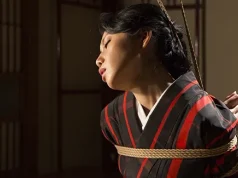
Although crude compared to the skill sets, materials and resources of today, sadomasochistic themes and diversity, including Kinbaku/Shibari rope bondage were growing in popularity. During 1964, Junko Aoki and Kazuya Mukai began their sadistic acts, becoming the leading performers of the time. Their initial 20-minute live shows would feature Aoki kidnapped, grabbed by the hair, tied with a Gote and crotch rope, gagged, inverted into the Ebi shrimp position, with hot wax and belt whipping. Together, they would go on to perform more widely across Japan until 1975.
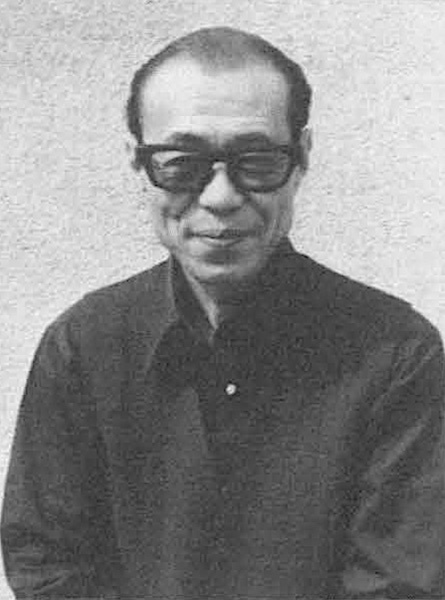
It is believed that Eikichi was inspired by Mukai and Aoki’s rapid popularity following a feature in Takashi Tsujimura’s SM Camera Hunt in the November 1964 issue of Kitan Club. It has been claimed he founded his own experimental theatre Osada Seminar at Ars Nova in 1965. However, there exists no evidence until a decade later in 1975 where one would have expected submitted reports or mentions from readers of Kitan Club or elsewhere. Osada Seminar may have existed irregularly as a very small taciturn group due to societal stigma in relative secrecy.
As a young man, Eikichi longed to be a film director. He enjoyed movies and Kabuki theatre, saw various other shows, avidly watched the Hishikushi workman TV series, and actor Makoto Fujita’s sword fighting movies, stirring him in the 1960s to become a 3rd dan in Kendo. He liked magic and could do orthodox tricks, loved seafood, eggplant and sake, had a sweet tooth, but did not like milk. He was known to be honest, mild-mannered, but sometimes stubborn. However, he was also different from more perverted ‘maniac’ enthusiasts of the time, preferring show rather than play. Osada Seminar thus became both the combined name of performances and also of the gatherings for enthusiasts – similar to the modern peer rope groups, but with open sadomasochism and eroticism.
From 1970 to 1972 Eikichi owned the tiny Mahjong shop Lotus near Kanda station, Tokyo with the aim to use it as a club. It was apparently only ever utilised for occasional small Osada Seminar meetings. In 1975 Experimental Drama Osada Seminar began, recorded in collaboration with Kazuya Mukai.
From 1971 Keiyu Tamai had been active in Osaka with nude and erotic shows. In October 1976 he relocated to Tokyo where Osada Seminar was held at his Theater Scandal above a car showroom in Roppongi. This is where 24-year-old avant-garde theatre troupe leader-director Denjiro Sakurada first met Keiyu Tamai and Eikichi Tsukada. With Denjiro’s GSG World Theatre in Nishi-Ogikubo, Tokyo, they began mutually helping each other with events for more than a year.
In 1975 Junichi Tate, freelance editor of the newly launched Japanese version of Playboy interviewed Eikichi, now using the name Osada, and took photos of a Shibari demonstration in their studios for a Q&A column in the magazine. However, as Hugh Hefner disliked SM, it was edited out of the American version.
Following the limited craze for sadomasochistic shows growing during the 1960s, the 1970s saw an explosion of SM magazine publications, and with it a significant increase of the number of active bondage masters. From the mid-1950s, industrial production had reached pre-war levels, and by the mid-1960s 41% of the labour force was employed by industry, with only 26% still in agriculture. The post-war education system produced high literacy rates, and was a strong contributor to modernisation. Until the 1973 oil crisis, Japan’s economy had been growing at an incredible ~17% per annum, dipping to a still healthy ~5%. High productivity growth had allowed wages to increase, and Japan had become the world’s third largest gross national product, just behind the United States and the Soviet Union. With emphasis turning to R&D, this trend would accelerate through the 1980s, by which time around 300 various SM related magazines had been published at one time or another.
Continue to Part Two
Sources:
長田英吉NOW
Tsurumi Shinsekai Eikichi Osada retirement Osada Seminar v Hiromi Saotome Dec 1989
Kazumi Ozawa ‘Diary of an M Woman’
Hiromi Saotome ‘After an apology to the late Eikichi Osada’, Hot Lady Magazine 20 May 1980
Shibari Technique, Bordeaux 1982
Eikichi Osada ドキュメント オーガズム
Eikichi Osada 長田英吉緊縛テクニック BIND TECHNIQUE
Weekend Super magazine
SM Spirits 1993
AdultRopeARt Yahoo group
Junichi Tate ‘Granpi Diary’
Interview and conversations with Yoshikatsu (Hige) Hayakawa 2019
Conversations with Kazumi Ozawa 2022