Fuzoku Soshi
October 1953
← Back to magazine archive
Issue Details
- PDF pages
- 177
Summary
The October 1953 issue of Fūzoku Sōshi shows the magazine pushing decisively toward a more coherent culture of seme, bondage, sadism, masochism, fetishism, and erotic classification. Its 150 PDF pages combine historical punishment imagery, staged bondage photography, illustrated portfolios, translated fiction, first-person confession, technical discussion, queer correspondence, criminal punishment, and pseudo-medical accounts of unusual desire. Compared with earlier issues, rope and torment no longer appear merely as scattered curiosities. They have become organizing principles through which bodies, sensations, techniques, and identities are repeatedly examined.
Read full summary Close full summary
Table of Contents 31 items
-
Mansfield Picture Gallery
Summary
A picture-gallery feature presenting a series of Mansfield illustrations and photographs depicting sadomasochistic tableaux, including whipping, bondage, female domination, male submission, outdoor scenes, and theatricalized punishment. Captions frame the images as examples of erotic fantasy and visual spectacle.
-
Wounded Man
Summary
Kitahara Rin’s illustrated feature “Wounded Man” depicts eroticized scenes of a restrained and distressed man, including overhead binding and a dominant female partner. The imagery emphasizes male vulnerability, physical restraint, and staged sadomasochistic drama.
-
Insect Fantasy: A Collection of Yōkai Illustrations
Summary
A collection of Ayako Nakagawa’s erotic illustrations depicts women bound, threatened, or overwhelmed by fantastical insects and yōkai-like creatures. The accompanying commentary emphasizes the imaginative compositions and the tension between realistic female bodies and surreal scenes of restraint.
-
Tormented Skin
Summary
A photographic feature presents staged scenes of women subjected to rope bondage and physical torment, including restraint with rough rope, insect imagery, and other sadistic tableaux. The accompanying text frames these photographs as stylized, contemporary representations of female bondage and suffering.
-
Fantasy of Abuse
Summary
A stylized erotic illustration visualizes an imagined scene of abuse: a woman is shown in a contorted, restrained pose amid looming shadowy hands and figures. The composition emphasizes helplessness, threat, and the fantasy of coercive domination.
-
Slave Festival
Summary
A translated erotic story in which Ascott and Chippers turn gambling and wagers into a contest of sexual domination, involving the coercive undressing, binding, humiliation, and abuse of women. The narrative escalates through rivalries, captivity-like confinement, and sadistic control, accompanied by explicit erotic illustrations.
-
New Styles of Torture
Summary
Kita Reiko’s illustrated feature surveys imagined “new styles” of erotic torture, combining commentary on changing tastes with scenes of women subjected to rope binding, positional restraint, electrical devices, medical procedures, and disciplinary stripping. The article presents these practices through sensational narrative episodes and accompanying erotic illustrations.
-
The Lady Who Sees Horses
Summary
A serialized erotic narrative about a married couple whose visit to a ranch exposes the wife’s intense fascination with horses. The husband’s curiosity, jealousy, and attempts to understand or direct her desires unfold through increasingly dreamlike encounters with horses and eroticized scenes of observation and restraint.
-
Buttock Fetishism
Summary
Yui Keiji’s essay examines an intense erotic fixation on women’s buttocks through personal recollections, observations of clothing and movement, beach encounters, cinema, and imagined scenes. It combines anecdotal testimony with reflections on the psychology, visual appeal, and social expression of buttock fetishism, accompanied by erotic illustrations.
-
San’yūtei Enchō
Summary
A literary discussion of rakugo master San’yūtei Enchō and his grotesque, supernatural narratives, including tales of murder, vengeful spirits, illicit desire, and tragic domestic relationships. The article surveys characteristic plots and figures from Enchō’s major works while considering their dramatic construction, sensational appeal, and place in late-Edo and Meiji popular culture.
-
Sadism in the Bedchamber of Love
Summary
A serialized erotic essay examining sadism within romantic and sexual relationships through scenes of domination, coercion, bodily control, and punishment. It considers the psychological dynamics of sadistic and submissive partners while presenting dramatized bedroom encounters.
-
A Sodomite’s Wanderings
Summary
A first-person autobiographical account of a male narrator’s wandering life and same-sex relationships in postwar Japan. The narrative recalls encounters with male lovers, work and poverty, gay bars and social marginality, presenting personal desire alongside the informal urban culture surrounding it.
-
How a Woman Loses the Power to Resist When Bound
Summary
An illustrated essay examining how binding allegedly diminishes a woman’s physical and psychological capacity to resist. It combines sexual-psychological speculation, historical and anecdotal examples, descriptions of restraint methods, and staged bondage scenes to present kinbaku as both erotic practice and technique.
-
Various Implements Used in Torture
Summary
An illustrated survey of implements used in eroticized torture and “torment,” including ropes, gags, straps, and striking tools. The text describes their applications and presumed bodily or sensory effects, while the accompanying drawings depict women subjected to restraint and corporal punishment.
-
Four Scenes of Abnormal Sadistic Abuse
Summary
A four-part erotic narrative depicts sadistic encounters involving coercion, restraint, humiliation, and the submission of women within domestic and interpersonal settings. The accompanying illustrations reinforce the staged scenes of bondage and abuse.
-
Sadistic Sexual Play
Summary
An essay on sadistic sexual play examines sadist and masochist identities, their psychological motivations, and forms of erotic experimentation, including tattooing and other bodily practices. Anecdotal cases and visual material frame the discussion within postwar sexual subculture and fetish discourse.
-
Reiko’s Twelve Months: Chrysanthemum
Summary
An illustrated erotic narrative from the “Reiko’s Twelve Months” series, depicting Reiko subjected to elaborate rope binding, humiliation, and coercive treatment by male figures. The accompanying prose presents the scene as serialized SM fiction.
-
Private Punishment and Torture in the Yoshiwara
Summary
A historical essay examining private punishment and torture in the Yoshiwara pleasure district, with emphasis on Edo-period practices used against prostitutes and other women. It surveys restraint, corporal punishment, abuse, and the social and institutional conditions surrounding these punishments, accompanied by dramatic illustrations.
-
Blood Drained from the Body
Summary
A first-person account of an obsessive fetish for menstrual blood and other bodily traces. The narrator describes secretly observing women, collecting and examining discarded sanitary materials, and incorporating these acts into fantasies involving his wife and a female employee.
-
Lesbos Correspondence
Summary
A correspondence feature presenting letters from women readers about same-sex desire, romantic and sexual relationships, secrecy, marriage, and emotionally difficult personal situations. The editor responds to readers with advice and invitations to continue contributing to the magazine’s lesbian-oriented community.
-
Notes on Perverse Gags
Summary
An illustrated essay examining erotic gags and forms of forced silence, including handkerchiefs, cloth gags, and other restraints. It discusses their visual and imaginative effects, connects them to punitive and captivity scenarios, and reflects on the psychology of gagging and female submission.
-
The Distorted Woman
Summary
An erotic fiction narrative follows Riko, a young woman in a school and boarding-house environment, whose relationships with a teacher and other women become increasingly coercive, emotionally manipulative, and sexually charged. The story combines jealousy, humiliation, domination, and psychological disturbance with recurring imagery of confinement, voyeurism, and nighttime encounters.
-
Sodomite Correspondence
Summary
A reader-correspondence section focused on men seeking same-sex relationships, presenting personal introductions, physical descriptions, romantic preferences, and requests for suitable partners. The editorial exchanges also discuss loneliness, self-presentation, compatibility, and the practical difficulties of arranging discreet meetings.
-
Sweet Feces
Summary
An erotic narrative centered on voyeuristic fascination with women’s urination and defecation, including fantasies of transparent or exposed toilets and encounters shaped by shame, curiosity, and sexual excitement. The accompanying illustrations reinforce the story’s staged and fetishistic visual imagination.
-
Splendid Delusions
Summary
A short erotic fantasy about a young man whose nighttime encounter with an alluring woman develops through drinking, seduction, and dreamlike erotic imaginings.
-
Women of the Execution Ground
Summary
A historical narrative of women subjected to brutal punishment and execution, combining accounts of execution-ground spectacles with scenes of captivity, bodily torment, and sexualized cruelty.
-
A Drifting Corpse
Summary
A crime-and-captivity narrative in which a woman is bound with rope, subjected to sadistic control, and ultimately becomes a corpse cast adrift on the water. The story combines eroticized restraint with murder, drowning, and the disposal of the body.
-
Confessions of a Fetishist
Summary
A first-person fetish confession tracing the narrator’s erotic fixation on women’s sputum, saliva, coughing, and related bodily fluids. The account moves from formative memories and voyeuristic observation to the deliberate collection and appreciation of phlegm as a fetish object.
-
The Husband of Twins
Summary
A fictional account of a man who becomes the husband and subordinate plaything of wealthy twin sisters. Across the episode, the sisters subject him to humiliating, coercive games involving nudity, restraint, animal imagery, and elaborate displays of female control.
-
Readers’ Exchange
Summary
A reader-correspondence section presenting letters, personal disclosures, requests, advice, and introductions among readers interested in erotic and SM culture. The exchange also includes reader-submitted visual material and editorial responses, reinforcing the magazine’s role as a participatory community forum.
-
The Fall of Kita-no-shō Castle
Summary
An illustrated historical-erotic narrative recounting the fall of Kita-no-shō Castle during the Sengoku period. It depicts the siege, defeat, deaths, escape attempts, and capture of women inside the castle, with captivity and coercive sexualized encounters forming a major part of the dramatization.
Highlights
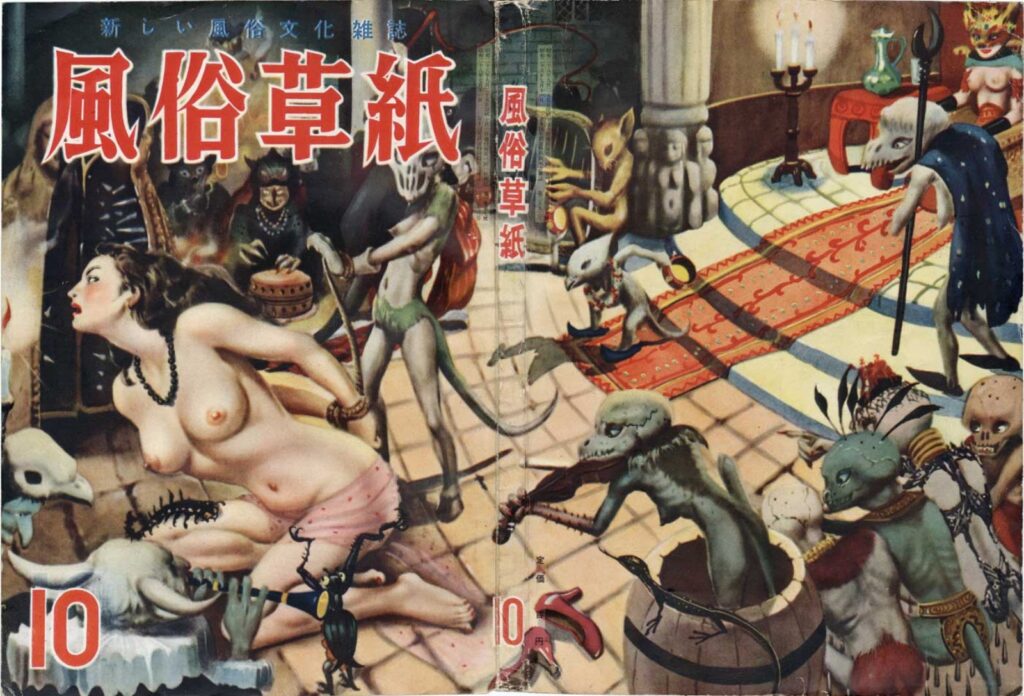
- The infernal cover surrounds a nearly nude woman with masked and animal-like figures, announcing the issue’s mixture of bondage, grotesquerie, fantasy, and punishment (PDF p. 1).
- The opening “Manbizm Art Gallery” presents women whipping, riding, supervising, and harnessing male slaves, making female domination a major visual theme (PDF pp. 4–8).
- A color plate shows a woman bound on the floor while a man prepares to restrain her more completely, establishing intimate rope coercion at the issue’s outset (PDF p. 3).
- Nakagawa Ayako’s “Fantasy of the Beetle” merges bondage with giant insects, ants, bodily infestation, and surreal torment (PDF pp. 11–12).
- “Skin Being Tormented” uses staged photographs and captions including “Beautiful Prey,” “After the Torment,” and “The Sadistic Pleasure of Coarse Rope” (PDF pp. 13–15).
- Kita Reiko’s “Fantasy of Ecstatic Cruelty” turns etsugyaku into an abstract visual world of inverted bodies and disembodied dark forces (PDF p. 16).
- A full-page portfolio arranges several restrained women as variations in posture, exposure, and pressure, extending the issue’s taxonomic approach to seme (PDF p. 18).
- The translated “Slave Festival” introduces Western enslavement and punishment fiction into the magazine’s Japanese SM environment (PDF pp. 20–28).
- Kita Reiko’s “New Styles of Torment” treats seme as an inventive art involving suspension, needles, strips, weights, and improvised techniques (PDF pp. 29–35).
- “Buttocks Worship Syndrome” frames fetishistic fixation as a first-person psychological case history (PDF pp. 46–51).
- “Sadism in Love and the Bedchamber” relocates sadistic behavior from punishment spectacle into romantic and sexual relationships (PDF pp. 60–64).
- “Sodomia Wanderings” explores male same-sex desire through urban travel, nightlife, prostitution, and personal encounter (PDF pp. 65–71).
- Itō Seiu’s “If a Woman Is Bound This Way, She Loses the Power to Resist,” Part Two combines rope instruction with images of women restrained to bamboo and other structures (PDF pp. 72–78).
- Kita Reiko’s “Reiko’s Twelve Months: Chrysanthemum” continues her seasonal reinvention of punishment imagery through domestic scenes of bondage and control (PDF pp. 91–92).
- The final third ranges across Yoshiwara punishment history, gags, Lesbos and Sodomia correspondence, women at execution grounds, bodily-fluid fetishism, and death imagery (PDF pp. 93–150).
Contributors
Named contributors represented in this issue:
- D. B. Anrera; translated by Miyake Ichirō
- Fujii Akira
- Fukada Tōru
- Hiki Kyōichirō
- Hinatsu Yukio
- Hitomi Kenjirō
- Hosoya Masako
- Itō Seiu
- Iwahori Hikaru
- Kageura Ken
- Kan Yoshichirō
- Kanagawa Saeko
- Kawano Kyōsuke
- Kita Reiko
- Kitahara Rin
- Masaoka Iruru
- Naka Michirō
- Nakagawa Ayako
- Oka Kazuma
- Ōya Reiko
- Saga Koyomi
- Sonomura Keiko
- Takatsuki Daizō
- Takigawa Tetsuo
- Toba Eiko
- Yoshino Seiichi
- Yui Keiji
English Translations from This Issue
- New Styles of Torture — Kita Reiko