Fuzoku Soshi
November 1953
← Back to magazine archive
Issue Details
- PDF pages
- 182
Summary
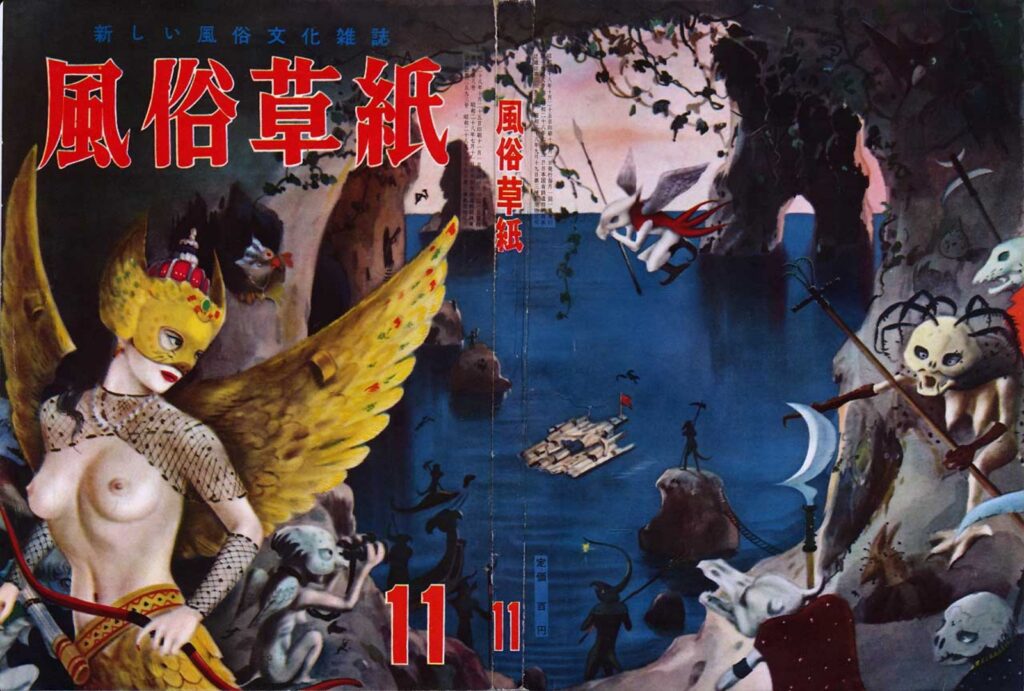
The November 1953 issue of Fūzoku Sōshi presents a magazine increasingly confident in treating bondage and seme as subjects that can be photographed, illustrated, classified, narrated, and debated. Its opening pages move immediately from a surreal fantasy cover to color bondage illustration and an extended photographic portfolio. The issue then ranges across rope, piercing and needle play, criminal interrogation, cross-dressing, sadistic pleasure, erotic dreams, slavery fantasy, queer desire, medicalized sexuality, and reader correspondence. These elements are not kept in separate compartments. The magazine continually places art beside alleged testimony, imported fiction beside Japanese punishment traditions, and erotic fantasy beside pseudo-scientific explanation.
Read full summary Close full summary
Table of Contents 23 items
-
Tormented Soft Skin
Summary
A photographic feature portraying a woman restrained in a room in a series of staged rope-bondage tableaux, accompanied by prose emphasizing her beauty, vulnerability, resistance, and emotional distress. The images include suspension, binding, and other forms of immobilization presented as dramatic erotic spectacle.
-
Spider
Summary
An illustrated melodramatic bondage story in which Kimiko is abducted and restrained by male antagonists, while other characters plot, threaten, and attempt to control her. The narrative combines captivity, coercion, jealousy, money, and rescue or escape tensions with sensational illustrations of physical restraint.
-
Rope and Tattoo
Summary
An illustrated feature on rope bondage and tattoo aesthetics, depicting women restrained in staged scenes with elaborate bindings, exposed bodies, and decorative tattoo motifs. The imagery emphasizes the visual and eroticized presentation of restraint and body adornment.
-
The Cross-Dressed Man
Summary
This fiction follows Chikichi, a lonely young office worker who secretly transforms himself with women’s clothing, a wig, and makeup, then ventures into public urban spaces as a woman. His encounters in theaters, nightlife venues, and social settings—especially his growing relationship with Mariko—create mistaken identities, erotic tension, and eventual confrontation with his male identity.
-
Interrogation in the Criminal Investigation Room: Women’s Section
Summary
A serialized investigative account of women questioned in Japan’s criminal investigation offices, describing surveillance, arrests, prolonged interrogation, physical abuse, intimidation, and coercive attempts to obtain information or confessions. The cases focus especially on women associated with Communist and other left-wing networks, while accompanying illustrations dramatize police custody and interrogation scenes.
-
The Sorrowful Cry of Pleasure
Summary
An adult fictional confession narrated by a wife describes her troubled marriage to a domineering husband whose coercive sexual games involve bondage, blindfolding, restraint, beating, and other forms of sadistic control. Her fear, humiliation, physical pain, and eventual conflicted erotic response are presented as an ambivalent mixture of marital anxiety and pleasure.
-
Dream Demon
Summary
An illustrated erotic fiction narrative in which Shōjirō and Natsuko become caught in escalating episodes of sexual pursuit, restraint, and domination. The story blends remembered encounters and dreamlike fantasy with jealousy, bodily vulnerability, and shifting control between the characters.
-
Rope and Corset
Summary
An illustrated erotic essay examines a young student’s fascination with nude models and paintings, linking artistic representation, voyeurism, and unconventional sexual desire. The accompanying artwork depicts a nude woman and an observing man in an intimate domestic setting.
-
Pale Eroticism
Summary
The article continues its discussion of nude models, artists, and erotic spectacle before shifting into a serialized bondage narrative, “Slave Festival.” The fiction depicts women being stripped, restrained, displayed, and subjected to coercive sexualized treatment by men, accompanied by explicit illustrations.
-
The Lady Who Wants to Be Naked
Summary
A sensational erotic fiction piece about a woman driven by an intense desire for nudity and sexual excitement. Through encounters with several men, the narrative depicts escalating exhibitionism, seduction, and unconventional group encounters, accompanied by explicit illustrations.
-
Slave Festival, Part Two
Summary
A serialized erotic-fiction installment depicting a “slave festival” in which women are restrained, stripped, humiliated, and sexually abused by groups of men. The narrative shifts among recollection, staged bondage scenes, and voyeuristic descriptions of coercion, bodily exposure, injury, and domination.
-
Gamiami’s Bedroom
Summary
An illustrated popular-fiction episode set in the world of naniwabushi performers, following O-Chiyo and other entertainers through professional rivalries, romantic entanglements, illness, violence, and police investigation. The narrative combines backstage and itinerant performance culture with melodramatic crime, betrayal, and blood-revenge motifs.
-
Naniwa-bushi and Blood
Summary
An illustrated erotic-grotesque tale in which a narrator’s encounters with an alluring woman unfold through dreams, corpses, bloodshed, and uncanny transformations. The narrative links obsessive desire and violent fantasy with factory life, social unease, and a recurring atmosphere of supernatural horror.
-
Cruel Demon
Summary
A sensational sexological and criminological essay examining sadism, masochism, sexual violence, and sexually motivated murder. It combines psychological interpretation with historical and contemporary case reports, including illustrated depictions of abusive and criminal encounters.
-
Reiko’s Twelve Months: Rain
Summary
A seasonal illustrated feature centered on Reiko and the motif of rain, presenting a romantic or atmospheric vignette within a twelve-month series.
-
The Endpoint of Sexual Abuse
Summary
A sensational pulp-horror narrative follows a physician whose fixation on a female patient develops into coercive sexual exploitation, sadistic bodily manipulation, and violent medical abuse. His attempt to reshape her into an imagined ideal culminates in extreme violence and apparent death, exposing the destructive consequences of obsessive desire and unchecked professional power.
-
At the End of Sadism
Summary
A psychological erotic fiction portraying a female beauty-salon worker whose fascination with women, particularly the beautiful Masako, develops into possessive and destructive obsession. The narrative combines salon life, intimate female relationships, sexual fantasy, jealousy, and visual scenes of domination.
-
Diary of Obsession
Summary
An illustrated historical essay examines sexual offenses involving Buddhist monks, nuns, temple women, and female attendants in the Edo period. Drawing on legal precedents and punishment records, it describes investigations, public exposure, confinement, flogging, exile, and other penalties, alongside reproductions of an illustrated punishment scroll.
-
Female Criminal Punishment Scroll
Summary
An illustrated case narrative portrays a male domestic worker subjected to degrading treatment and forced animal-like servitude by a female employer, including confinement in a doghouse. The concluding discussion considers male same-sex desire, effeminacy, gender nonconformity, and the social stigma surrounding such relationships in postwar Japan.
-
Bestial Human
Summary
An essay examining the preferences of male homosexuals, including favored physical types, age differences, personal appearance, occupations, social status, and masculine or feminine traits. It combines contemporary social observation with historical examples and literary references to discuss how same-sex desire and ideals of masculinity are expressed.
-
The Fault Line of Sodomy
Summary
An essay examining male same-sex desire and the boundaries by which sodomy or homosexuality was classified and understood. It considers sexual behavior, identity, and the social and psychological tensions surrounding non-normative male sexuality.
-
Lesbos Correspondence
Summary
A reader-correspondence feature presenting questions, personal accounts, and advisory exchanges concerning women’s intimate relationships and lesbian desire. The section also discusses erotic representation, bodily intimacy, romantic jealousy, and the community function of sharing experiences and advice.
-
The Closed Female Body
Summary
An erotic literary narrative about sexually charged encounters, bodily desire, and the gradual exposure of a woman’s concealed inner life. The story follows shifting relationships marked by secrecy, seduction, sexual experimentation, and transgressive or taboo intimacy.
Highlights
- A surreal cover populated by winged, masked, skeletal, and animal-like figures frames female vulnerability as an erotic nightmare world (PDF p. 1).
- The opening color plate depicts an inverted woman suspended by rope while a seated male figure controls the rigging (PDF p. 3).
- “Tormented Soft Skin” opens an unusually extensive photographic portfolio of suspension, floor bondage, furniture restraint, and gagging (PDF pp. 4–7).
- Captions such as “The Suspended Little Bird,” “The Scream of the Breasts,” “Sofa of Cruelty,” and “The Dog’s Bait” turn individual bondage poses into miniature narratives (PDF pp. 5–7).
- “Spider” uses rope as a web and the room as a trap, repeatedly depicting a woman captured and repositioned by male assailants (PDF pp. 8–11).
- “Rope and Needles” combines immobilization with concentrated piercing sensation and presents the two as complementary seme techniques (PDF p. 12).
- A multi-scene illustrated portfolio compares whipping, confinement, suspension, and improvised torment devices (PDF p. 14).
- “The Cross-Dressed Man” places male femininity and gender disguise within the magazine’s expanding world of abnormal sexuality (PDF pp. 16–27).
- “Interrogation in the Criminal Investigation Room,” continued, uses police authority and official procedure as frameworks for coercion (PDF pp. 28–35).
- “The Scream of Ecstasy” explores the unstable relationship between bodily pain, involuntary sound, and interpreted pleasure (PDF pp. 36–41).
- “Dream Demon” blends bondage, nightmare, assault, intoxication, and supernatural fantasy in a long illustrated narrative (PDF pp. 42–60).
- The second installment of “The Slave Festival” presents women’s enslavement and punishment as a collective public spectacle (PDF pp. 66–74).
- “Blood and Flowers” joins crime, injury, bodily investigation, and aestheticized death within a grotesque documentary frame (PDF pp. 82–95).
- Kita Reiko’s “Reiko’s Twelve Months: Rain” uses exposure to weather and unequal shelter as forms of domination (PDF pp. 96–97).
- “The Endpoint of Sexual Abuse” treats sexual violence through medical, criminal, and psychological explanation, revealing the unresolved boundary between documentary warning and erotic spectacle (PDF pp. 98–104).
Contributors
Named contributors represented in this issue:
- Akimoto Tsutomu
- Aoyama Izumi
- D. B. Anrera; translated by Miyake Ichirō
- Hinatsu Yukio
- Kayabiya Kazuhiko
- Kikuyama Susumu
- Kita Reiko
- Komai Noboru
- Kunikata Mariko
- Kurosu Yoshio
- Kusaba Yōko
- Masaoka Iruru
- Matsui Kōko
- Mimori Shirō
- Mitani Yōsuke
- Miyauchi Misao
- Ōba Reiko
- Ōtsuki Daizō
- Sakanoue Nobuo
- Sonomura Keiko
- Takeno Tōsuke
- Toba Eiko