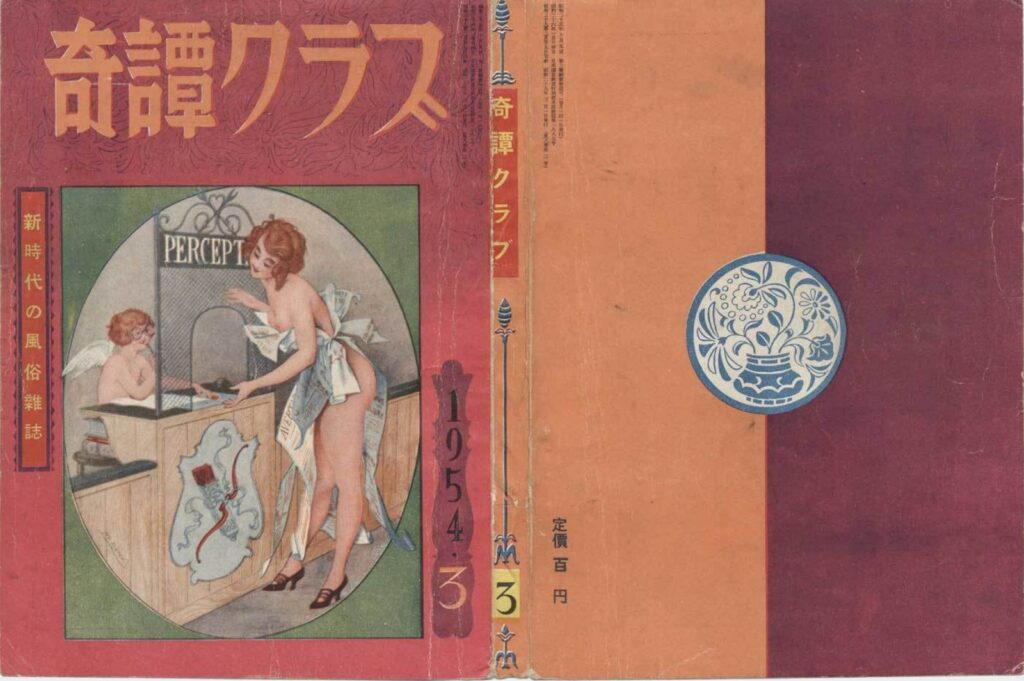
Kitan Club
March 1954
← Back to magazine archive
Issue Details
- PDF pages
- 221
Summary
The March 1954 issue of Kitan Club is considerably larger than the January and February scans and combines an extensive opening portfolio of bondage illustration and photography with fiction, confession, literary criticism, seppuku research, historical narratives, translated European material, queer testimony, and discussion of masochism as an artistic and psychological identity.
Read full summary Close full summary
Table of Contents 45 items
-
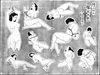
Five Forms of Variant Binding
Summary
An illustrated instructional feature presenting five variations of binding, shown through front, back, and side views of the restrained body. Arrows and diagrams clarify the positioning and movement involved in each rope arrangement.
-
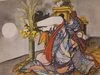
A Genroku-Era Scene
Summary
A historical erotic scene attributed to Itō Seiu, depicting a woman restrained within an elaborate Japanese domestic or entertainment setting while other figures observe or participate. The accompanying text frames the tableau through historical anecdotes linking eroticized restraint with past Japanese culture.
-
She Ran Like the Wind
Summary
A staged erotic photograph depicts women in a theatrical outdoor setting, posed with rope and apparent restraint while a male figure participates in the scene. The caption presents the women as running wildly, emphasizing motion, spectacle, and controlled erotic play.
-
The Skillful Trainer
Summary
A theatrical erotic photograph presents two women in revealing costume and harnesses, posed as if under the direction of an experienced trainer or handler. The scene combines performance, display, and themes of erotic discipline and submission.
-
Flagellation
Summary
A photographic feature titled “Flagellation” presents staged images of a woman in fetish attire using leather restraints and elevated or contorted poses associated with whipping and disciplinary scenarios.
-
Six Types of Gags
Summary
An illustrated instructional feature presents six types of gags, showing different cloth, strap, and metal mouth restraints and briefly explaining their construction and use.
-
The Tragedy of Defeat
Summary
An illustrated feature titled “The Tragedy of Defeat” depicts Japanese women being captured, restrained, and abused in the Manchurian wilderness, framing wartime sexual violence through sensational erotic imagery.
-
Punishment Illustrations
Summary
A portfolio of punishment illustrations by Minamikawa Kazuko presents staged scenes of women tied or otherwise restrained while subjected to whipping and other forms of eroticized discipline.
-
Inverted and Two-Handed Suspension
Summary
A photographic demonstration of inverted suspension and two-handed suspension, showing models restrained with rope and suspended from an overhead beam or support. The captions emphasize the rope arrangements and the suspended posture, including a position in which the subject remains supported only by the toes.
-
Shrimp Binding
Summary
A photographic feature demonstrating shrimp binding, in which the model’s limbs are folded and secured toward the torso with rope, producing tightly compressed, contorted positions. The images present the binding as a kinbaku restraint technique.
-
Crotch Binding
Summary
A photographic feature presenting rope-binding arrangements centered on crotch and waist binding, with models shown in kneeling and reclined positions. The images emphasize the placement and visual form of the bindings rather than providing extended prose instruction.
-
Compact Floor Restraint
Summary
A photographic feature depicting a compact floor-based restraint in which the model is bound in tightly folded, seated and reclined positions. The staged images focus on bodily compression, crossed limbs, and the visual presentation of immobilization.
-
A Bound-Woman Study
Summary
A two-page illustration feature depicting women subjected to elaborate rope bondage, gagging, and immobilizing positions. The scenes include a woman bound on a floor and another restrained near an electrical cooker, emphasizing staged peril and helplessness.
-
Her Majesty the Queen
Summary
Takiko’s illustrated “Her Majesty the Queen” presents a dominant woman physically controlling a submissive man, who lies restrained at her feet while she holds a cord or whip. The composition centers female authority, male submission, and theatrical erotic domination.
-
Cruel Women
Summary
An illustrated commentary on representations of cruel or dominant women, drawing on European paintings, illustrations, and scenes of female teachers disciplining male pupils. The feature emphasizes female authority, corporal punishment, humiliation, and the eroticized visual staging of male submission.
-
Stimulating Methods of Binding
Summary
An illustrated practical feature presenting stimulating methods of binding, with women shown restrained in rope configurations involving gagging, blindfolding, positional restraint, and specialized bondage apparatus. The images emphasize the visual technique and erotic display of rope restraint.
-
The Unfathomable Punishment Chamber
Summary
An illustrated erotic punishment feature depicting women subjected to elaborate bondage and disciplinary scenarios, including rope restraint, immobilization, and observation by male figures. The imagery presents a stylized fantasy of a mysterious punishment chamber rather than documentary reportage.
-
Two-Woman Half Suspension
Summary
A photographic feature demonstrating two forms of partial suspension bondage involving two women, with rope arrangements securing the body in standing and floor-based positions. The images emphasize suspension technique, bodily positioning, and staged kinbaku presentation.
-
A Woman Subjected to Interrogation
Summary
A historical illustration depicts an Edo-period woman subjected to a Suruga interrogation, a punishment in which she was suspended, struck, or rotated while bound. The accompanying caption identifies the scene as an example associated with the Mito domain and presents it as a record of historical penal practice.
-
To Everyone Who Loved Me: Yūko’s Farewell Message
Summary
Furukawa Yūko addresses readers in an extended farewell, reflecting on the letters, expectations, and emotional bonds formed through her published writings. She discusses her personal masochistic imagination and experiences, including bondage, flogging, sensory restriction, and other forms of eroticized discipline, while considering the psychological meanings of these practices.
-
The Room of Evil
Summary
A dark erotic fiction centered on Tomoko, the sculptor Saburō, and an unsettling private world where female bodies, rope restraint, nudity, and sadistic artistic display become objects of fascination. The accompanying illustrations depict bound bodies, grotesque transformations, and voyeuristic scenes, reinforcing the story’s macabre visual atmosphere.
-
From a Masochist’s Notebook
Summary
A serialized essay from a masochist’s notebook examining masochism through the life and writings of Sacher-Masoch, including Venus in Furs, marital domination, and the psychology of submission. It combines personal-style reflections, erotic anecdotes, historical and literary examples, letters requesting discipline, and illustrated scenes involving punishment, bondage, bodily fetishism, and bathhouse fantasies.
-
Seppuku Research Night Talk, Part Two
Summary
The second installment of a research essay on female seppuku surveys historical accounts, literary depictions, and artistic representations of women disemboweling themselves. It compares sources ranging from historical chronicles and fiction to modern visual treatments, emphasizing the cultural fascination with ritualized death and the female body.
-
Spiders and Butterflies: Benibana Sōshi
Summary
An illustrated serialized SM story follows schemes of seduction, deception, captivity, and violent punishment involving women and predatory male figures. Its dramatic scenes combine eroticized confinement and bodily threat with theatrical, sensational storytelling.
-
The Man I Sought, Part Three
Summary
This serialized erotic fiction installment follows a woman caught in coercive captivity and escalating confrontation. The narrative features rope and tape restraint, sensory restriction, threats, escape attempts, and knife violence within a melodramatic bondage scenario.
-
On the Beauty of the Transformed Female Body
Summary
A dramatic first-person narrative about the narrator’s obsessive relationship with Takeno Kiyoshi, whose vulnerable, transformed body becomes the focus of desire, restraint, fear, and emotional control. The story moves through domestic and childhood memories, rope bondage, knife threats, humiliation, self-harm, and Kiyoshi’s eventual death, blending erotic fantasy with psychological confession.
-
In Praise of Perversion
Summary
An erotic first-person narrative follows the narrator’s fascination with a beautiful woman named Junko, whose encounters develop into intense games of seduction, jealousy, domination, submission, and physical restraint. The story treats “perversion” as a source of desire while moving between voyeuristic observation and direct sexual involvement.
-
The Mysterious Woman and Me
Summary
An extended essay examines socially stigmatized sexual desires and the boundary between sexual “abnormality,” immorality, and criminal conduct. It argues for psychological and social understanding rather than reflexive condemnation, discussing masochism, sadism, humiliation, fetishistic behavior, pain and pleasure, gender hierarchy, and changing social norms.
-
Anatomical Tales: The Female Body Explained
Summary
An erotic narrative about a narrator’s encounters with a mysterious woman and her associate, unfolding through conversations, invitations, and increasingly elaborate scenes of female domination. The accompanying illustrations depict women being stripped, tied, gagged, suspended, and otherwise subjected to theatrical bondage and humiliating restraint.
-
Sentimental Education
Summary
An autobiographical account by a long-serving anatomy-laboratory assistant describing the dissection of female cadavers, including procedures, instruments, bodily observations, and the practical routines of postmortem examination. The narrator also reflects on the unsettling erotic, psychological, and voyeuristic associations that the work evokes.
-
Sexual Fluids
Summary
Itō Seiu presents an erotic-psychological narrative centered on Tōzaburō, his wife Yukie, and an aggressive encounter with a woman on a train. The later sections explore shame, sadistic impulses, bodily sensation and odor, bathing, pregnancy, breastfeeding, and the sensory dynamics of marital sexuality.
-
The Demonic Sisters
Summary
A historical erotic narrative set in a Meiji-era licensed quarter, following Toyokichi and other characters through brothel entertainments, sexual intrigue, coercion, and violent punishment involving the titular sisters. The story is accompanied by dramatic illustrations depicting the crowded pleasure district and its scenes of domination and abuse.
-
The Female Guard and the Prisoner
Summary
A serialized erotic captivity narrative in which the narrator becomes entangled with Mitsue and her sister, whose aggressive games of pursuit, restraint, humiliation, gagging, and bondage increasingly place him under their control. The story combines staged scenes of female domination with escalating fantasies of imprisonment and submission.
-
The Fall of Takato Castle: A Secret Record of Cruelty
Summary
A serialized historical erotic narrative recounting the fall of Takato Castle during the Takeda–Oda conflicts. The story depicts the capture, restraint, humiliation, torture, sexual abuse, and killing of women amid wartime violence, accompanied by explicit erotic illustrations.
-
Modern Masochism Art Criticism: Infatuation
Summary
A serialized erotic narrative follows Miki as he plots and observes intimate encounters involving his wife and other characters, while suspicion, jealousy, deception, and psychological fixation intensify. The episode uses staged voyeuristic situations, domestic concealment, and fetishistic details to explore modern masochistic desire and emotional manipulation.
-
The Stars Are Wet
Summary
A melodramatic erotic narrative about an intense relationship among two women and a man named Akashi, shaped by jealousy, illness, sexual coercion, and emotional dependency. The story culminates in scenes of captivity, bondage, and fatal knife violence.
-
Crime in My Youth
Summary
A first-person retrospective confession about the author’s sexual curiosity and transgressive experiences during boyhood, centered on his attraction to a foreign schoolmate named Mary. The account combines adolescent sexual psychology with recollections of coercive restraint and bondage.
-
The Intestines
Summary
A narrative centered on high-pressure enemas and invasive intestinal treatment, describing the physical sensations, medical apparatus, and escalating procedure in a fetishistic context. The article combines bodily distress, clinical imagery, and anal experimentation.
-
Cruel Women
Summary
Morimoto Aizō translates and explains excerpts from the 1901 German illustrated work Das Grausame Weib, presenting historical and literary scenes of women exercising cruel authority over men and enslaved people. The discussion is accompanied by illustrations depicting whipping, bondage, punishment, and racialized colonial domination.
-
Highland Exhibitionism
Summary
A first-person confession recounts an exhibitionist’s escalating compulsion to expose his body, beginning with furtive incidents around school toilets and developing into staged encounters with women in public and secluded settings. The narrative focuses on the excitement of being observed, deception, risk, and the reactions of unwilling spectators.
-
The Juvenile Prisoner
Summary
A first-person juvenile-prison memoir describes a boy’s descent into crime, arrest, remand detention, interrogation, confinement, corporal punishment, and eventual court proceedings. Its sensational account emphasizes institutional captivity, prison discipline, fear, humiliation, and the psychological impact of being treated as a hardened criminal while still a minor.
-
The Baptism of Marriage
Summary
An erotic wartime narrative recounts a Japanese soldier’s capture by Zhu Huilan, an educated Chinese guerrilla commander, and his subjection to her violent authority, restraint, and sexualized humiliation. The captive’s fear gradually becomes entangled with fascination and submission.
-
Confession of a Homosexual Man
Summary
A first-person life history traces a man’s same-sex desire from childhood and school experiences through later relationships, sexual encounters, secrecy, and emotional attachment. The account presents homosexuality as an enduring personal and psychological history shaped by social pressures and intimate bonds.
-
Modern Masochism Art Criticism
Summary
Hara Tadamasa’s extended criticism examines masochistic themes in Wagner’s Tristan und Isolde alongside films, fiction, and other cultural works. It interprets erotic suffering, gendered power, sexual psychology, and stylized representations of bondage, cruelty, and desire in modern art.
-
Publication Information and Advertisements
Summary
A composite section of publication information, reader correspondence, editorial notices, subscription and submission guidance, promotional material, and advertisements. It documents the magazine’s participatory reader community and the commercial and publishing networks supporting specialist erotic periodicals.
Highlights
- Five Forms of Variant Binding uses arrows and repeated views to make restraint appear as a sequence of transformable positions (PDF p. 5).
- Itō Seiu’s Genroku scene places erotic spectatorship inside an elaborate historical environment of costume, architecture, and public display (PDF p. 6).
- The imported visual portfolio brings together bridling, flagellation, gag design, and wartime captivity as an international archive of restraint (PDF pp. 7–12).
- Minamikawa Kazuko’s drawings reduce rope and bodily posture to bold graphic compositions rather than complete narrative scenes (PDF pp. 13–14).
- The photographic pages compare inversion, overhead attachment, shrimp binding, and crotch rope through controlled studio variation (PDF pp. 15–18).
- Her Majesty the Queen gives female authority a direct visual emblem by placing a standing woman over a man at her feet (PDF p. 21).
- To Everyone Who Loved Me addresses readers directly, showing how a recurring pseudonymous contributor could develop an emotional relationship with the magazine’s audience (PDF pp. 31–44).
- From a Masochist’s Notebook turns masochism into a continuing first-person identity informed by memory, fantasy, and literature (PDF pp. 52–58).
- On the Beauty of the Transformed Female Body explicitly treats bodily distortion and restraint as subjects of aesthetic judgment (PDF pp. 77–86).
- In Praise of Perversion attempts to reclaim a pathologizing label as a source of individuality and imaginative value (PDF pp. 87–92).
- Itō Seiu’s Sexual Fluids combines folklore, antiquarian research, and intimate bodily material in a form unavailable to polite mainstream publishing (PDF pp. 115–125).
- The Female Guard and the Prisoner makes female dominance institutional, using prison surveillance and restricted movement as its organizing hierarchy (PDF pp. 133–148).
- The Fall of Takato Castle confirms that the issue continues substantially beyond page 150 and uses siege history as a framework for suffering and vulnerability (PDF pp. 149–158).
- The late confession cluster gives exhibitionism, juvenile imprisonment, marriage, and male homosexuality distinct first-person or case-history forms (PDF pp. 191–210).
- Modern Masochism Art Criticism closes the substantive issue by treating masochistic representation as an artistic field with recognizable themes and standards (PDF pp. 211–217).
Contributors
Named contributors represented in this issue:
- Azuma Shin; credit reading uncertain
- commentary by Morimoto Aizō
- composition by Sugiura Kōji
- composition by Tsujimura Takashi
- Furukawa Yūko
- Futamata Shizuko
- Hara Tadamasa
- Itō Seiu
- Kawada Nobuyuki, credit reading uncertain
- Kawamoto Yukio
- Kawano Kyōsuke
- Kawauchi Shigeo, credit reading uncertain
- Kazuhisa, artist credit reading uncertain
- Kishino Shigeru, credit reading uncertain
- Koseki Shunji, credit reading uncertain
- Matsui Raikō
- Miji Otoko, romanization uncertain
- Minamikawa Kazuko
- Nakayasu Hiromichi
- Naoki Fujio
- Numa Shōzō
- Okada Sakiko
- Oniyama Kensaku, romanization uncertain
- Oniyama Tadamasa, romanization uncertain
- Sakurai Eiichi
- Takiko
- Tobita Kinryōji
- Tomoe Torikun, romanization uncertain
- translated and explained by Morimoto Aizō
- Yoshida Ichitarō