Kitan Club
May 1956
← Back to magazine archive
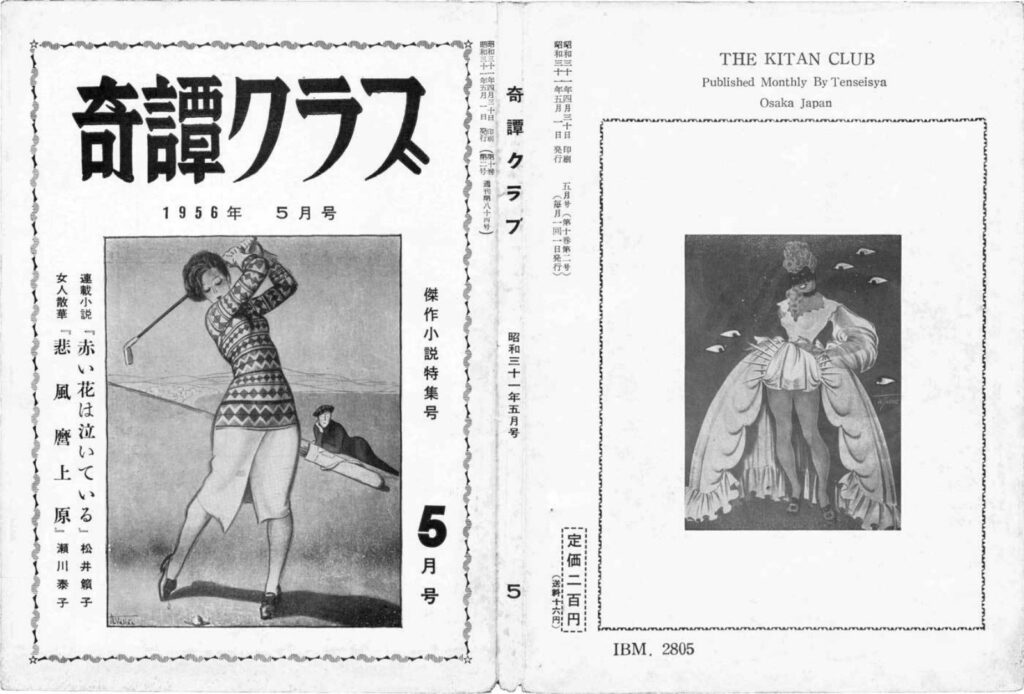
Issue Details
- Volume
- 10
- Issue
- 2
- PDF pages
- 169
Summary
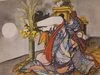
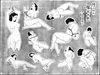
The May 1956 issue of Kitan Club identifies itself as the fourth issue following the magazine’s revival and presents itself as a special issue devoted to notable fiction. Its editorial mixture is broader than that label suggests: extended serialized and stand-alone fiction appears alongside prison reportage, autobiographical confessions, fetish studies, reader testimony, photographic portfolios, imported American imagery, and reports on staged performances. The front matter establishes the issue’s visual identity through Takashi Shima’s theatrical bondage illustration, an editorial photographic portfolio titled “Expressions of the Models,” images reproduced from the American magazine Bizarre, and Shōhei Miyazaki’s dramatic illustration of a stewardess tied to an aircraft.
Read full summary Close full summary
Table of Contents 25 items
-
The Red Flowers Are Crying, Part Two
Summary
The second part of Rōko Matsui’s serialized erotic novel follows Misako’s troubled relationship with Natsuo through jealousy, marriage, betrayal, coercive control, and increasingly violent bondage encounters. The narrative combines romantic melodrama with captivity, restraint, and sadomasochistic power struggles.
-
Ten Months Imprisoned
Summary
Ichirō Haruta presents an account of ten months in a postwar prison, describing confinement, prison routines, illness, institutional discipline, fellow inmates, and emotionally charged visits from a wife. The piece emphasizes the psychological strain and social isolation produced by incarceration.
-
Taste of the Devil
Summary
Nobuo Takagi’s first-person account explores erotic fascination with bodily excretions, odors, taste, and medical examination through encounters involving cabaret workers and other women. It treats taboo bodily sensations as a form of fetishistic experimentation and reflects on the psychological origins of such desires.
-
Complete Submission
Summary
A dark fictional account of a son subjected to escalating paternal violence, humiliation, and physical control until domestic submission becomes nearly absolute. The narrative presents coercive family authority as a grotesque form of bondage.
-
The Chilling House of Strange Tales
Summary
A fictional horror narrative set around a theatrical “house of strange tales,” where visitors watch elaborate tableaux of torture, punishment, hanging, murder, and supernatural terror performed by costumed actors. The story emphasizes the disturbing relationship between staged violence, eroticized suffering, and spectatorship.
-
Body-Odor Diary
Summary
A first-person diary-style fiction about a man’s obsessive attraction to women’s body odor, sweat, bodily traces, and worn clothing, culminating in increasingly intrusive attempts to pursue and control his desired women.
-
The Palace of King Jie
Summary
A historical erotic fantasy set in the palace of King Jie, depicting courtly excess, sexual coercion, captivity, punishment, and the domination of women within an ornate Chinese-imperial setting.
-
A Late Awakening
Summary
An erotic literary narrative in which a seemingly ordinary encounter gradually develops into an unsettling sequence of intoxication, domination, restraint, and sadistic sexual play involving a woman named Yukiko.
-
The Gray Notebook
Summary
A diary-like literary work centered on obsessive enema practices, rectal irrigation, bodily control, and fetishistic fantasy, supplemented by pseudo-medical reflections on the history and psychology of the practice.
-
Crucifixion in a Box
Summary
A historical erotic crime narrative follows Oume as she is accused, captured, and subjected to escalating sadistic punishment, culminating in her being nailed into a box in a crucifixion-like ordeal.
-
A Letter from a Female Sadist to Her Slave
Summary
Presented as an intimate letter, a female sadist addresses her slave and describes the emotional authority, discipline, and erotic control she exercises over him.
-
The Nadeshiko Blossoms Have Fallen: I Committed Seppuku
Summary
In an “abnormal experience” account, a woman recalls wartime domestic service and devoted submission to her husband before describing her attempt to follow him in death through ritualized self-disembowelment.
-
Strange Zen
Summary
A first-person account describes a visit to a female physician whose acupuncture examination and treatment gradually become an eroticized, disciplinary encounter involving undressing, needles, bodily exposure, and compelled postures.
-
Punishment and Fetishism
Summary
This erotic narrative follows Ranako and Yoshio through an escalating regimen of punishment and fetishistic training, featuring ropes, restrictive clothing, staged scenarios, role reversal, and elaborate bodily discipline.
-
Bladder Research, Part Three
Summary
Presented as a confessional study, this essay surveys the navel as a site of bodily fascination and erotic experimentation, combining anecdotal practices, folk and medical explanations, and discussion of abdominal sensations and treatment.
-
Physiological Desire
Summary
A first-person narrative follows a man’s lifelong fixation on being buried and physically immobilized in sand, culminating in an intense encounter with laborers who enact his unusual desire. The story presents bodily restriction as a source of psychological and erotic gratification.
-
Crimson Demon Palace
Summary
This erotic fantasy depicts a young man drawn into the orbit of a striking woman whose beauty, mystery, and commanding behavior gradually turn fascination into coercion, humiliation, and bodily torment.
-
Older Sister and Younger Brother
Summary
A psychologically charged narrative portrays the evolving bond between an older sister and her younger brother, combining childhood physical contests and discipline with incestuous longing, possessiveness, and adult erotic tension.
-
Longing for the Shadow Flower
Summary
A first-person confessional memoir recounts the narrator’s fascination with and involvement in the secret binding and punishment of an older sister, later connecting the experience to the narrator’s own erotic imagination and conduct.
-
The Beauty of Bygone Days
Summary
An erotic fictional narrative follows Kaori and Tanaka through marriage, psychological domination, repeated rope bondage, punishment, and shifting memories of desire, jealousy, and wartime-era social life.
-
Sad Wind over the Dusty Plain
Summary
A serialized historical novel set amid Sengoku-era conflicts in Aizu, it follows rival warlords, shifting alliances, military campaigns, and the violent fates of those caught in the struggle, including women entangled in political and erotic power relations.
-
Manuscript Gleanings
Summary
An editorial feature presenting and commenting on submitted manuscripts, including excerpts and discussion of unusual erotic and supernatural writing, while inviting further contributions from readers.
-
Abnormal Monologue
Summary
A fictional first-person monologue in which a woman recounts marital suspicion, a troubling attraction involving a snake, and increasingly explicit bodily and sexual preoccupations, framed as an exploration of abnormal desire and behavior.
-
The Woman Who Laughs under Torture
Summary
An erotic fiction narrative follows Maki and others through escalating scenes of rope bondage, coercion, punishment, and sadistic sexual control, framed as a dramatic story of a woman who laughs under torture.
-
Reader Correspondence
Summary
A reader-correspondence section presents letters and editorial responses concerning the magazine’s fiction, photography, bondage themes, reader expectations, submissions, and the continuing development of its specialist readership.
Highlights
- The opening visual section combines an original theatrical bondage illustration, photographs of bound models, imported Bizarre magazine imagery, and a dramatic stewardess-in-peril illustration, establishing the issue’s mixture of Japanese production and foreign fetish iconography. (PDF pp. 6–9).
- The second installment of “The Red Flowers Are Crying” develops a prolonged story of marital betrayal, jealousy, possessive violence, and emotional captivity. (PDF pp. 11–20).
- “Ten Months Imprisoned” offers unusually detailed documentary writing about prison wards, medical treatment, solitary confinement, punishment, inmate labor, family visits, and correspondence. (PDF pp. 21–27).
- “The Chilling House of Strange Tales” records the construction and performance of traveling sideshows and haunted attractions, including staged suspension, restraint, torture tableaux, and audience reactions. (PDF pp. 37–42).
- “The Palace of King Jie” uses the legendary Chinese tyrant as a frame for a modern fantasy of authority, humiliation, bodily display, and escalating cruelty. (PDF pp. 45–50).
- The cluster beginning with “The Gray Notebook” moves from personal recollection into self-injury, captivity, unusual ritual practice, and direct communication from a self-described female sadist. (PDF pp. 57–76).
- “Punishment and Fetishism,” “Bladder Research, Part Three,” and “Physiological Desire” present desire through analytical, medicalized, and autobiographical frameworks rather than conventional fiction. (PDF pp. 82–96).
- The late-issue sequence of “Crimson Demon Palace,” “Older Sister and Younger Brother,” “Longing for the Shadow Flower,” and “The Beauty of Bygone Days” forms a substantial block of psychologically charged fiction concerned with family, memory, compulsion, and forbidden desire. (PDF pp. 97–128).
- “Sad Wind over the Dusty Plain,” identified as a women’s grotesque tale, is one of the issue’s longest later narratives and includes an illustrated map within the story. (PDF pp. 133–143).
- The closing reader-correspondence section combines personal letters, editorial responses, club notices, photographic offers, publication information, and community announcements. (PDF pp. 161–169).
Contributors
Named contributors represented in this issue:
- Aiichirō Nagaoka
- Editorial Department
- Ichirō Haruta
- Jūzō Taketani
- Kō Tayama
- Kōsuke Saji
- Mika Moriyama
- Misao Kitagawa
- Natsuo Adachi
- Nobuo Aoyama
- Nobuo Takagi
- Reisaku Karii
- Ritsuo Sudō
- Rōko Matsui
- Ryūichi Yazaki
- Seiryū Kishimoto
- Shinji Sakata
- Shōhaku Aizawa
- Taichi Mori
- Takashi Tsujimura
- Tamaki Yoshii
- Tōma Mineno
- Toshino Haruki
- Yasuko Segawa
English Translations from This Issue
- Body-Odor Diary — Reisaku Karii