Kitan Club
April 1956
← Back to magazine archive
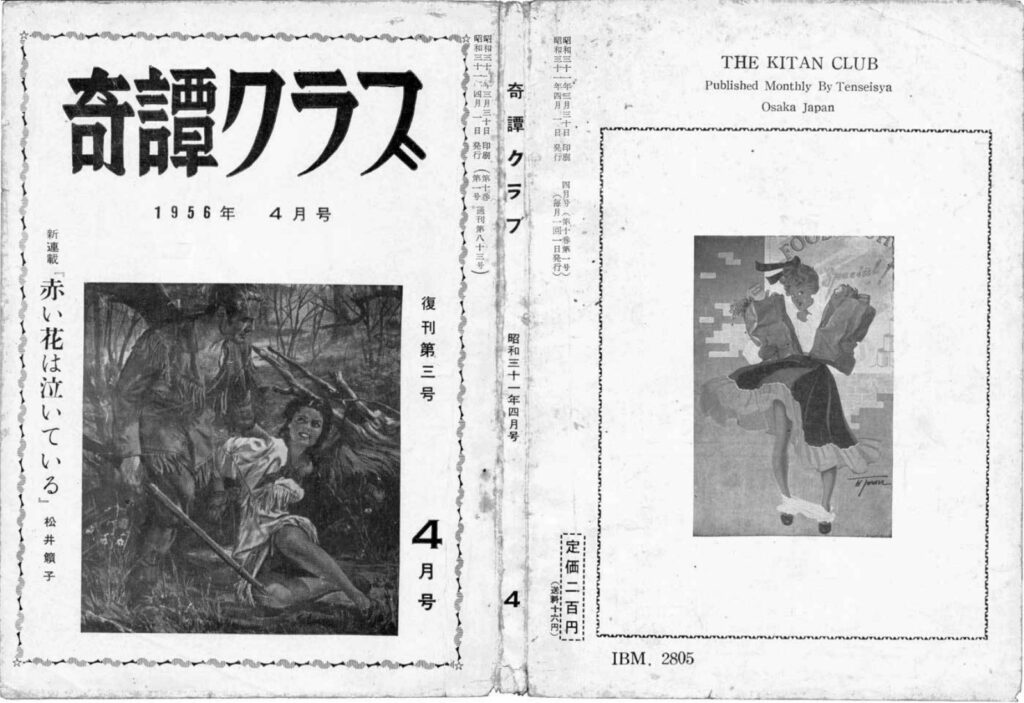
Issue Details
- PDF pages
- 173
Summary
The April 1956 issue of Kitan Club is a large, densely varied publication combining staged bondage photography, illustrated historical fantasy, serialized fiction, personal confession, medical and sexological essays, prison memoir, film criticism, reader communications, historical research, book advertising, and editorial notices. Its editorial identity is built on movement between spectacle and inquiry. Images of suspension, gagging, restrictive clothing, captivity, punishment, and female authority are placed beside articles about historical newspapers, fetish development, bodily practices, sadism, masochism, criminality, literature, performance, and visual culture. Unconventional desire is consequently presented as entertainment, testimony, research material, artistic subject, and the basis of an active reader community.
Read full summary Close full summary
Table of Contents 52 items
-
Painful Dream
Summary
An illustrated dream sequence portrays a woman bound with rope and suspended upside down, awakening in an atmosphere of painful suffocation and distress.
-
The Second Exposure Banquet
Summary
This illustrated erotic scene depicts a strange banquet in which a bound participant is displayed before an amused gathering, following an episode of coercive drinking and exposure.
-
Nylon Raincoat
Summary
A photographic feature presents a model bound while wearing a nylon raincoat, emphasizing the garment’s tactile and fetishistic appeal.
-
What Kind of Pose Shall I Take?
Summary
A photographic feature presents model Sagawa Michiko posed seated and bound with a rope, accompanied by a caption describing her first experience of being tied for the camera.
-
My Wrists Hurt, Untie Me Quickly
Summary
A photographic feature shows model Kaga Rieko in several tightly bound poses, with the accompanying text dramatizing discomfort as the rope tightens around her wrists and circulation is affected.
-
Night Thief
Summary
This illustrated historical erotic tale follows a warlord’s daughter who is captured by opportunistic thieves amid the chaos of the Warring States period and subjected to sexualized captivity.
-
Warring States
Summary
A richly illustrated historical erotic fiction presents Hime’s capture by armed men during Japan’s Warring States period, followed by repeated scenes of gagging, binding, pursuit, rescue, and renewed captivity.
-
Notes on Meiji-Period Newspapers
Summary
This historical newspaper survey assembles Meiji-era reports and advertisements concerning marriage, women’s schooling and compulsory nude physical examinations, domestic abuse, sensational murders, and the administration of corporal punishment in Korea.
-
Reader Communications
Summary
A reader-correspondence page presents letters and editorial replies about the magazine’s reception, readership, requested subjects, and submitted material, while inviting continued contributions and support.
-
Wandering in Swaddling Clothes
Summary
A first-person fetish narrative recounts the writer’s fascination with diapers and diaper-like garments, describing encounters, fantasies, remembered incidents, and the influence of Japanese and imported erotic imagery.
-
Black Slave Training
Summary
An erotic fantasy recounts a white youth’s capture and enslavement of a Black girl on a South Seas island, including domestic labor, chaining, corporal discipline, and sexualized domination.
-
A Certain Seppuku Maniac's Essay
Summary
Framed as a passionate letter, this dark erotic fantasy describes a lover’s fixation on seppuku, blood, blades, bodily injury, and sadomasochistic surrender.
-
Women Bound in Enjoyable New Year Films
Summary
This film-oriented feature surveys Japanese New Year movie scenes in which actresses are captured, tied, suspended, or otherwise restrained, discussing the staging and appeal of bondage imagery.
-
Ten Months in Captivity
Summary
A first-person memoir of ten months in prison, describing confinement, penal labor, meals, medical routines, relations among inmates and staff, and the humiliations and tensions of institutional life.
-
Introduction to the Yamaguchi Bodybuilding Method
Summary
An instructional presentation of the Yamaguchi bodybuilding method, explaining exercises, equipment, body-strengthening routines, and practical training experiences intended to improve physical development.
-
The Beauty of the Kilt
Summary
An essay on the erotic and aesthetic appeal of the kilt as a revealing garment, considering bodily exposure, tight clothing, spectatorship, and the psychological responses produced by dress and partial nudity.
-
The Taste of the Demon
Summary
Takagi Nobuo combines observations of animal excretion and mating behavior with autobiographical accounts of fetishistic encounters, exploring the erotic significance of feces, enemas, and other taboo bodily pleasures.
-
The Sadism of Dr. Erskine
Summary
Nonaka Aizō presents a literary-psychological study of Dostoevsky’s sadistic imagination, connecting episodes from the author’s life, family background, writings, and reception to recurring themes of cruelty, domination, and sexualized violence.
-
Thoughts on Female Horse Riding
Summary
Baba Takatsugu reflects on the erotic meanings of women riding horses, combining personal recollections, magazine and film references, riding attire, bodily movement, and fantasies of female physical power and display.
-
How I Punish Him
Summary
An erotic narrative depicts a male subject being disciplined by dominant women through elaborate bondage, blindfolding, gagging, positional restraint, and sensory control, interwoven with dialogue and staged scenes.
-
On the Seppuku of Female Swordswomen
Summary
This essay examines the eroticized image and symbolism of female swordswomen performing seppuku, discussing traditional clothing, ritual staging, bodily detail, blood, and the appeal of the scene in historical and visual culture.
-
Letter to Kasuga Rune
Summary
A reader letter to Kasuga Rumi expresses a male devotee’s desire to serve a female dominant, recounting submissive fantasies and requesting continued interaction and guidance.
-
Miserable
Summary
A first-person account of life in a juvenile correctional institution describes solitary confinement, forced nudity, beatings, humiliating punishments, and the arbitrary brutality of institutional discipline.
-
I Accuse: The Problem of Abu
Summary
Mizukami Ryūtarō presents a provocative first-person “accusation” of Abu while reflecting on sadism, masochism, gendered desire, violence, and the psychological boundary between erotic fascination and cruelty.
-
Complete Submission
Summary
Sakata Shinji recounts formative experiences of harsh paternal and educational discipline, including beatings, fear, shame, and eventual submission to overwhelming authority.
-
Nose Prelude
Summary
An essay on the erotic and imaginative significance of the nose, illustrated with botanical and fetish imagery, that also discusses piercing, hooks, restraints, and the construction and use of a leg-spreading bondage device.
-
Film Bondage Fragments
Summary
A critical essay examines bondage and suspension scenes in Japanese and foreign films, recalling specific productions and evaluating the realism, staging, visual impact, and physical mechanics of their restraint sequences.
-
Reader Communications
Summary
A reader-correspondence page presents letters and editorial replies about the magazine’s reception, readership, requested subjects, and submitted material, while inviting continued contributions and support.
-
Mania Is Born
Summary
A first-person autobiographical narrative traces the author’s path from youthful aviation ambitions through wartime and postwar experiences, culminating in an encounter that awakens his fascination with fetishistic bodily practices, restraint, and enema imagery.
-
Research on the Navel
Summary
This pseudo-scientific and sexological essay surveys navel shapes, positions, bodily development, and aesthetic judgments, combining comparative observations, anecdotal evidence, and erotic interpretations of the navel as a fetishized body part.
-
Cruel Women
Summary
A translated chapter examines women’s desires for control and examples of female cruelty, domination, and violence in intimate, social, and historical settings.
-
Seppuku Desire
Summary
An essay explores fantasies of seppuku and the psychological meanings of knives, bodily penetration, self-harm imagery, and imagined death, linking these motifs to erotic and masochistic desire.
-
Afterward, the Bound Actresses
Summary
A survey of actresses in stage and screen productions describes memorable scenes in which women are captured, tied, gagged, restrained, or otherwise subjected to bondage and punishment, with attention to their performances and visual appeal.
-
Sad Love: Kuritaguchi
Summary
This historical erotic tragedy follows lovers in the Edo period whose forbidden relationship leads to pursuit, betrayal, captivity, torture, execution, and a fatal reunion amid a deeply mournful romance.
-
That Pleasure
Summary
A first-person erotic narrative follows a man’s growing fascination with feminine performance and transformation, culminating in his being dressed, restrained, and subjected to punishment as he discovers masochistic ecstasy.
-
Authentic Scene Punishment
Summary
A practical, diagram-supported account explains how to construct and use a sheet-based restraint apparatus for staged punishment, including the positioning and binding of the subject’s limbs.
-
Complete Enema Miscellany
Summary
This essay surveys enema practices as erotic and medicalized activities, relating bodily sensation and female pleasure to historical imagery, changing sexual culture, and modern fetish interests.
-
Bondage Scenes in Western Painting
Summary
An essay examines bondage scenes in Western paintings and related films, comparing how tied, restrained, and imperiled bodies are staged through composition, props, lighting, and dramatic action. It treats these images as part of a broader history of erotic visual representation.
-
The Guest Wife
Summary
This erotic fiction follows Tanida’s increasingly controlling encounter with Tsubomi, a woman he meets while traveling, as flirtation develops into prolonged bondage, humiliation, and coerced sexual play in domestic and public settings. The narrative emphasizes escalating restraint, voyeuristic staging, and the unstable boundary between desire and domination.
-
In Response to the Forty-Five-Centimeter Wasp Waist
Summary
In a personal response about achieving a forty-five-centimeter “wasp waist,” the writer describes corset wearing, tightlacing routines, bodily discomfort, and the emotional appeal of reshaping the torso through sustained discipline. The account presents waist training as both an intimate bodily practice and a clothing-centered fetish.
-
Hero of Inversion: Oda Nobunaga, Chapter Six
Summary
A historical essay on Oda Nobunaga examines his authoritarian samurai ethos, reputation for cruelty, executions, military campaigns, and ambition to conquer China, presenting his violence and downfall through a psychologically and sexually charged portrait.
-
X's Butt
Summary
An illustrated erotic narrative centers on a woman’s exposed buttocks, voyeuristic observation, bodily humiliation, and the violent cutting of an X-shaped mark, blending sensational storytelling with fetish imagery.
-
Women's Belly Argument
Summary
A humorous illustrated essay debates women’s abdominal shape, fatness, pregnancy, clothing, and bodily exposure while discussing changing beauty standards and presenting stylized visual examples of female bodies.
-
Collar of Speech
Summary
An essayistic miscellany considers “abnormal” sexuality in modern fiction, film, and theatrical culture through literary commentary, anecdotes, and observations about erotic behavior and artistic representation.
-
Corncob Story Collection
Summary
The editorial department reviews and contextualizes unpublished reader manuscripts, then presents an erotic narrative about sisters subjected to coercion, captivity, humiliation, and sexualized control.
-
Red Flowers Are Crying, Part Two
Summary
The second installment follows Misako through preparations for marriage and a highly charged domestic and wedding setting in which family power, sexual vulnerability, and coercive erotic tension increasingly shape her experience.
-
Confession of Lost Love
-
Reader Communications
Summary
A reader-correspondence page presents letters and editorial replies about the magazine’s reception, readership, requested subjects, and submitted material, while inviting continued contributions and support.
-
Latest Kitan Club Books and Special Publications
-
Reader Communications and Next-Issue Notice
-
Latest Books and Publication Catalog
-
Editorial and Publication Information
Highlights
- The formal illustrated contents page organizes pictorial features, historical essays, fiction, confessions, recurring series, film criticism, and reader-oriented material. (PDF p. 4).
- The opening visual portfolio includes inverted suspension, a public exposure banquet, raincoat bondage, kneeling rope poses, and gagged restraint. (PDF pp. 6–10).
- A sequence of illustrated historical and exoticized scenes depicts abduction, warfare, captivity, forced display, and sexualized punishment. (PDF pp. 11–13).
- Notes on Meiji-Period Newspapers assembles historical reports concerning marriage, prostitution, punishment, crime, bodily abnormality, and sexual behavior. (PDF pp. 15–19).
- A Certain Seppuku Maniac's Essay examines ritual cutting through historical reference, private fantasy, pain, blood, and aesthetic fascination. (PDF pp. 27–29).
- Ten Months in Captivity continues its account of interrogation, detention, institutional routine, illness, punishment, and prison authority. (PDF pp. 31–36).
- The Yamaguchi bodybuilding article treats exercise and physical development as systems of disciplined bodily transformation. (PDF pp. 37–39).
- The Taste of the Demon combines illness, medicine, appetite, dreamlike perception, and bodily sensation. (PDF pp. 41–45).
- Thoughts on Female Horse Riding surveys Japanese and Western history, clothing, posture, aristocratic culture, and erotic spectatorship. (PDF pp. 49–54).
- How I Punish Him presents female authority through commands, emotional control, humiliation, and male submission. (PDF pp. 55–60).
- The article on female swordswomen's seppuku combines anatomy, warrior history, abdominal cutting, and evaluation of literary accounts. (PDF pp. 61–62).
- Miserable describes juvenile-reformatory life through arrest, institutional hierarchy, forced routine, fear, and punishment. (PDF pp. 64–66).
- Complete Submission continues a narrative of dependency, domination, humiliation, and progressive surrender. (PDF pp. 71–74).
- Nose Prelude catalogues erotic and sensory associations involving smell, pressure, piercing, bodily symbolism, and personal memory. (PDF pp. 75–77).
- Film Bondage Fragments surveys cinematic scenes of tying, suspension, abduction, gagging, and punishment. (PDF pp. 78–81).
- Mania Is Born traces fetishistic identity through childhood impressions, medical incidents, shame, curiosity, and later sexual experience. (PDF pp. 83–87).
- Research on the Navel combines anatomy, cultural symbolism, hygiene, bodily observation, and erotic fascination. (PDF pp. 88–90).
- The translation of Das Grausame Weib presents European historical examples of female cruelty, domination, and punishment. (PDF pp. 91–92).
- Afterward, the Bound Actresses provides career and publication notes about women associated with bondage performance and photography. (PDF pp. 95–96).
- That Pleasure is a long narrative involving obsessive memory, illness, hospital treatment, bodily transformation, and socially difficult desire. (PDF pp. 101–108).
- A practical feature uses a suspension diagram to discuss authentic bondage staging, bodily positioning, and rigging apparatus. (PDF pp. 109–110).
- Complete Enema Miscellany combines historical anecdotes, clinical procedure, humiliation, and fetishistic bodily response. (PDF pp. 111–113).
- Bondage Scenes in Western Painting surveys captivity, punishment, abduction, and restraint in European visual art. (PDF pp. 114–116).
- The Guest Wife is a long narrative of marriage, jealousy, deception, coercion, and shifting sexual alliances. (PDF pp. 117–124).
- The wasp-waist confession discusses corsetry, measurement, discomfort, fashion, discipline, and reshaping the torso. (PDF pp. 125–126).
- The Oda Nobunaga study combines biography, military history, cruelty, religion, rumor, and interpretations of sexual inversion. (PDF pp. 127–134).
- Women's Belly Argument examines abdominal binding, belts, corsetry, clothing, posture, and representations of women's waists. (PDF pp. 137–140).
- The Corncob Story Collection compiles sexual, medical, and comic anecdotes centered on an ordinary object. (PDF pp. 143–148).
- Red Flowers Are Crying, Part Two, develops domestic secrecy, illness, restraint, coercive encounters, and threatened violence. (PDF pp. 149–158).
- Confession of Lost Love is a first-person account of rejection, loneliness, humiliation, memory, and lingering erotic attachment. (PDF pp. 159–162).
- The closing communications contain reader reactions, requests for imagery, proposals for specialist groups, and editorial replies. (PDF pp. 163–164, 171).
- Catalogs, forthcoming-issue notices, special-edition advertisements, subscription information, and editorial announcements form the closing back matter. (PDF pp. 165–173).
Contributors
Named contributors represented in this issue:
- Aoyama Yoshiki
- Azuma Shin
- Baba Takatsugu
- Ebima Yōko
- Editorial Department
- Hanno Tōma
- Haruta Ichirō
- Jō Hideto
- Johannes R. Birlinger
- Jūji Kōsuke
- Kaji Shin'ichi
- Karii Rei
- Kasagi Toshirō
- Kasahara Magonosuke
- Kashimura Takehiko
- Kawase Kazumi
- Kitaya Eiji
- Komura Jirō
- Kuroiwa Iwao
- Masuoka Kinkichi
- Matsui Matoko
- Midori Takehiko
- Minega Miya
- Miyazaki Shōhei
- Mizui Shōjirō
- Mizukami Ryūtarō
- Moriguchi Ayako
- Nonaka Aizō
- Odai Fumi
- Sakanoe Nobuhiko
- Sakata Shinji
- Samaki Seisaku
- Sawato Kiyokatsu
- Shima Takashi
- Suma Ritsuo
- Takagi Nobuo
- Takarazuka Fumio
- Tsujimura Takashi
- Yamaguchi Kōichi