Yomikiri Romance
June 1953
← Back to magazine archive
Issue Details
- PDF pages
- 198
Summary
The June 1953 issue of Yomikiri Romance is a broad popular-humor magazine built around sexual comedy, urban folklore, marriage anxieties, nightlife, voyeurism, bodily embarrassment, and the friction between older customs and postwar metropolitan life. Unlike specialist SM magazines, it generally treats sexuality through jokes, anecdote, caricature, confessional sketches, and comic misunderstanding. Its tone is less secretive than playfully indiscreet, with the reader invited to peek through a keyhole made of punch lines.
Read full summary Close full summary
Table of Contents 51 items
-
The Joy of Youth
Summary
A photographic feature celebrating youthful pleasure and bodily freedom through staged images of a young woman outdoors, including scenes beside and in the water. The accompanying text evokes spring, nature, sensuality, and the hopes associated with youth.
-
Employment Guidance as I Saw It
Summary
An illustrated, satirical look at employment guidance and job-seeking, presenting a series of comic scenes involving applicants, workplaces, and sexualized social interactions. The feature uses eroticized cartoon imagery to comment humorously on employment and everyday postwar life.
-
From Constitution and Physique
Summary
An illustrated discussion considers whether a person’s physical constitution or body type can reveal erotic or sexual proclivities. A series of humorous vignettes presents social, intimate, and observational situations to explore the limits of judging personality from appearance.
-
Such Things Happen
Summary
A short illustrated comic feature presents a series of humorous sexual and romantic misunderstandings, using domestic and voyeuristic situations for comic effect. The captions and scenes emphasize the absurdity of everyday erotic encounters.
-
A Striptease Show for a Little Money
Summary
An illustrated erotic comedy about a low-cost striptease performance, depicting the performer, spectators, and the awkwardly humorous reactions surrounding the show.
-
Comic Street Scenes
Summary
A sequence of humorous erotic cartoons portraying everyday street and domestic situations, including marriage, henpecked husbands, female authority, flirtation, and sexual embarrassment.
-
Striptease from Morning Until Midnight
Summary
A sequential erotic comic follows a striptease performer through an entire day, depicting repeated performances, backstage interactions, spectators, photographers, and the commercial milieu surrounding her work. The exaggerated situations combine sexual display with comedy and theatrical spectacle.
-
A Magazine Called the Laugh-Line Streetcar
Summary
A visual publishing feature presents a humor-oriented magazine through portrait photography and cartoon scenes of its editor, contributors, and readers. The page emphasizes the magazine’s playful editorial identity and its social circulation among an audience.
-
Anja Paper’s Monologue
Summary
A humorous first-person monologue by Kasuga Saburō built around the speaker’s claim that he was born on April 1, prompting jokes about April Fool’s Day. The piece also recounts episodes from the magazine office, including caricature drawing, submissions to newspapers, and encounters with artists and entertainers.
-
A Relaxed View of Life
Summary
Natsume Koshō’s essay reflects on the work of women serving in Japanese restaurants, whose duties extend from serving food and drink to entertaining male customers. Through an anecdote involving a politically prominent client and requests concerning relaxed or absent undergarments, it satirizes sexualized service, male expectations, and shifting postwar social manners.
-
Umbrellas and Petticoat Government
Summary
A humorous, illustrated conversational essay about umbrella repairers, barbers, dress and shoe purchases, and the everyday power exercised by women over men. Its anecdotes repeatedly contrast male embarrassment and desire with women’s confidence, consumer choices, and control within marriage and social life.
-
The Woman Seen at Night
Summary
An erotic short story centered on a woman encountered and observed at night, with pan-pan culture, rented rooms, money, deception, and unstable sexual relationships shaping the narrative. The story emphasizes voyeuristic curiosity and the precarious intimacy of postwar urban nightlife.
-
An Abnormal Virgin Membrane
Summary
A police memoir-style narrative contrasting older and contemporary sexual attitudes, centered on anecdotes involving chastity, marriage, and the intimate lives of women encountered in urban and rural settings. The piece combines social commentary with humorous, sensational storytelling about sexual propriety and changing customs.
-
Zenkōji Bathhouse Story
Summary
An erotic tale explaining the traditional “mizūage” custom associated with the geisha and pleasure quarters, depicting a young woman’s sexual initiation in the context of marriage, arranged relationships, and first-night expectations. The story uses bathhouse and domestic scenes to explore sexual custom, embarrassment, and male-female negotiation.
-
A Lush Bedroom Scene
Summary
An article about the demands of performing eroticized bedroom and stage scenes, focusing on performers’ embarrassment, costumes, gestures, and the audience’s enthusiastic response. It contrasts ordinary theatrical acting with commercially staged scenes designed to provoke spectatorship and applause.
-
Dancing-Girl Striptease Oddities
Summary
A humorous backstage-style account of dancing girls and revue performers, centered on revealing bloomers, costume mishaps, provocative choreography, and the reactions of audiences and fellow performers. The piece situates these anecdotes within Japan’s postwar revue and entertainment culture, including stage work associated with Asakusa and Shinjuku.
-
New Tales of Excrement and Urine
Summary
A scatological erotic narrative centered on night-soil collectors and their encounters with households, presenting bodily waste as an object of unusual fascination and desire. The piece combines occupational anecdotes, social observation, and fetishistic interest in excrement and urine.
-
No Chance of Egg Implantation
Summary
A humorous erotic tale in which chicken eggs, believed to promote health and sexual vitality, bring a poultry farmer into contact with a family and ultimately facilitate a romantic or marriage connection. The story links rural poultry keeping and reproductive ideas with courtship and domestic relationships.
-
Sinful Shadow-Picture Play
Summary
An illustrated erotic comic centered on a shadow-theatre performance, in which silhouettes, costumes, stage effects, and performers create suggestive scenes. Conversational commentary about entertainers and changing popular tastes frames the playful spectacle.
-
A Stylish Female Painter
Summary
An illustrated comic portrait of Kawagishi, a bold and unconventional female painter known for her forceful, masculine-coded manner and provocative artistic world. Studio conversations and scenes involving bodies, modeling, display, and sexual reputation satirize gender expectations surrounding women artists.
-
Ah, the Vanished Pet
Summary
A humorous erotic tale in which the scientist Mita recounts his youthful relationship with a German woman and a later reunion that overturns his idealized memories of her. The narrative dwells on bodily allure, aging, hair, and the psychological gap between fantasy and reality.
-
The Pharmacist’s Strange Habit
Summary
A comic erotic story about Ono, a pharmaceutical-company representative, and K子, a hospital head nurse, whose clandestine courtship involves nighttime visits to the nurses’ quarters and develops into a more permanent relationship. The story emphasizes workplace hierarchy, illicit desire, and unconventional romantic behavior.
-
The Striptease Hut
Summary
An erotic reportage-style feature follows a visit to a striptease venue, describing its performers, audience, backstage atmosphere, and staged undressing routines. The narrator presents the venue as a site of spectacle, sexual curiosity, and commercialized postwar entertainment.
-
A Story of a Man Who Had His Mawashi Taken
Summary
A fictional erotic account centers on a woman recounting how a man stripped her of her clothing and control during a drinking encounter. The narrative develops themes of coercion, humiliation, and unequal sexual power through dialogue and suggestive illustration.
-
A Fair-Weather Weapon
Summary
An erotic travel anecdote about a Japanese diplomatic official whose sexual prowess becomes a source of fascination and comparison in Parisian nightlife. The narrative contrasts Japanese and foreign sexual attitudes through stories involving European women, prostitution, and masculine reputation.
-
A Gentleman’s Collecting Mania
Summary
A comic erotic story about a respectable gentleman with a collecting obsession who recruits a bathhouse attendant to obtain discarded personal hair and other intimate remnants from female patrons. The narrative treats this fetishistic practice through negotiations, voyeuristic fantasy, and illustrated scenes of women’s bodies.
-
Curious Tales of Right and Left
Summary
A humorous salon-style dialogue explores supposedly meaningful differences between the right and left sides of the body, especially in hair parting, hairstyling, dress, and everyday behavior. The discussion extends these observations into playful gender stereotypes and claims about masculine and feminine psychology.
-
A Story Limited to One Person
Summary
A first-person relationship story centers on an unmarried woman connected with the film and stage world, discussing social pressure to marry, romantic attachment, and the complications that arise when intimate relationships become unstable. The narrative presents personal emotional conflict and unconventional romantic arrangements in a confessional, anecdotal form.
-
The Oiran’s Betrayal
Summary
An illustrated erotic narrative set in the licensed quarter follows an oiran and the men around her through betrayal, suspicion, and coercive encounters. The story combines period courtesan-house atmosphere with scenes of restraint, pursuit, and eroticized submission.
-
Money or a Man?
Summary
A discursive feature asks whether women should prioritize financial security or a romantic partner, using contrasting male and female perspectives to discuss marriage, economic dependence, attraction, and changing postwar gender expectations. Its conversational, advice-like treatment frames intimate choice as a social and psychological question.
-
The World’s Best Toilet
Summary
A humorous illustrated essay about men’s fascination with women’s nude bodies, including the voyeuristic pleasures and awkward social dynamics surrounding nude modeling and photography. It satirizes gender relations and the supposed inconvenience of women despite claims of sexual equality.
-
Waist-Meat Studies
Summary
A comic essay devoted to the erotic and aesthetic significance of women’s waists, buttocks, and related body contours. Drawing on comparisons with food, animals, Western beauty ideals, and popular imagery, it treats “waist meat” as both a bodily fetish and a subject of cultural debate.
-
The Forceful Gentleman Customer
Summary
An illustrated erotic narrative follows a woman working in a beauty or service establishment as she deals with an insistent male customer who ignores boundaries and presses his advances. The dialogue and staged scenes emphasize male forcefulness, female vulnerability, and the customer’s pursuit of forbidden intimacy.
-
Sake Alone and the Geisha’s Skill
Summary
A first-person-style account from the world of geisha and entertainment describes the difficulties of dealing with drunken and sexually aggressive male customers. Through humorous anecdotes and dialogue, it considers professional composure, unwanted advances, and the practical handling of unruly patrons.
-
The Strip Wife Club
Summary
A humorous erotic feature about striptease performers and the men who become fascinated with them, including speculation about their personalities, relationships, and suitability as wives. Illustrated scenes and conversational commentary place striptease within postwar popular entertainment and domestic sexual culture.
-
The Hadaka Ghost Story
Summary
A supernatural erotic story centered on nude photography, a photographer or studio setting, and strange encounters involving women, images, and apparent ghostly manifestations. The narrative combines comic horror with voyeuristic interest in the nude female body and the culture of erotic photographic production.
-
Sausage and Egg White
Summary
A chef recounts an allegedly true restaurant episode involving a widowed proprietress, her female staff, customers, and a drunken man whose late-night behavior creates an increasingly sexual and coercive situation. The narrative blends workplace gossip, erotic anecdote, and comic observation of restaurant life.
-
This Road Cannot Be Avoided
Summary
An essay examines the appeal and credibility of sensational “true stories” in contemporary erotic magazines, contrasting police suppression and commercial publishing with readers’ appetite for scandalous material. It then presents a humorous erotic anecdote involving a newly married couple, family expectations, and the intrusive perspective of a researcher of sexual customs.
-
One Night of Yobai
Summary
A fictionalized account of yobai, the traditional nocturnal visiting custom, in which Yūtarō secretly approaches a young woman in a rural village. The story frames the encounter through remembered village practices, clandestine desire, and the risks of discovery.
-
Is That the Husband’s Child?
Summary
An erotic narrative built around overheard conversations and uncertainty about a child’s paternity. A narrator observes the emotional and sexual complications involving a married couple, an outside relationship, and the question of whether the child is the husband’s.
-
How to Handle Youth
Summary
A conversational essay about the sexual tensions that can arise during medical examinations, especially for young patients and medical workers who routinely encounter the opposite sex. It discusses embarrassment, arousal, and the psychological adjustment required to treat the body professionally.
-
When One Becomes a Doctor in the Pleasure Quarter
Summary
A humorous, dialogue-driven account of a physician practicing near the pleasure quarter, where he treats women for urinary, dermatological, and venereal complaints. The story also depicts the sexual customs and “water-drawing” initiation of a young woman, combining clinical encounters with brothel-district anecdotes.
-
A History of Rustic Marriage Customs
Summary
An illustrated historical survey of rustic marriage customs, focusing on betrothal, bridal transfer, wedding-night practices, consummation, chastity, and the community’s role in regulating married sexuality. The article compares regional traditions and older customs with changing modern expectations, including rituals, taboos, and punitive responses to perceived violations.
-
Wedding Customs of Various Regions
Summary
A comparative account of wedding and courtship customs in different Japanese regions, including trial marriages, arranged relationships, household authority, gift exchange, and local expectations surrounding brides and grooms. The article also discusses how regional marriage practices shape domestic and sexual relationships.
-
Village Council Tales from the Field
Summary
A richly illustrated treasure-hunting feature recounts legends and reported discoveries of buried gold associated with historical figures, castles, temples, and wartime upheavals. It follows competing searches, disputed evidence, maps, excavations, and rumors surrounding hidden caches across Japan.
-
Fallen Objects
Summary
A seven-panel illustrated comic follows a man dealing with objects that have been dropped or misplaced in the street, using visual gags and misunderstandings to build its humor.
-
Streetcar Anecdotes
Summary
Ōba Gorō’s illustrated column presents humorous, sensational anecdotes about film actors and actresses, focusing on their supposed sexual energy, romantic behavior, and physical stamina both on and off the set.
-
Stories from the Postwar Entertainment District
Summary
A humorous, anecdotal account of postwar entertainment districts, describing performers, patrons, unusual attractions, and the changing atmosphere of popular amusements. The piece mixes observational reportage with sexualized stories and comic commentary on urban leisure culture.
-
Streetcars Then and Now
Summary
A miscellany of sensational stories about performers and popular spectacles, beginning with the origins and display of the “flower streetcar” and continuing with accounts of swallowing swords, unusual bodily feats, and eccentric entertainers. The article treats these attractions as changing forms of public amusement, linking historical anecdotes with contemporary show culture.
-
Stories You Should Not Tell People
Summary
A framed, conversational erotic narrative recounts a series of illicit and sensational sexual episodes shared among acquaintances, including wartime memories, seduction, captivity, coercion, and punishment. Illustrated scenes reinforce the story’s themes of secrecy, erotic danger, and bondage.
-
Exploring Tokyo’s Red-Light Districts by Pen and Camera
Summary
A written-and-photographic reportage feature explores a Tokyo red-light “blue-line” district, documenting its streets, interiors, workers, customers, and the atmosphere of nightlife. The article combines observational captions and interviews or commentary about rural women who came to Tokyo seeking new lives and found themselves in the district’s commercial-sexual world.
Visual Catalog 5 sequences
-
The Delights of Youth Archival title: Indoor-to-waterside portrait sequence Photographic Portfolio Three consecutive monochrome photographs of one adult woman, beginning seated indoors and continuing outdoors beside shallow water and rocks.
-
Scenes of Sadistic Pleasure and Rapture Archival title: Single-page kneeling rope-restraint photograph Photographic Portfolio Predominantly visual monochrome page showing an adult woman kneeling on tatami with her arms secured behind by cord or rope.
-
Strip Pub: From Morning Until Midnight Archival title: Strip Pub: From Morning Until Midnight comic sequence Illustration Sequence Eight consecutive magenta-ink comic pages beginning with a printed feature title on page 27 and continuing through numbered multi-panel strip pages depicting recurring adult characters in nightclub, street, backstage, and performance situations.
-
A Cultural History of Local Customs: Strange Marriage Practices Archival title: Illustrated historical-feature title plate Illustration Sequence Single predominantly visual black-and-white title page dominated by an illustrated woman in patterned kimono and oversized Japanese title typography.
-
Exploring Tokyo's Prostitution Districts with Pen and Camera Archival title: Tokyo prostitution-district photographic reportage Photographic Portfolio Five-page photographic reportage beginning with a text-heavy opener containing a halftone image and the printed heading 'ペンとカメラで探る東京買春地帯', followed by four consecutive monochrome collage pages combining adult women photographed in interior settings with aerial neighborhood views, inset images, captions, and location markers.
Highlights
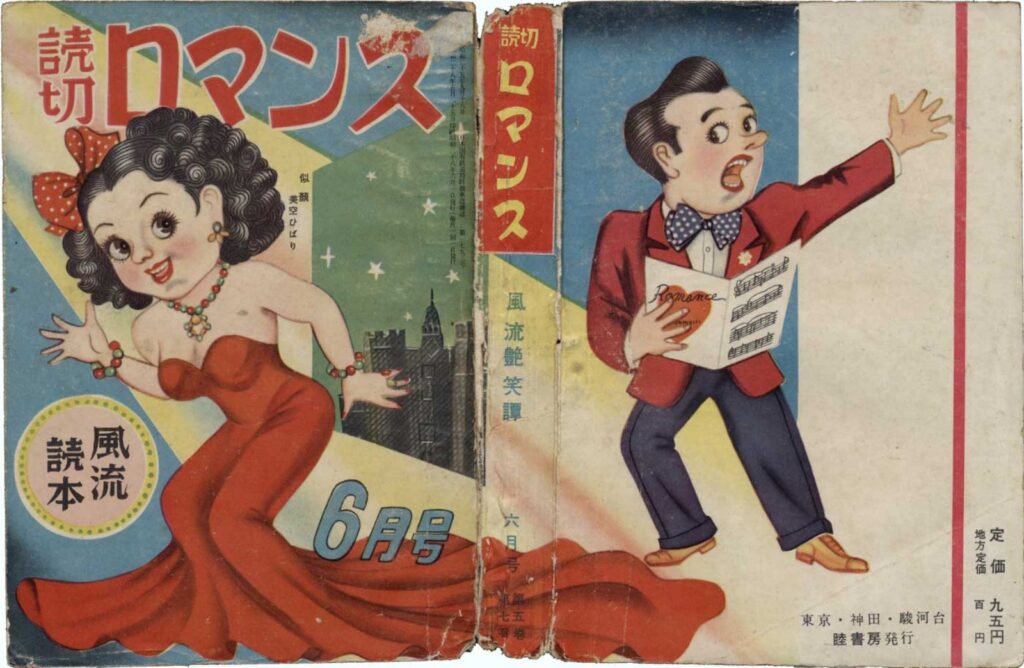
- The wraparound cover turns the magazine itself into a sexual joke, pairing a glamorous woman with a startled male reader who appears unable to cope with what he has opened (PDF p. 1).
- The illustrated contents pages use passing legs, shoes, flirtation, and voyeurism to make navigation through the magazine resemble entry into a busy nightlife district (PDF pp. 2–6).
- The Joy of Youth blends hot-spring travel photography, pinup posing, and staged melodrama, moving from a riverside kimono portrait to partial undressing and indoor captivity imagery (PDF pp. 7–10).
- The long cartoon sequence on PDF pages 11–34 creates a compact social history of employment, courtship, sex work, fashion, and urban entertainment through repeated sexual misunderstanding.
- A Magazine Called the Laugh-Line Streetcar and Anja Paper’s Monologue introduce the recurring short-column format that dominates the issue’s middle section (PDF pp. 35–37).
- Umbrellas and Petticoat Government treats female domestic authority as comic social revolution, with men repeatedly outmaneuvered by wives and lovers (PDF pp. 41–46).
- The Woman Seen at Night turns voyeurism into a comedy of unreliable perception, where the desired woman is reconstructed through darkness, expectation, and embarrassment (PDF pp. 47–49).
- An Abnormal Virgin Membrane uses pseudo-medical language as comic camouflage for anxiety about virginity, marriage, and sexual proof (PDF pp. 50–52).
- Zenkōji Bathhouse Story and A Lush Bedroom Scene place sexual curiosity in communal bathing and domestic interiors, two spaces where privacy is fragile (PDF pp. 53–58).
- Dancing-Girl Striptease Oddities and The Striptease Hut portray erotic performance as an industry populated by performers, promoters, customers, and disappointed spectators (PDF pp. 59–61, 80–83).
- New Tales of Excrement and Urine and The World’s Best Toilet reveal the magazine’s determination to collapse the boundary between eroticism and bodily comedy (PDF pp. 62–64, 105–107).
- A Stylish Female Painter and Curious Tales of Right and Left use women’s professional and social mobility as sources of both fascination and male unease (PDF pp. 71–73, 93–95).
- One Night of Yobai and the marriage-custom features preserve sensationalized accounts of nocturnal courtship and regional wedding practices for an urban readership (PDF pp. 130–154).
- The late anecdotal collections shift from tightly designed comic columns to looser reminiscence, gathering village, streetcar, nightlife, and sexual stories into a communal oral-history style (PDF pp. 155–193).
- Exploring Tokyo’s Red-Light Districts by Pen and Camera closes the issue with staged photographs and documentary language, transforming the city’s entertainment quarters into an erotic map (PDF pp. 194–198).
Contributors
Named contributors represented in this issue:
- Akikaze Ryūkyō
- Fujiwara Kanasoku
- Haga Yoshiko
- Hamakawa Rakugan
- Hayase Jirō
- Hirai Noboru
- Hiyama Yoshirō
- Kashima Seikichi
- Kasuga Saburō
- Kawachi Kōji
- Kiryū Jirō
- Kita Ichirō
- Kitamura Ken
- Kiyokawa Nijiko
- Kobayashi Katsuki
- Komatsu Kaoru
- Marie Tsushima
- Minami Hiroaki
- Mitsui Takanobu
- Morishige Hisaya
- multiple contributors
- Nakamura Yukie
- Natsume Koshō
- Ōba Gorō
- Ogi Sōsuke
- Oka Sakura
- Ōki Keita
- planning and text by Miki Saburō; photography by Hamakawa Kichizō
- Sakurada Kazuo
- Sasagawa Arden
- Satsuki Yūko
- Shibuya Sakae
- Shikitei Tonma
- Sōma Chieko
- Sugishita Kamesuke
- Tachibana Sakuya
- Uehara Ichirō
- Uno Tomiyo
- Yamada Katsuko
- Yoyogi Bansuke