Uramado
January 1958
← Back to magazine archive
Issue Details
- PDF pages
- 373
Summary
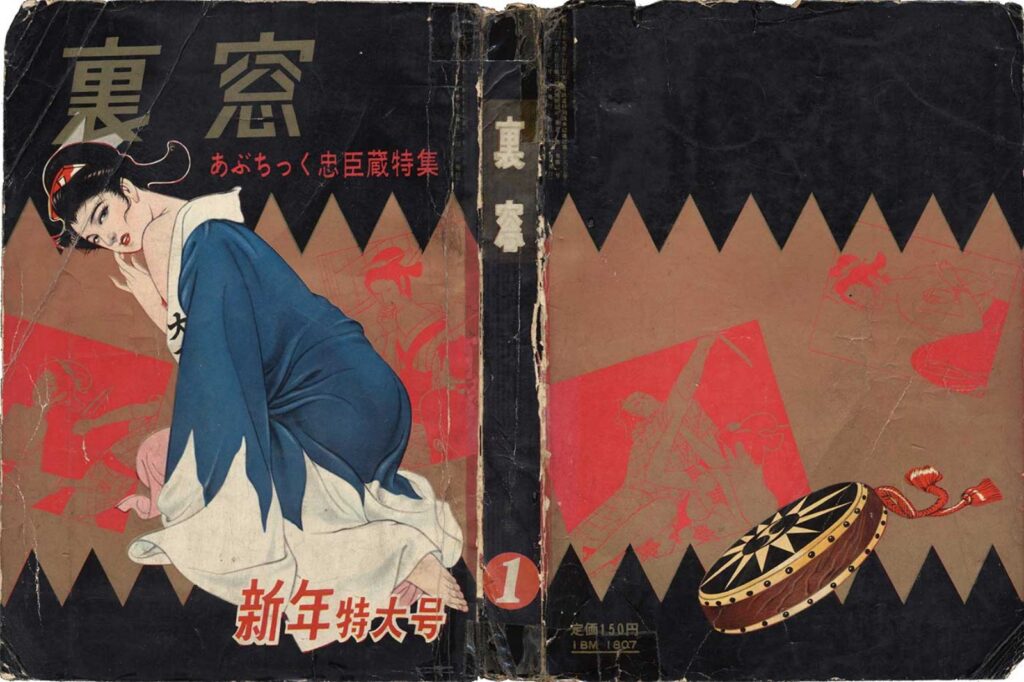
The January 1958 New Year issue of Uramado is a lavish 150-page special number organized around hidden crimes, historical punishment, erotic danger, supernatural tales, foreign pulp, and illustrated suspense. Its cover advertises the “Hidden Lord Special,” visually combining a distressed woman, historical cruelty, a large key, and torture imagery.
Read full summary Close full summary
Table of Contents 29 items
-
A Strange Tale of the Female Chūshingura
Summary
An illustrated historical erotic tale recasts the Chūshingura legend through the ordeal of a woman pursued, abducted, coerced, and subjected to humiliating restraint amid samurai intrigue.
-
An Amorous Akō Ballad
Summary
This illustrated Akō-themed erotic ballad blends Chūshingura-era revenge and household intrigue with sexualized coercion, restraint, violence, and the threatened or actual punishment of women.
-
A Loyal Retainer Living in Darkness
Summary
This serialized historical erotic fiction follows a loyal retainer moving undercover through the intrigues surrounding the Akō vendetta, with secret messages, disguises, violence, and eroticized encounters involving coercion and restraint.
-
Two Paths of the Genroku Era
Summary
A serialized Genroku-era erotic adventure follows samurai, townspeople, and women through abduction, concealment, escape, social intrigue, and shifting romantic and sexual power relations. The narrative repeatedly uses confinement, coercion, and bondage imagery within its historical setting.
-
Good Evening!
Summary
A serialized erotic story follows Chifumi from an unremarkable young woman into a transformed beauty through cosmetic surgery, tracing how her altered appearance changes her confidence, employment prospects, romantic relationships, and domestic life. Its numbered episodes combine sexual fantasy with anxieties about beauty, status, and personal identity.
-
Shadow on the Road to the Underworld
Summary
This serialized Edo-period erotic crime tale follows Sanpei and Oharu through betrayal, abduction, interrogation, revenge, and repeated scenes of coercive captivity and rope restraint.
-
Secret Tale of the Basket Lantern
Summary
A serialized Edo-period erotic tale follows Kiyoshichi and O-Chiyo through family intrigue, debt, deception, abduction, and escalating scenes of forced restraint and punitive violence, ending amid an unresolved confrontation.
-
The Illustrated Mandala of Strange Tales
Summary
A serialized Edo-period erotic strange tale combining dramatic prose with heavily illustrated scenes of seduction, coercion, captivity, violence, and revenge among merchants, artisans, and samurai-era figures. The installment repeatedly foregrounds women and men subjected to ropes, confinement, assault, and other fetishized forms of restraint.
-
The Graveyard Mansion
Summary
An episodic historical erotic tale in which an investigation of a sinister graveyard mansion uncovers buried bodies, family secrets, violent captivity, and grotesque encounters between the living and the dead.
-
The Great Disloyalist
Summary
A historical erotic adventure about a disloyal samurai and his companions, involving abduction, pursuit, coercion, violence, and forbidden sexual intrigue amid Edo-period social and military settings.
-
The Disordered Genroku Kimono
Summary
A serialized historical erotic tale set in Edo-period Japan, following Koyata and other townspeople through clandestine encounters, jealousy, pursuit, deception, and violent confrontations involving sexual coercion and restraint. Dramatic illustrations reinforce the story’s scenes of captivity, bondage, and danger.
-
Foxfire
Summary
A serialized historical erotic mystery follows a dangerous investigation involving murder, pursuit, captivity, and women subjected to elaborate rope restraint and coercive treatment.
-
Snowstorm Confession of Omiyo
Summary
This serialized historical erotic narrative recounts Omiyo’s troubled experiences amid snowbound travel, social vulnerability, coercive sexual power, and abusive male authority.
-
The Bloodstained Kannon Image
Summary
A serialized historical erotic adventure follows the swordsman Shinpachirō through assassinations, pursuit, betrayal, and revenge surrounding the bloodstained Kannon image, with scenes of capture, coercion, and violent swordplay. The accompanying illustrations depict stylized samurai combat, bound or threatened figures, and eroticized restraint.
-
The Demon-Hour Woman, Part Ten of the Secret Memorandum
Summary
The tenth installment of Shimamoto Haruo’s serialized fiction follows a mysterious demon-like woman whose transformations, occult powers, violent encounters, and episodes of pursuit, restraint, and sexualized peril entangle Chizuru and other characters in a dark supernatural conspiracy.
-
The White Caterpillar
Summary
A serialized erotic fantasy follows a woman whose strange encounters with a beautiful, caterpillar-like figure lead through captivity, bodily transformation, medicalized torment, and violent sadomasochistic power struggles.
-
Kira’s Hawk Head
Summary
An illustrated historical erotic serial set in the Edo period depicts a young woman and rival men caught in schemes of seduction, abduction, confinement, deception, and coercive punishment.
-
The Booby-Trapped Gun
Summary
A serialized Western-style suspense story follows lawmen, hunters, and fugitives through a mountain settlement as a booby-trapped rifle, killings, revenge, pursuit, and a final armed confrontation expose a dangerous criminal scheme. The narrative incorporates captivity and scenes of people being bound or restrained outdoors.
-
Two Men Named Kuranosuke
Summary
This serialized historical erotic fiction set in the Genroku period follows rival samurai households and their schemes of deception, pursuit, captivity, and revenge, with scenes of women being stripped, bound, gagged, humiliated, and subjected to coercive sexualized interrogation. Illustrated episodes combine the Ako vendetta milieu with melodramatic bondage and sadistic fantasy.
-
The S.S. Secret Club
Summary
A serialized erotic crime narrative follows a narrator’s increasingly perilous involvement with the clandestine S.S. club, whose members stage sadistic games, coercive encounters, disguises, surveillance, and execution-like punishments amid police threats and pursuit.
-
The Beautiful Slave Jelissna
Summary
An illustrated erotic narrative depicts a dissatisfied woman drawn into a coercive sexual situation connected with a pachinko-world setting, using domestic tension, male control, humiliation, and bondage imagery to frame her loss of autonomy.
-
Pachinko Hell
Summary
A serialized erotic story set around a pachinko parlor follows gambling-obsessed patrons and staff through coercive sexual encounters, bondage, humiliation, and escalating financial and emotional ruin.
-
The Sole of the Foot and Gennai
Summary
A historical erotic narrative set in the Edo period depicts samurai, servants, and women entangled in secret intrigues, pursuit, captivity, and elaborate rope restraint, with fetishistic attention to bodies and clothing.
-
The Treasury of King Ryuka
Summary
A serialized erotic adventure follows the pirate King Ryuka and his companions through violent encounters, captivity, coercion, punishment, and bondage at sea and on land, accompanied by dramatic illustrations.
-
Record of Wandering
Summary
An autobiographical, epistolary narrative traces a young man’s wandering life, emotional isolation, romantic longing, and developing recognition of same-sex desire through a series of letters and recollections.
-
Passion and the Compassionate Heart
Summary
A serialized erotic-crime narrative follows a violent gang whose robberies, coercive encounters, kidnappings, and betrayals draw police attention, with scenes of bound captives and threatened women intensifying the story’s atmosphere of sadism and forbidden desire.
-
The Sound Demon
Summary
A surreal erotic story follows a solitary narrator through postwar Tokyo nightlife and an unsettling encounter with Eiko, whose voice, appearance, and strange sensory effects generate fascination, disorientation, and obsessive desire.
-
Tattooed Benten
Summary
A serialized historical erotic story set in the Edo period, following women and men through abduction, confinement, sexual coercion, punishment, and elaborate rope-bound scenes associated with a tattooed Benten figure. The narrative is accompanied by dramatic illustrations and emphasizes violent power relations, captivity, and fetishized bodily display.
-
Publication Information and Advertisements
Summary
The supplied pages contain a continuation of a serialized historical erotic narrative in which characters pursue, abduct, restrain, and interrogate one another amid scenes of rope bondage, gagging, and coercive sexual tension.
Highlights
- The New Year cover combines a distressed woman, a large key, historical imagery, and instruments of punishment under the banner of a “Hidden Lord Special” (PDF p. 1).
- The opening color serial presents a woman endangered by household authority, political intrigue, and criminal accusation (PDF pp. 6–12).
- One color illustration shows the heroine bound around the torso and arms while seated on the floor (PDF p. 12).
- A full-page illustration of a woman near a dog transforms domestic vulnerability into a carefully composed erotic-danger image (PDF p. 13).
- “A Woman’s Crimson Underrobe Seen Through the Age” studies garments, sexuality, custom, and concealed parts of the female body (PDF pp. 14–21).
- The New Year supplement “The Righteous Man Who Lives in Darkness” begins a long catalogue of historical punishments and crimes (PDF p. 23).
- “The Man Strangled by a Dog” uses animal attack, ligature, and helplessness as a sensational opening episode (PDF pp. 23–26).
- “The Hanging Man” presents inverted or elevated restraint as part of historical punishment (PDF pp. 27–28).
- Later episodes include sale, branding, confinement, bathhouse danger, bodily search, and burning or marked skin (PDF pp. 29–40).
- “The Woman at the Bathhouse” combines nudity, public vulnerability, criminal intrusion, and historical setting (PDF pp. 34–35).
- “The Search of the Body” makes forced inspection itself a narrative and visual spectacle (PDF pp. 36–37).
- “Three Stages of the Former Enemy” develops a longer historical tale of revenge, abduction, and punishment (PDF pp. 41–53).
- “The Shadow of Yomisen Road” joins night travel, alcohol, abduction, and violence in a historical crime narrative (PDF pp. 65–69).
- The modern serial “Konbanwa” brings the magazine’s hidden-world formula into hospitals, nightlife, and urban sexual danger (PDF pp. 54–64).
Contributors
Named contributors represented in this issue:
- Anzukasa Ichirō
- Fuji Kinya
- Fushimi Kazuo
- Hashizume Hikoshichi
- Hōkaiji Kayō
- Iida Toyokichi
- Inagaki Shisei
- Inō Takashi
- Jinkō Kyōichi
- Kaibe Yōzō
- Koyama Ryūtarō
- Kubomura Hiroshi
- Kuroki Shinobu
- Matsui Raiko
- Misaki Yōnosuke
- Nakabayashi Setsuzō
- Narumi Genkichi
- Ōkōchi Jōhei
- Shimamoto Haruo
- Takano Nijūsan
- Ujigawa Ryū
- Watson Dokuda
- Yamada Shigeyoshi
- Yokoyama Kengo; illustrations by Nakajima Kimi
- Yokoyama Masakatsu