Kitan Club
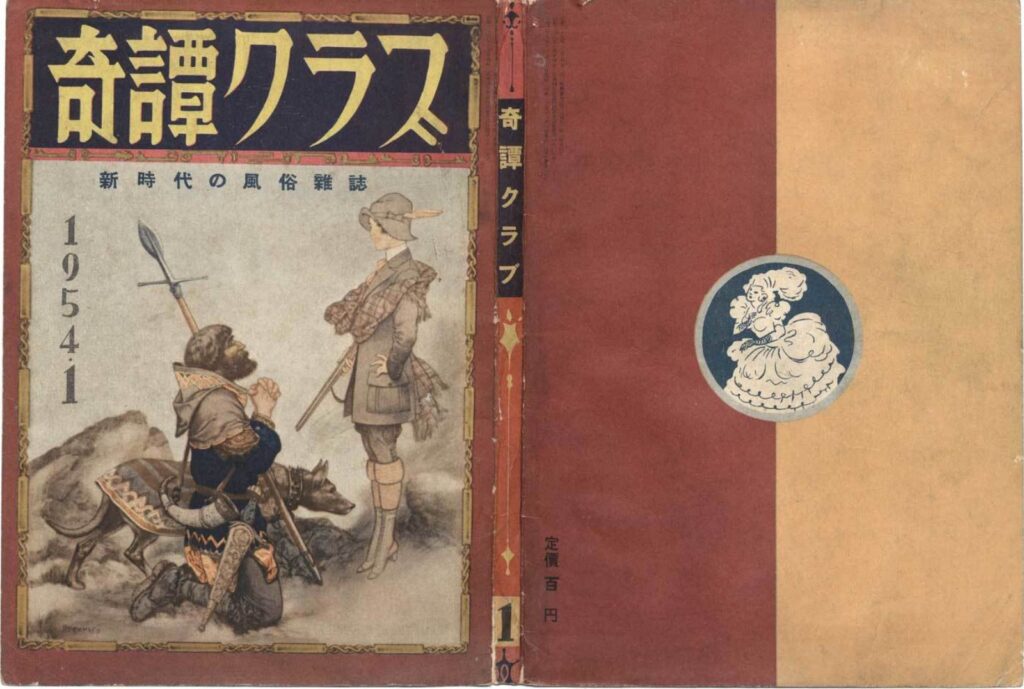
January 1954
← Back to magazine archive
Issue Details
- PDF pages
- 132
Summary
The January 1954 issue of Kitan Club is a New Year number that combines a large visual portfolio with fiction, confession, historical commentary, medicalized writing, translated European material, and recurring essays about bondage and masochism.
Read full summary Close full summary
Table of Contents 34 items
-
Methods of Applying Crotch Rope
Summary
An illustrated instructional feature demonstrating several methods of applying rope around the crotch and body. The diagrams show different tying patterns, including bindings that restrict the limbs and posture, with some figures blindfolded or gagged.
-
Daimyo Procession
Summary
An illustrated historical-cultural feature on a daimyo procession or street display, presenting elaborately dressed participants and attendants in an Edo-period urban setting. Explanatory text discusses related seasonal customs, public spectacles, and decorative practices.
-
From Life Photographs
Summary
A photographic feature presenting women bound in elaborate rope arrangements, including upright and suspended poses against posts or other supports. The images emphasize staged kinbaku technique and restrained body positioning.
-
Recent European and American Women
Summary
A visual feature composed by Sugiura Kōji showcasing contemporary European and American women in staged bondage and fetish scenes, including restrained, gagged, and inverted poses. The presentation frames imported Western imagery as a recent erotic visual trend.
-
The Master of the House and the Geisha
Summary
An erotic illustrated scene introduces a runaway girl who has been deceived by a pimp and brought to a geisha house, where the proprietor first examines her. The imagery presents her coercive sexualization and restraint within the house setting.
-
Twisting
Summary
A bondage illustration depicts a woman tied with rope and suspended from the ceiling, with her clothing removed or displaced as part of the scene. The feature emphasizes elaborate rope restraint and suspended positioning.
-
Suspension Arrangement
Summary
An erotic illustration presents a woman suspended and bound in a complex rope arrangement, accompanied by text describing the training of performers in various arts to increase their commercial value. The feature combines staged restraint imagery with themes of discipline and display.
-
Water Torture
Summary
This illustrated feature, titled “Water Torture,” depicts women subjected to elaborate rope restraint and posed exposure, including a seated figure and a bound reclining figure. The imagery frames bondage as a staged spectacle involving submission, coercion, and visual display.
-
The Process of Submission
Summary
A photographic sequence titled “The Process of Submission” depicts women being progressively positioned and restrained with rope in staged bondage scenes. The images emphasize kneeling, tied-limb, and controlled postures as visual representations of submission.
-
A Secret Album of Pleasure
Summary
“A Secret Album of Pleasure” is a photographic feature presenting a series of rope-bound women in varied seated, kneeling, and floor-based positions. Its visual emphasis is on eroticized restraint, bodily display, and staged scenes of domination and submission.
-
A Cruel Scene from a Divorce
Summary
A single erotic illustration presents a woman restrained in an extreme raised-leg or inverted posture, with rope extending overhead. The scene is framed as a cruel episode connected with divorce.
-
Punishment in the Rear Room of a Brothel
Summary
A multi-panel erotic illustration sequence depicts women tied to wooden structures in a rear-room setting and subjected to cane or rod punishment. The imagery emphasizes immobilization, exposure, and ritualized corporal discipline.
-
The Teacher on the Platform
Summary
A staged photographic feature presents a woman restrained with rope in several positions while another woman acts as instructor or disciplinarian. The images emphasize practical rope binding, immobilization, and the theatrical presentation of a bondage lesson.
-
Women Who Were Cruelly Treated
Summary
Morimoto Aizō comments on illustrations and other visual depictions of women subjected to cruel treatment, drawing on slavery narratives, punishment scenes, and related nineteenth-century European imagery. The article compares recurring images of whipping, domination, captivity, rebellion, and female suffering across historical and transnational sources.
-
Cruel Treatment: Do Not Behave Like a Dog!
Summary
A staged photographic scene depicts a dominant woman forcing a submissive man into a dog-like posture, accompanied by dialogue ordering him to behave like a dog. The feature emphasizes degradation, command, and physical control.
-
The Spider’s Captive
Summary
A visual feature titled “The Spider’s Captive” presents bound bodies in a photographic image and an accompanying illustration, portraying immobilization through elaborate restraint and a spider-like captivity motif.
-
The Transformation of the Female Abdomen
Summary
A staged photographic feature depicting a woman enacting a simulated female seppuku ritual, using a blade and posed abdominal gestures. The accompanying text presents the scene as an eroticized visual imitation rather than an actual act.
-
The Monkey Gag and Me: A Night with Yūko
Summary
Yūko Furukawa’s autobiographical essay recounts her fascination with monkey gags and other forms of mouth and sensory restraint, tracing the interest from childhood memories through adult experiences with her husband. She discusses the physical sensations, embarrassment, arousal, techniques, and varied gagging arrangements associated with these practices.
-
Writhing in Pleasurable Torment
Summary
An erotic first-person narrative follows Yuko as she is subjected to escalating rope restraint, gagging, forced positioning, and corporal punishment by a male partner. The account emphasizes her physical suffering, humiliation, and ambivalent pleasure in bondage.
-
The Chastity of the Invisible Woman
Summary
Itō Seiu discusses the erotic power of punishment scenes in Japanese theatrical and historical settings, focusing on women being bound, beaten, and displayed before spectators. The article combines commentary on stage conventions and audience response with illustrations of staged scenes and traditional restraint practices.
-
The Beautiful Demon’s Sneer
Summary
A serialized SM fiction narrative in which the beautiful and domineering Yukiko subjects Tatsuji to escalating humiliation, bondage, and physical punishment. Set against a postwar urban backdrop and framed through memories of wartime hardship, the story explores her sadistic control and his fearful submission.
-
The Room of Evil
Summary
An erotic narrative about a married couple whose sexual relationship becomes increasingly shaped by cruelty, voyeurism, bodily fetishism, and the husband’s interest in manipulating a younger man. The story develops through domestic encounters, coercive sexual experimentation, and sadomasochistic acts involving cutting, bodily control, and humiliation.
-
Cruel Women
Summary
A translated and annotated historical survey of cruel women rulers and aristocratic women, drawing on a 1901 German work to recount abuses of power, executions, torture, corporal punishment, and other acts of extreme violence. The chapter presents these cases as sensational historical examples of female cruelty and punitive authority.
-
My Life Experience: Longing for Abdominal Incision
Summary
Kojima Teruhiko’s autobiographical confession traces his lifelong fascination with abdominal incision and seppuku, linking childhood memories, samurai stories, erotic imagery, and fantasies of blood, pain, and bodily violation. The article also describes imagined and staged scenes of cutting involving male and female figures, presenting self-injury and execution as erotic spectacle.
-
The Violated Woman
Summary
A fictional erotic narrative follows actress Mieko and members of a traveling theatrical troupe through coercive sexual encounters, captivity, and escalating abuse. Illustrated scenes emphasize forced undressing, restraint, humiliation, and staged performance within the troupe’s backstage and touring environments.
-
The Man I Sought: Infatuation
Summary
A first-person, purportedly factual erotic narrative about Miki, his wife Mie, and the narrator, whose relationships develop through marital jealousy, secrecy, sexual experimentation, and an unusual three-person erotic dynamic. Organized into autobiographical sections on Miki’s marriage, the wife’s confession and confidence, and the narrator’s own sexual disposition, the piece combines intimate testimony with illustrated scenes.
-
A Widow Weeps Under Private Punishment
Summary
A sensationalized prison memoir describes widowed and other female inmates subjected to informal punishment by fellow prisoners, including restraint, forced exposure, beatings, and humiliating staged ordeals. The narrative combines criminal case histories with lurid depictions of women’s prison hierarchy and vigilante discipline.
-
On Combination Lingerie
Summary
An essay on the one-piece combination undergarment discusses its construction, everyday use, foreign variants, advertising, and changing cultural meanings. It also considers how the garment’s openings and fit became associated with embarrassment, erotic attention, and sexualized observation.
-
Grass Quince: Benibana Sōshi
Summary
A fictional erotic narrative centered on Ito-ko, a woman subjected to violent coercion, sexual assault, and rope restraint. The story emphasizes her resistance, captivity, humiliation, and the perpetrator’s sadistic control.
-
The Man in the Mountain Castle, Part Eleven
Summary
A serialized, autobiographical-style erotic narrative in which a woman reflects on her developing sexual curiosity and her pursuit of men, while recounting scenes of tying, forced positioning, humiliation, and punishment. The work presents female sexual agency alongside recurring fantasies of bondage and dominance.
-
Eight Years Wandering in Manchuria
Summary
Okinoya Emiko presents a first-person account of Japanese women’s experiences in Manchuria after Japan’s defeat, describing flight, capture, sexual violence, forced undressing, beatings, humiliation, deprivation, and attempts to survive and escape. The testimony also reflects on the long-term psychological and bodily effects of these experiences.
-
Spiders and Butterflies: The Unfortunate New Face
Summary
A serialized SM fiction follows Rié, an aspiring “new face” drawn into a studio environment where Setta and Takio subject her to escalating coercion, humiliation, and physical torment. The episodes depict rope restraint, forced postures, confinement in a sack, and suspension, framing her ordeal as a sadistic captivity fantasy.
-
Madame
Summary
A first-person “Madame” narrative recounts a woman’s development and exercise of authority over men, including riding a male servant as a horse, imposing service, grooming, whipping, and other disciplinary routines. The extended account presents female control, male submission, humiliation, and physical punishment within an eroticized domestic and equestrian setting.
-
Publication Information
Summary
An editorial communication to contributors acknowledges readers’ opinions and manuscript or image submissions, explains that material may be considered for future issues, and provides practical guidance for sending contributions and correspondence to the magazine.
Highlights
- Methods of Applying Crotch Rope presents multiple front, side, and rear views, treating rope placement as a comparative visual system (PDF p. 5).
- Itō Seiu’s Daimyo Procession contrasts the issue’s erotic imagery with an elaborate historical street scene crowded with attendants, spectators, and costume detail (PDF p. 6).
- The early European-image pages place Western pinup restraint beside Japanese illustration, inviting readers to compare cultural styles rather than treating bondage as exclusively domestic (PDF pp. 7–12).
- The Process of Submission uses a photographic sequence to turn undressing, control, and restraint into a staged progression (PDF pp. 13–14).
- Punishment in the Rear Room of a Brothel uses multiple panels and intersecting sightlines to make the interior resemble a diagram of surveillance (PDF pp. 17–18).
- Women Who Were Cruelly Treated gathers European war, slavery, and punishment prints into a visual history of female suffering (PDF pp. 20–22).
- The Monkey Gag and Me gives gagging and humiliation an autobiographical female voice rather than presenting them solely through an outside observer (PDF pp. 27–34).
- Itō Seiu’s The Chastity of the Invisible Woman combines personal reminiscence with his characteristic interest in the socially hidden or overlooked woman (PDF pp. 37–40).
- The Beautiful Demon’s Sneer makes female cruelty theatrical, combining school-uniform imagery, domestic interiors, and caricature (PDF pp. 41–50).
- Cruel Women supplies female dominance with a European historical genealogy under the German title Das Grausame Weib (PDF pp. 59–62).
- Longing for Abdominal Incision is a striking example of the magazine’s willingness to publish highly specific personal fixations in autobiographical form (PDF pp. 63–68).
- The Violated Woman demonstrates the issue’s recurring use of first-person suffering as both confession and sensational narrative (PDF pp. 69–76).
- A Widow Weeps Under Private Punishment presents a woman interpreting her own humiliation, complicating the magazine’s usual external gaze (PDF pp. 89–96).
- On Combination Lingerie connects fetishism with postwar fashion and consumer technology, treating underwear as both garment and psychological object (PDF pp. 97–99).
- Spiders and Butterflies returns to the magazine’s predator-and-prey metaphor, using entrapment and fragile beauty to describe emotional as well as physical captivity (PDF pp. 118–124).
Contributors
Named contributors represented in this issue:
- commentary by Morimoto Aizō
- composition and photography by Tsujimura Takashi
- composition by Sugiura Kōji
- Furukawa Yūko
- Futamata Shizuko
- Itō Seiu
- Kawabata Tanako
- Kawai Itsuko
- Kojima Teruhiko
- Kondō Kikuya
- Kosaka Tamie
- Maki Fujio
- Matsuba Teruhiko
- Matsui Raikō
- Minamikawa Kazuko
- Okinoya Emiko
- Takiko
- Tobita Kinryōji
- translated and explained by Morimoto Aizō