Fuzoku Soshi
December 1953
← Back to magazine archive
Issue Details
- PDF pages
- 325
Summary
The December 1953 special issue of Fūzoku Sōshi is less a conventional monthly number than a lavish anthology of the magazine’s developing erotic world. Advertised as a “secret edition” or collector’s issue, it gathers approximately 150 PDF pages of color plates, bondage photography, Japanese and Western erotic art, historical punishment imagery, sadistic and masochistic commentary, queer material, crime reports, literary fiction, and essays on unusual sexuality. Its structure resembles an exhibition catalog crossed with a pulp encyclopedia: images dominate the opening half, while the second half organizes abnormal desire into named genres, techniques, identities, and histories.
Read full summary Close full summary
Table of Contents 37 items
-
Balanced Pleasure
Summary
A full-page erotic illustration by Nakagawa Ayako presents several nude figures bound with rope in an elaborate wooden-frame tableau. The staged composition emphasizes intertwined bodies, immobilization, and dramatic restraint.
-
A Grand Collection of Terrifying and Bizarre Pictures
Summary
A multi-page visual portfolio presenting terrifying, bizarre, and erotic illustrations in historical Japanese settings. The scenes depict women subjected to rope bondage, suspension, captivity, coercive handling, and fantastical or violent punishment, accompanied by captions and artist credits.
-
The Twin Blades of the Rope
Summary
An illustrated erotic narrative set in a traditional Japanese milieu depicts women subjected to elaborate rope bondage, including seated and suspended positions, alongside dialogue expressing jealousy, humiliation, and revenge. The feature presents restraint as both a visual spectacle and a coercive fantasy.
-
Whip
Summary
A two-page illustrated feature centers on nude female figures posed with whips and related implements, using dramatic compositions to evoke eroticized punishment and fetish display. The emphasis is on stylized imagery rather than instructional technique.
-
Torment
Summary
An erotic illustrated torment scene depicts a woman struggling against restraint while a man responds with escalating sadistic excitement. The accompanying caption presents the encounter as a coercive fantasy centered on domination and suffering.
-
Three Flowers
Summary
This illustrated fiction presents scenes of jealous and coercive male domination: Yoshiko is bound and gagged while interrogated, while other women face captivity, sexual wagering, humiliation, and fear of being taken away. The accompanying images reinforce the narratives’ themes of restraint and threatened sexual control.
-
Illustrations of Itō Seiu
Summary
An illustration by Itō Seiu depicts a grotesque legend in which a ruler takes pleasure in cutting open pregnant women to observe their unborn children, until a divine intervention reveals a fox spirit’s identity. The caption frames the scene through supernatural and violent sexual imagination.
-
Three Torn Bellies
Summary
This illustrated scene from the Kabuki tradition of Adachigahara portrays Ibara, mother of Abe no Sadatō, cutting open pregnant women, imprisoning the extracted children, and praying to a dragon deity while plotting to disturb the realm. Her crimes are discovered by a murdered woman’s husband, leading to her destruction by Hachiman Tarō.
-
The Painting That Laughs
Summary
An illustrated erotic scene centered on a laughing Noh mask, with a woman shown bound in rope and placed within a theatrical, ritualized tableau.
-
Living Sacrifice Cuisine
Summary
An illustrated tableau titled “Living Sacrifice Cuisine,” depicting bound and partially disrobed women arranged around a table and food-like objects in a grotesque sacrificial fantasy.
-
Two Whips
Summary
A two-part erotic illustration feature depicting women in stylized bondage scenes, including rope restraint and whip-related dominance imagery. The images combine theatrical costume, posed submission, and detailed kinbaku compositions.
-
The Room of Yōkai
Summary
An illustrated supernatural fantasy scene titled “The Room of Yōkai,” showing a vulnerable woman surrounded by grotesque spirits and uncanny creatures, with imprisoned figures visible behind bars. The imagery blends erotic spectacle with dark folkloric and monstrous motifs.
-
The Snake Pit
Summary
An erotic illustration depicts bound figures suspended over a deep pit filled with snakes, combining peril, captivity, and bondage imagery.
-
The Pain of Love
Summary
An erotic illustration titled “The Pain of Love” portrays an intense physical encounter between two figures, emphasizing intimacy, bodily control, and eroticized suffering.
-
The Burning Female Body
Summary
An erotic illustration depicts a nude woman restrained with ropes and chains, surrounded by bondage and torture-related implements. The composition presents captivity and bodily constraint as a sadomasochistic fantasy.
-
The Position of Blood
Summary
An erotic illustration shows a woman bound spread-eagle to a wooden framework, with her limbs and body immobilized by ropes. The image emphasizes ritualized punishment and positional restraint.
-
The Demon Approaches
Summary
An erotic illustration by Mizusawa Fukayuki depicts a naked woman bound with rope in a dark room while an older man restrains or threatens her. The staged scene emphasizes coercion, captivity, and the visual drama of rope bondage.
-
Listen to the Sorrowful Cry
Summary
A striking illustration accompanies a short Japanese prose passage in which a battered woman hangs from a beam in an old storehouse while a resentful man taunts her and demands that she repeat an insult. The scene frames suspension bondage and punishment as a dark revenge fantasy.
-
The Trap of Shame
Summary
An erotic illustration depicts a woman bound with rope in an isolated outdoor setting, emphasizing her helplessness and exposure. The image frames bondage as a visual scenario of shame and entrapment.
-
One Hundred Scenes of Sadistic Pleasure
Summary
A photographic portfolio presents staged scenes of a woman captured, tied, and subjected to escalating fear, shame, and domination in domestic and outdoor settings. Recurrent ropes, furniture, a male captor, and a snake construct a sadistic captivity narrative through sequential erotic photographs and captions.
-
Illustrated Hell of the Daughter
Summary
A staged photographic feature depicting a woman subjected to escalating rope bondage, positional restraint, exposure, and punitive treatment by a male aggressor in a traditional Japanese interior. Captions frame the sequence as an eroticized “hell” of shame, captivity, and punishment, including suspension-like tying and other elaborate restraint poses.
-
Male Nude Special Collection
Summary
A photographic portfolio of nude male models posed in elaborate rope restraints, including bindings against a barred backdrop, floor poses, and full-body immobilization around a post. Captions frame the scenes through moods of contemplation, passion, longing, and sadistic eroticism.
-
Secret Illustrated Account of the Snow-Skin Hell Mandala
Summary
An illustrated historical erotic narrative set in the Tokugawa period, involving the captive woman Yuki and the retainers of General Yanagisawa Yoshiyasu and shogun Tokugawa Tsunayoshi. Yuki is subjected to forced nudity, restraint, humiliation, and punitive sexualized scenes, including an encounter involving the shogun’s dog, presented in a sensational “hell scroll” style.
-
Museum of Perverse Art
Summary
A visual feature presenting a “museum” of Western and Japanese images associated with sexual perversity, including historical illustrations, cartoons, and staged photographs of whipping, humiliation, restraint, and female control. Captions and commentary frame these scenes as a cross-cultural history of eroticized domination and punishment.
-
Naked Abnormal Love
Summary
An illustrated essay examines exhibitionism, voyeurism, and unconventional erotic desires, discussing nakedness and the display of the body through historical examples, sexological ideas, and modern anecdotes. It contrasts changing social attitudes toward nudity with psychological interpretations of spectatorship and bodily fetishism.
-
The Conduct of Princess Sen
Summary
A historical-erotic account of Princess Sen traces her marriages, court life, family conflicts, and reputation for exceptional beauty and sensuality in the Tokugawa era. The narrative combines historical anecdotes with sensationalized descriptions and dramatic illustrations of the princess and her relationships.
-
Nuru…
Summary
A brief erotic vignette, accompanied by an illustration, evokes Salome and the severed head of Yokanaan before shifting to an intimate scene between two women. The imagery links sensuality, blood, and theatrical sadism.
-
Blood on the Double-Edged Sword
Summary
A serialized erotic narrative follows the developing relationship between Sugino Yukiko and Wakatsuki Sanae, framed through letters, an investigator-narrator, and an unusual botanical experiment involving a stimulating plant. The episodes depict staged nude encounters, same-sex desire, sensory stimulation, and increasingly coercive or humiliating erotic play.
-
Various Techniques of Sadistic Abuse
Summary
An illustrated essay cataloguing forms of sadistic abuse, ranging from striking, cutting, and bloodletting to forced postures, humiliation, and coercive sexual scenarios. It combines pseudo-sexological discussion with historical anecdotes and graphic erotic illustrations to examine the relationship between pain, domination, fear, and sexual excitement.
-
Grand Roundtable on Perverse Customs
Summary
A multi-page roundtable examines changing sexual customs and “perversion,” with participants discussing sadism, masochism, homosexuality, fetishism, gender variance, sexual crime, and erotic behavior. The conversation compares Japanese and Western practices, reflects on postwar social change, and considers the influence of erotic literature, magazines, images, and other forms of popular culture.
-
A Woman Ensnared by Love
Summary
A roundtable discussion examines changing sexual customs and relationships, including female and male homosexuality, marriage, prostitution, fetishistic behavior, and imported Western sexual imagery. The speakers frame these subjects through postwar social change, sexual psychology, gender expectations, and anxieties about modernity.
-
The Strange Sexual Desire of Kawayanagi
Summary
A sensational case study examines Kawayanagi’s unusual sadistic sexual desires through police investigation, witness testimony, medical observations, and accounts of violence and murder. The article interprets the behavior through contemporary sexological and psychological ideas while presenting the case as evidence of sexually motivated criminal sadism.
-
A Record of Perverse Sexuality
Summary
An encyclopedic survey of “perverse” sexual behaviors, presenting historical anecdotes, literary references, clinical descriptions, and illustrated examples of voyeurism, exhibitionism, sadism, masochism, fetishism, and related practices. The article treats these behaviors as psychological and cultural phenomena while also documenting their representation in popular and erotic imagery.
-
The Male-Colored Apartment
Summary
A psychological discussion of exhibitionism, focusing mainly on male public exposure and comparing it with female exhibitionistic behavior. It examines motives, social settings, clothing and bodily display, involuntary versus deliberate acts, and the relationship between exhibitionistic conduct, sexual desire, shame, and mental disturbance, accompanied by illustrative scenes.
-
Tales of Perverse Curiosities
Summary
A survey of unusual Japanese erotic “curiosities,” drawing on late-Edo and modern texts to discuss masturbation, voyeurism, domestic sexual fantasy, and fetishized bodily imagery. The article combines commentary on historical erotic publications with excerpts or dramatized scenes and accompanying illustrations.
-
The Woman’s Punishment Ground
Summary
An illustrated historical essay examines Meiji-era artist Kunichō’s depictions of women subjected to binding, punishment, humiliation, and domestic confinement. It discusses the circulation, interpretation, and visual conventions of erotic punishment imagery in Japanese print and popular culture.
-
Beautiful Agony
Summary
A digest of Eastern and Western masochist literature surveys fantasies of submission, humiliation, pain, and ecstatic surrender, drawing on literary and artistic examples from antiquity through modern Japanese and European culture. The accompanying images reinforce the article’s discussion of staged erotic suffering and masochistic desire.
Highlights
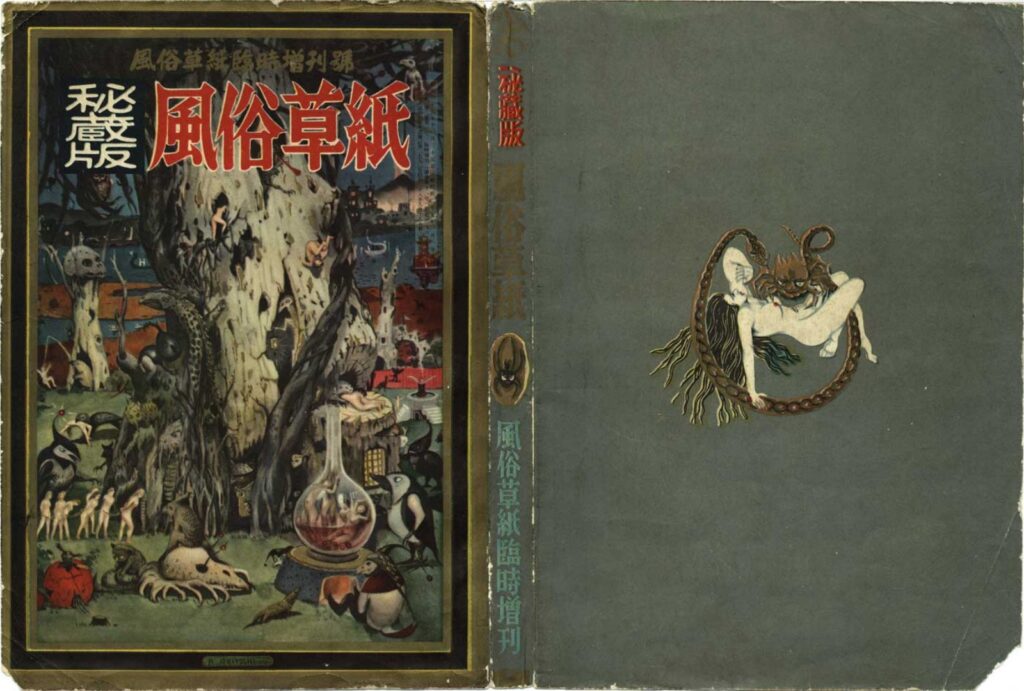
- The elaborate infernal cover turns the special issue into a secret museum of monsters, skeletons, erotic bodies, instruments, and punishment fantasies (PDF p. 1).
- The opening color plate gathers several inverted and restrained women into a crowded theatrical composition of ropes, spectators, and bodily display (PDF p. 3).
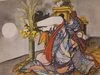
- A richly patterned illustration titled “Beauty Suspended Upside Down” places an inverted kimono-clad woman within a moonlit historical landscape (PDF p. 4).
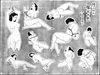
- The opening art portfolio ranges from minimalist studies of rope and posture to historical discipline, domestic assault, infernal torment, and grotesque fantasy (PDF pp. 5–27).
- The first major Japanese bondage-photo suite presents chair restraint, floor bondage, threatening implements, attack, fear, and “rope seeking the warmth of skin” (PDF pp. 28–38).
- A second photographic suite, centered on a woman in traditional dress, names distinct states including whipped skin, human-flesh torment, monkey binding, humiliation, and rope biting into the body (PDF pp. 39–49).
- The male nude bondage collection studies the male body through kneeling poses, muscular display, compact floor restraint, and pillar bondage (PDF pp. 50–54).
- The illustrated “Snow-Skin Hell Mandala” presents a historical institution in which women are stripped, inspected, disciplined, displayed, and subjected to ritual ordeals (PDF pp. 55–62).
- The “Museum of Abnormal Art” gathers Western images of whipping, spanking, animal punishment, public humiliation, and female dominance (PDF pp. 63–67).
- “Abnormal Love of the Nude Body” examines nudity through exhibitionism, shame, spectatorship, psychology, and modern commerce (PDF pp. 72–76).
- “Record of Princess Sen” turns courtly history into a narrative of female authority, jealousy, punishment, and erotic intrigue (PDF pp. 77–81).
- “Blood on the Double-Edged Sword” develops a sustained modern narrative of lesbian intimacy, secrecy, jealousy, and danger (PDF pp. 83–86).
- “Sadism Techniques: Various Methods of Cruel Erotic Torment” organizes restraint, pain, fear, exposure, and bodily control into a developing theory of practice (PDF pp. 87–93).
- The roundtable on abnormal customs brings writers, artists, doctors, publishers, and researchers together to debate sadism, masochism, homosexuality, fetishism, and erotic media (PDF pp. 94–109).
- “Sadism Revealed in Sexual Crimes,” “A Hundred Forms of Women in Ecstatic Cruelty,” “Exhibitionism on the March,” “Stories of Strange and Abnormal Books,” and Kunichika’s women-under-torment prints connect criminology, etsugyaku, public exposure, print history, and artistic genealogy (PDF pp. 110–150).
Contributors
Named contributors represented in this issue:
- Asada Minoru
- Fujisawa Morihiko; illustrations by Nozaki Kōsaku
- Itō Seiu
- Kunikata Mariko
- Mitani Ichiba
- Mizusawa Fukayuki
- Nakagawa Ayako
- Nozaki Kōsaku
- Ōhashi Yasei
- Ryūdōji Yū; illustrations by Akiyoshi Noboru
- Sakanoue Nobuo
- Shimizu Mitsue
- Takahashi Tetsu
- Yagiwa Hideo
- Yoshida Hideo
- Yoshida Taeko
- Yuki Aoi