Kitan Club
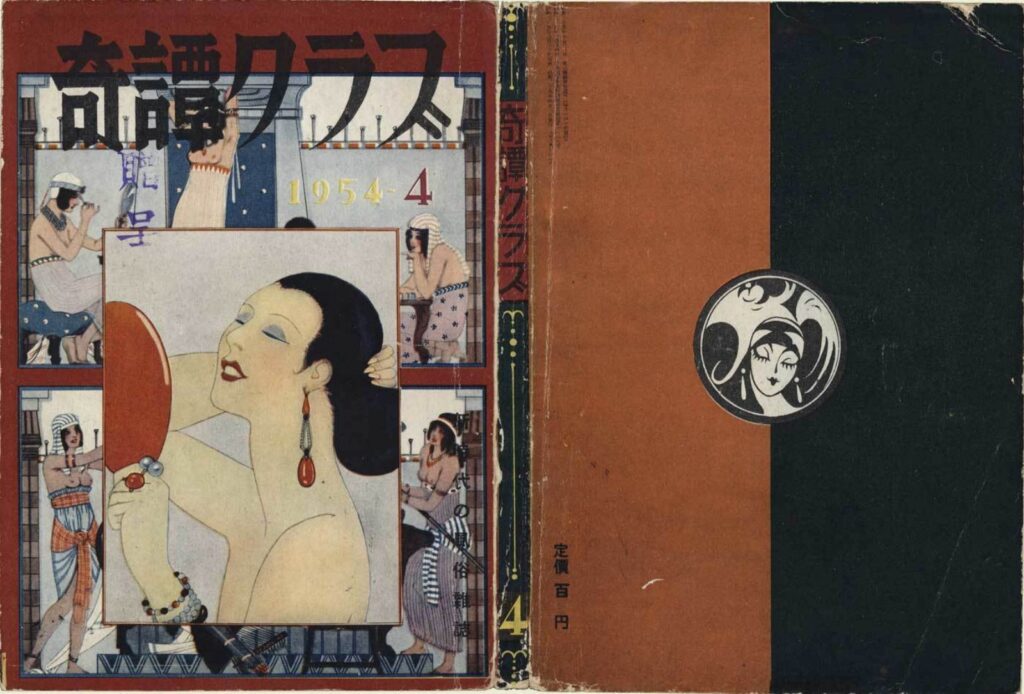
April 1954
← Back to magazine archive
Issue Details
- PDF pages
- 140
Summary
The April 1954 issue of Kitan Club shows the magazine at a mature stage in its transformation from a broad curiosity publication into one of the central print spaces of early Japanese SM culture. Across 140 PDF pages, the issue combines bondage photography, illustrated seme, foreign fetish imagery, reader testimony, confession, fiction, sexological classification, queer autobiography, medical case material, and historical discussion. Rope is everywhere, but it appears in several different registers: as practical technique, erotic spectacle, narrative device, psychological symbol, and evidence of a developing subculture.
Read full summary Close full summary
Table of Contents 39 items
-
Circus Torment
Summary
An erotic illustration feature depicting women subjected to circus-like rope-binding positions, including inverted suspension, pole bindings, and other elaborate restraints. Captions identify the various bondage arrangements.
-
New Yoshiwara Public Exposure
Summary
An illustrated historical account of public exposure and punishment in the Yoshiwara pleasure district, describing the former inspection site and the punishment reportedly imposed there on an arrested flower seller. The accompanying scene portrays a public spectacle involving a restrained woman and gathered observers.
-
Auctioning the Beautiful Pony
Summary
A visual feature presents women as eroticized “ponies” being displayed and auctioned, including scenes of staged presentation, pony-style costume, and submission. The photographs emphasize spectacle, labeling, and the transformation of women into fetishized property.
-
Flagellation
Summary
A short visual feature titled “Flagellation” depicts women using whips and a restrained woman equipped for punishment. The images focus on eroticized whipping, bodily control, and bondage.
-
Woman Sitting on a Man’s Waist
Summary
A staged photograph shows a woman seated on the waist of a prone, apparently restrained figure, emphasizing a physically dominant female pose.
-
Foreign Bondage Photographs
Summary
A photographic feature presenting foreign bondage imagery includes a prone person bound with rope in a posed restraint scene, with an accompanying note drawing attention to the method of tying the knot.
-
Takate Kote
Summary
A photographic instructional feature presenting the takate kote, or upper-body arm-and-chest tie, through staged bondage poses. The images emphasize the rope arrangement, immobilized posture, and visual presentation of the bound model.
-
Capture-Play Stage Photographs
Summary
A visual portfolio titled “Capture-Play Stage Photographs,” showing staged scenes of women being captured, restrained, and displayed in outdoor and theatrical settings. The photographs draw on period capture imagery and dramatic bondage tableaux.
-
Hit-and-Run Killing: Two Flowers Scattered on the Railway
Summary
A sequential erotic illustrated narrative follows two young women through bicycle and railway-track accidents, scenes of danger, bodily vulnerability, and apparent rescue or aftermath. The feature presents railway violence as a sensational, staged spectacle rather than ordinary documentary reportage.
-
Pine-Needle Torment
Summary
A single erotic illustration depicts a nude woman draped over a pine-tree branch amid dense needles, turning a natural setting into an image of torment, exposure, and bodily vulnerability.
-
Bound to the Bed
Summary
A photographic feature depicts a woman restrained in a prone position on a bed, with her limbs secured and her tearful expression evoking an imagined spanking scene. The accompanying text emphasizes the suggestive absence of both an opposing figure and a whip, leaving the scene open to fantasy.
-
Is This All Right?
Summary
A close-up photograph shows a man’s wrist being firmly stepped on by a woman wearing a black high heel. The caption presents the image as expressing female superiority, male submission, and the contrasting satisfaction of both participants.
-
A Woman with a Whip and a Man as Her Horse
Summary
A photographic feature depicting a whip-wielding woman dominating a man presented as her human horse. The accompanying images emphasize forceful sadistic performance, submission, and the theatrical staging of corporal punishment.
-
Bizarre Hypnotist
Summary
An illustrated erotic fantasy centered on bizarre or cruel hypnosis, with figures placed in scenes of sexual control, restraint, and punishment. The artwork presents domination and bondage as theatrical, imaginative scenarios rather than documentary scenes.
-
How to Apply a Gag
Summary
A photographic instructional feature demonstrating how to apply a gag, showing the restrained subject and the placement and securing of the gag.
-
Pillar Binding
Summary
A photographic demonstration of pillar binding (hashira shibari), showing a seated subject secured with rope in a compact, restrained posture.
-
Beauty Exercises
Summary
An illustrated erotic feature presents painful contortions and one-foot toe suspension as supposed “beauty exercises,” framing female endurance and display through bondage imagery.
-
Inspired by Pears and Peaches: Whip Torment
Summary
An illustrated scenario depicts a woman, still dressed, restrained over a basket filled with eels. The accompanying text invokes instinctive fear of snakes and eels as the basis for an imaginative torment scene.
-
Cruel Women: Illustrated Portfolio
Summary
An illustrated portfolio presenting European and American images of cruel or dominant women, including scenes of whipping, punishment, sexual discipline, and female control. Captions identify works such as Das Grausame Weib and other imported illustrations, with references to schoolroom discipline and sadistic fantasy.
-
Dragging Around
Summary
A staged erotic photograph titled “Dragging Around” depicts a partially nude woman bound with ropes and pulled or led through an interior space, emphasizing forced movement and physical restraint.
-
Reflections on Rope: The Allure of Binding One’s Wife
Summary
Kuruki Sakae reflects on the emotional and erotic appeal of tying his wife, combining personal memories of marital bondage with observations on desire, jealousy, freedom, and sexual psychology. The essay discusses rope restraint as an intimate form of marital communication and invokes literary and cultural examples alongside staged illustrations.
-
An Abused Boyhood
Summary
A first-person account of an abused boy’s experiences of arrest, confinement in a juvenile prison, forced undressing, physical punishment, humiliation, and sexualized mistreatment. The narrative emphasizes the fear, degradation, and lasting psychological effects of institutional and interpersonal abuse.
-
Erotic-Letter Correspondence
Summary
A personal erotic letter addressed to Yashima Sawako, in which Eri Mizue reflects on an intense fascination with women’s beauty, same-sex desire, and fantasies of female vulnerability, restraint, and erotic spectacle. The correspondence also discusses how beauty and abuse are represented through literature, film, and visual art.
-
A Record of Wailing
Summary
A long first-person confession in which Yūko Furukawa recounts a troubled marriage, sexual masochism, bondage and punishment fantasies, and the psychological conflicts surrounding desire, shame, guilt, and self-knowledge. Illustrated episodes and dramatic monologues frame the narrative as an introspective record of suffering and forbidden erotic experience.
-
Gags: Notes on Overseas Sadism, Part One
Summary
Azuma Shin’s first installment of “Notes on Overseas Sadism” compares Japanese and Western approaches to sadistic practices, focusing especially on gags and other restraint devices. It surveys historical and theatrical examples—including elaborate masks, punitive appliances, and staged scenes—to discuss the development, symbolism, and practical use of gagging in overseas sadism.
-
The Man I Sought, Part Four
Summary
Part four of Matsui Kanoko’s autobiographical erotic narrative follows her shifting infatuations and encounters with several men, including a clothing-shop clerk and university students. The account culminates in a seaside episode involving swimsuits, mutual teasing, and playful burial in sand, reflecting on desire, jealousy, experimentation, and the narrator’s search for an ideal partner.
-
Nostalgia for the Long Pipe
Summary
Nishi Sadao nostalgically recalls the long tobacco pipe as an eroticized object, connecting childhood memories, domestic scenes, and illustrated or cinematic images with later adult fascination. The essay also reflects on shared smoking rituals and the pipe’s role in intimate fetishistic imagination.
-
Reflections on Female Seppuku
Summary
Taya Keisei surveys and reflects on representations of female seppuku, discussing historical examples, medical plausibility, sensational imagery, and the cultural fascination surrounding women’s self-disembowelment. The essay considers how erotic illustrations and related fantasies transform violent death into a stylized visual and imaginative motif.
-
Confession of a Homosexual
Summary
An autobiographical confession by a man describing same-sex attraction and intimate relationships with male comrades during military service, followed by marriage to a woman and the persistence of forbidden same-sex desire in his domestic life. The account emphasizes secrecy, emotional conflict, and attempts to reconcile heterosexual marriage with continuing male-centered desire.
-
From the Notebook of a Masochist: The Queen of Water
Summary
Two illustrated episodes from a masochist’s notebook present eroticized historical bathing fantasies centered on powerful women, servants, and subordination. The scenes draw on figures such as Anne Boleyn and Poppaea and combine luxurious baths with enslavement, bodily service, hair removal, bloodletting, humiliation, and violent punishment.
-
The Room of Evil
Summary
A fictional first-person account follows a woman through an unsettling erotic underworld of captivity, surveillance, and coercive encounters. As she enters the titular “room of evil,” power shifts between men and women through bondage, sadistic threats, voyeurism, and sexual domination.
-
Being Bound for the First Time
Summary
Murata Namiko recounts her first experience as a bound model during an outdoor photography session. She describes being tied to a tree and later restrained in staged scenes, moving from apprehension and discomfort toward familiarity with rope bondage and the photographer’s direction.
-
I Committed Seppuku
Summary
A first-person account by Kishida Eiko describing an imagined and eventually enacted episode of abdominal self-cutting with a razor during a bathing trip. The narrative emphasizes the writer’s fascination with pain, blood, bodily sensation, fear, and the conflicted emotions surrounding masochistic self-injury.
-
In Praise of Perversion, Part Two
Summary
The second part of Oniyama Kōsaku’s theoretical essay classifies diverse forms of “perversion,” including sadism, masochism, fetishism, scopophilia, exhibitionism, necrophilia, zoophilia, and same-sex desire. It considers their psychological mechanisms, social and ethical interpretations, and the tension between individual desire, moral judgment, and legal norms.
-
Memoirs of Dr. Yamikumo
Summary
A first-person memoir-style erotic narrative attributed to Dr. Yamikumo, recounting increasingly extreme encounters involving coercion, bondage, humiliation, sadistic violence, and medicalized sexual experimentation. The episodes move between fetishistic fantasy, captivity scenarios, and voyeuristic descriptions of women and men subjected to elaborate restraints and bodily ordeals.
-
Sexual Fluids, Part Three
Summary
The third installment of Itō Seiu’s essay examines sexual fluids, nude modeling, and the relationship between eroticized bodies and modern visual culture. It discusses artists, models, photography, painting, exploitation, and changing sexual attitudes while reflecting on the voyeuristic and commercial uses of the nude body.
-
Spiders and Butterflies, Final Installment
Summary
The concluding installment of Hida Ryōji’s serialized SM fiction follows a woman who is abducted, restrained, humiliated, and prepared for staged photographic display. The narrative combines captivity, elaborate rope and apparatus bondage, sensory restriction, punishment, and the voyeuristic spectacle of an audience and camera.
-
Cruel Women
Summary
Moriki Aizō’s translated continuation of Das Grausame Weib presents historical and anecdotal accounts of women who exercise violent authority over enslaved or subordinated people, including whipping and other forms of corporal punishment. The piece frames female cruelty through nineteenth-century colonial and slavery-related sources, with emphasis on gendered dominance and punitive spectacle.
-
Slave Boy
Summary
A fictional first-person account of a young man who becomes a female employer’s servant and sexual subordinate. The Madam and her assistant enforce his obedience through stripping, verbal humiliation, corporal punishment with a riding crop, and other disciplinary commands.
Highlights
- “Circus Torment” opens the issue with women inverted, compressed, suspended, and arranged as a visual catalogue of acrobatic bondage (PDF p. 5).
- An Itō Seiu historical illustration depicts violence in the Shin-Yoshiwara pleasure quarter and links Edo punishment imagery to modern seme (PDF p. 6).
- Foreign material includes female domination, lesbian spectacle, whipping, and suspension under the explicit heading “Flagellation” (PDF pp. 7–10).
- “Expert Hands” presents a Japanese bondage-photo sequence moving from behind-the-back restraint to chest binding and gagging (PDF pp. 11–12).
- “The Stage of the Captive” uses outdoor posts, frames, and traditional costume to make landscape part of the bondage composition (PDF p. 13).
- A sensational bicycle and railway sequence transforms modern transport, accident, and bodily peril into pulp erotic spectacle (PDF pp. 14–17).
- Kita Reiko’s “The Strange Curator” or “Museum of Strange Pictures” classifies suspension, pressure, inversion, and mechanical torment as collectible images (PDF pp. 21–22).
- “How to Hang a Monkey” and the adjacent pillar restraint treat named bondage forms as practical bodily engineering (PDF pp. 23–24).
- Historical and foreign punishment illustrations include inverted restraint, women disciplined with whips, and the German feature “Cruel Women” (PDF pp. 25–28).
- “Random Thoughts While Circling the Rope” reflects on binding a wife and relocates rope from public punishment into domestic erotic fantasy (PDF pp. 31–38).
- “The Abused Youth” connects cruelty, adolescence, sexual awakening, and the formation of sadistic or masochistic identity (PDF pp. 39–43).
- “Sensual Correspondence” and “Record of Convulsions” turn reader address and first-person confession into vehicles for private abnormal desire (PDF pp. 44–61).
- “Overseas Sadism Notes: The Monkey Collar” surveys foreign restraint devices, while “The Man I Desired” develops a long female first-person erotic narrative (PDF pp. 62–80).
- “Female Castration Fantasy,” “A Certain Homosexual’s Confession,” and “From the Notebook of a Masochist” join medicine, queer testimony, and literary sadism (PDF pp. 83–96).
- “Bound for the First Time,” “Because I Had an Injury, I Was Castrated,” “Aesthetic Theory of Abnormality,” and “Spiders and Butterflies” connect lived experience, medical narrative, classification, and fictional entrapment (PDF pp. 104–140).
Contributors
Named contributors represented in this issue: