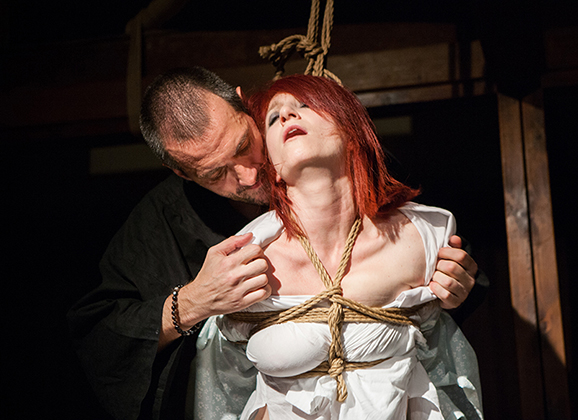
Riccardo Wildties: Kinbaku, Semenawa, and European Rope Culture
Riccardo Sergnese, better known as Riccardo Wildties, is an Italian rigger and rope artist whose work developed out of the European kinbaku scene of the early 2010s. After first encountering BDSM in his thirties, he became increasingly focused on Japanese rope bondage, initially practicing with his model Redsabbath and gradually moving from technical experimentation toward a more explicitly Japanese-inspired approach.
A major turning point came at the 2011 London Festival of the Art of Japanese Rope Bondage. There he encountered performances by Japanese kinbakushi including Hajime Kinoko and Kazami Ranki, as well as European practitioners such as Wykd Dave. Wildties later described this period as the point at which his priorities shifted away from rope as technique alone and toward the emotional connection and physical experience created between rigger and model.
From 2012 onward he began performing and teaching across Europe. By the end of that year, the work of Naka Akira had become a particularly important influence. Wildties increasingly explored semenawa, using rope not simply to restrain or decorate the body but as a means of creating controlled discomfort, erotic tension, and emotional intensity. His work from this period emphasized a more traditional Japanese aesthetic and a deliberate use of pressure, posture, and vulnerability.
That connection to Naka’s work led to an unusually significant invitation in August 2014, when Wildties was invited to perform as the main event at Naka Nawakai, Naka Akira’s private session series. This was the first time someone other than Naka himself had been featured as the main event there.
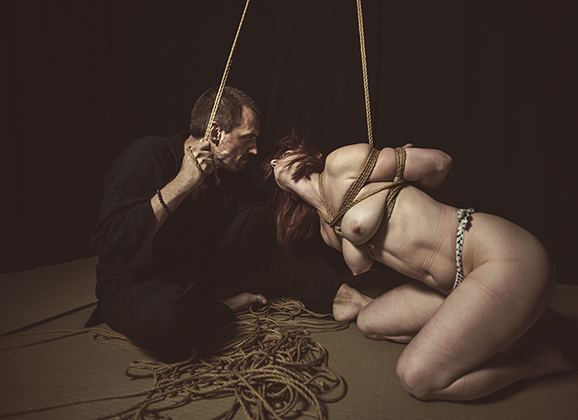
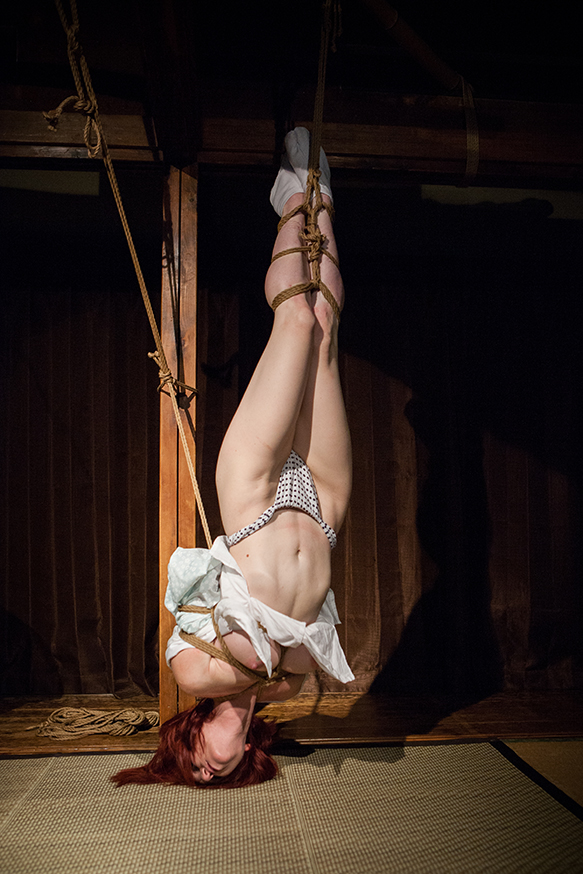
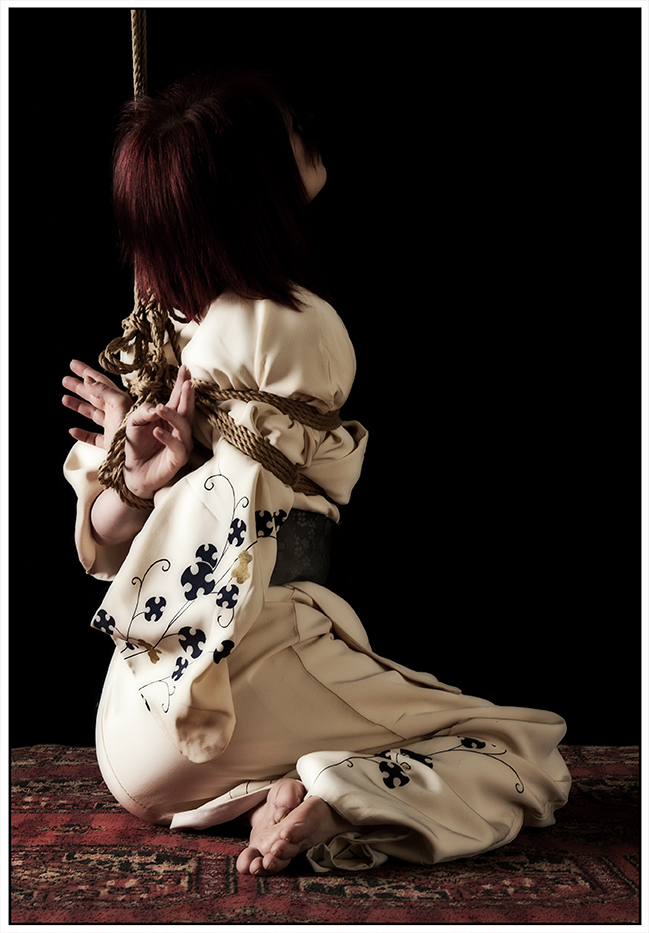
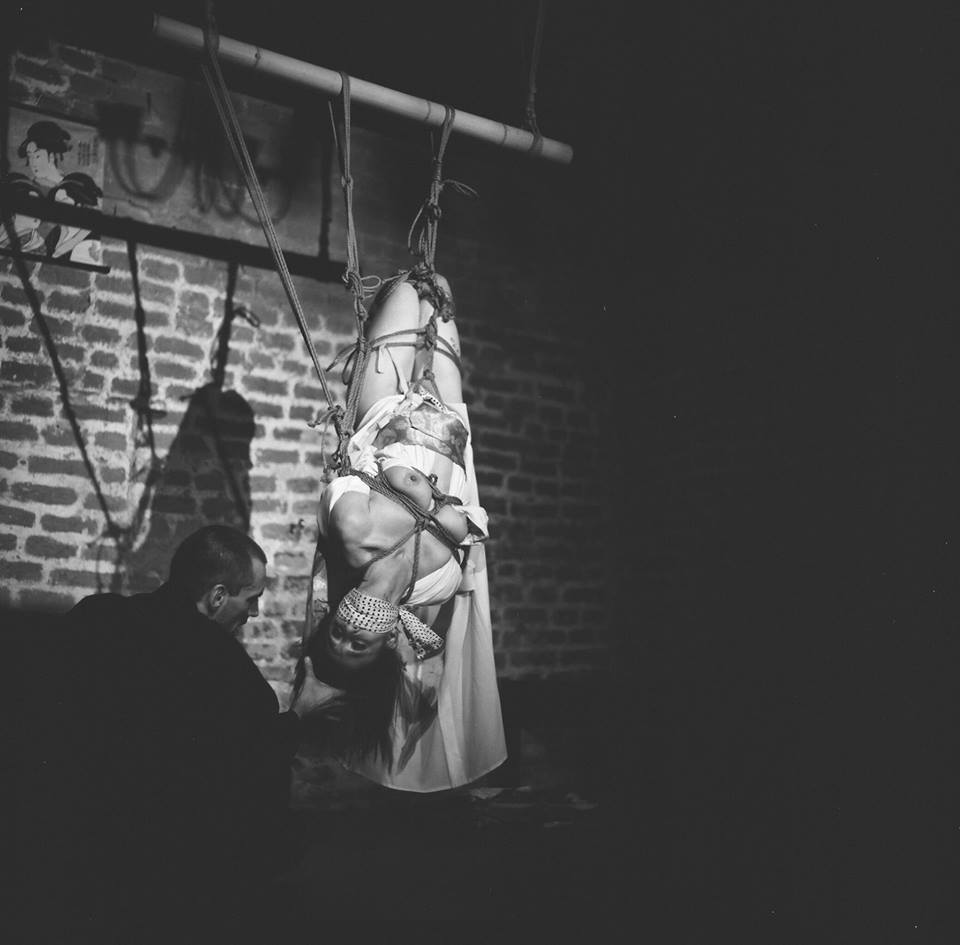
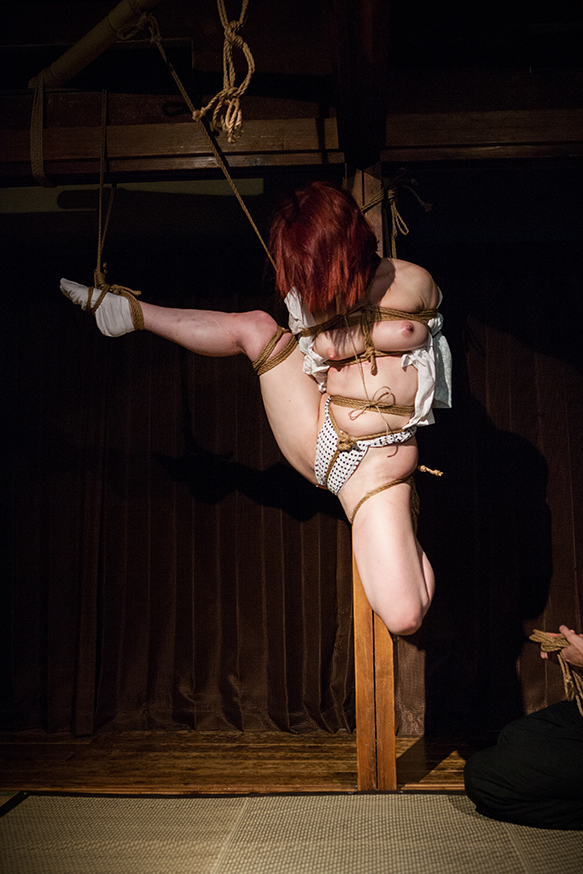
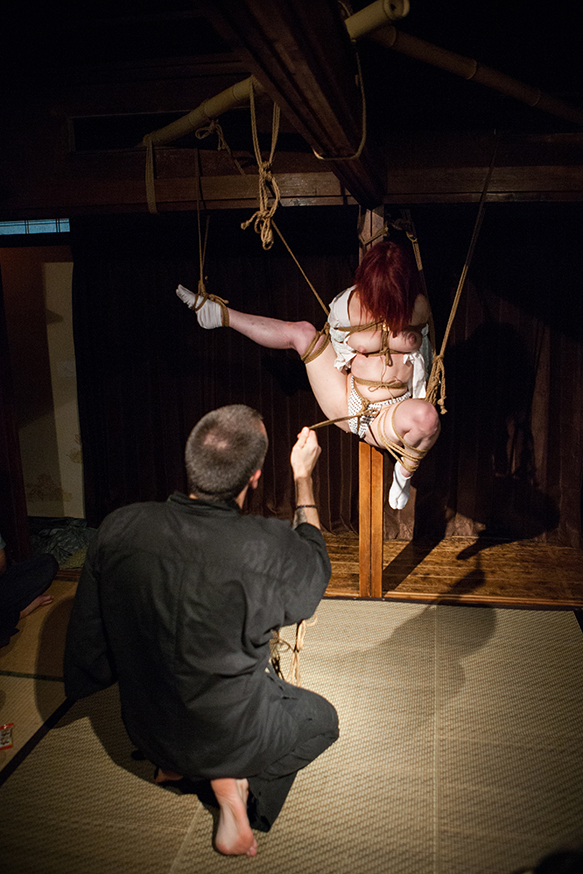
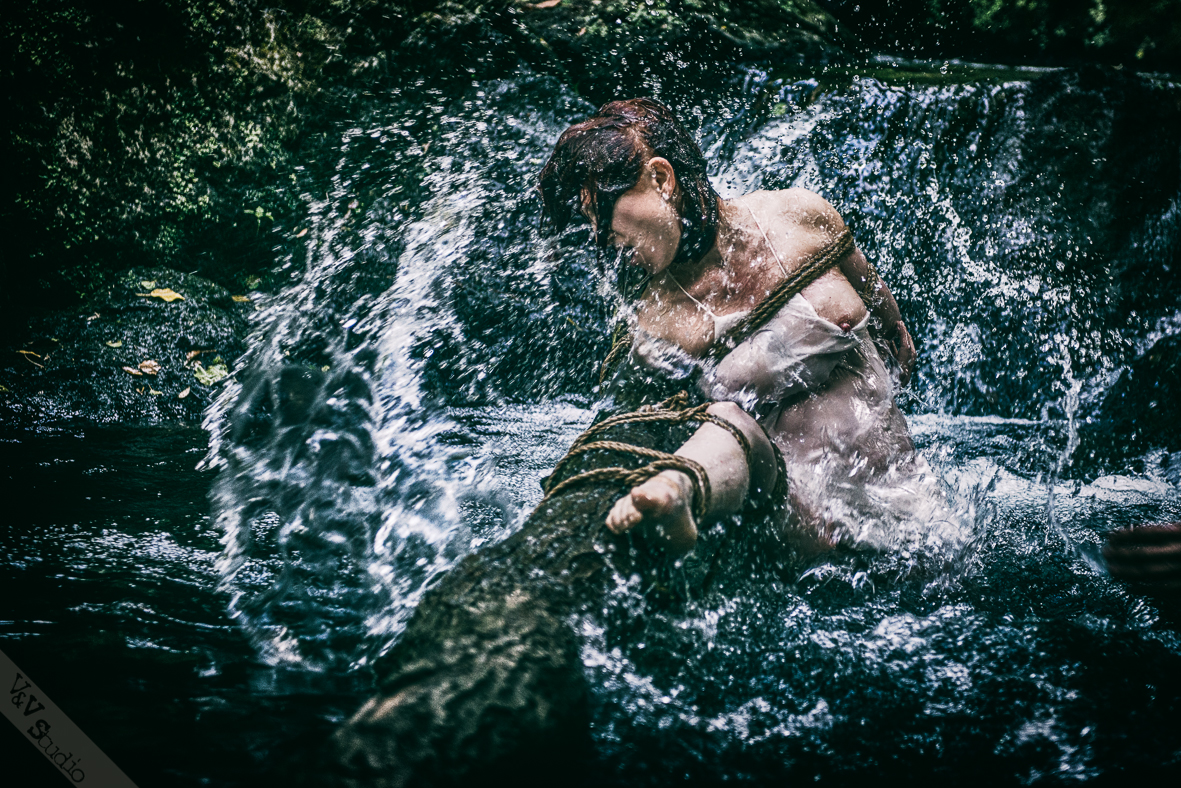
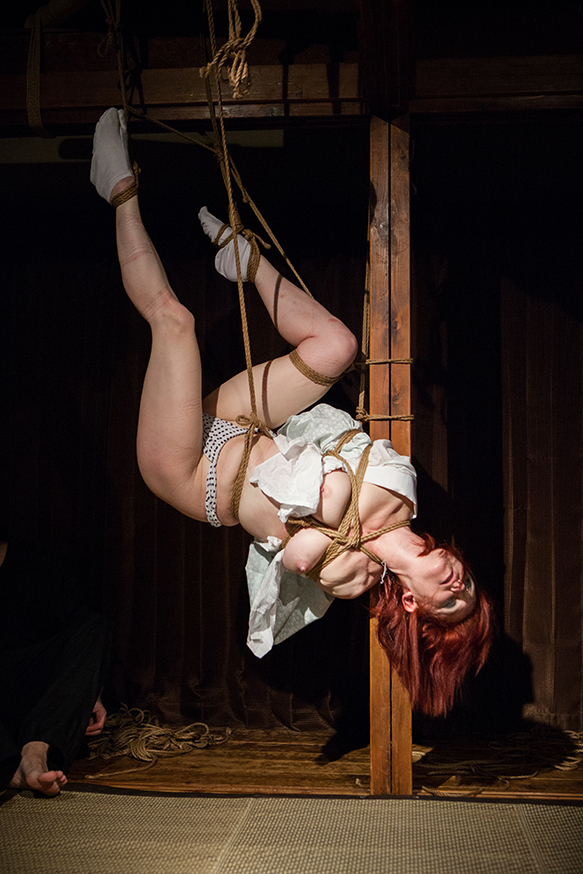
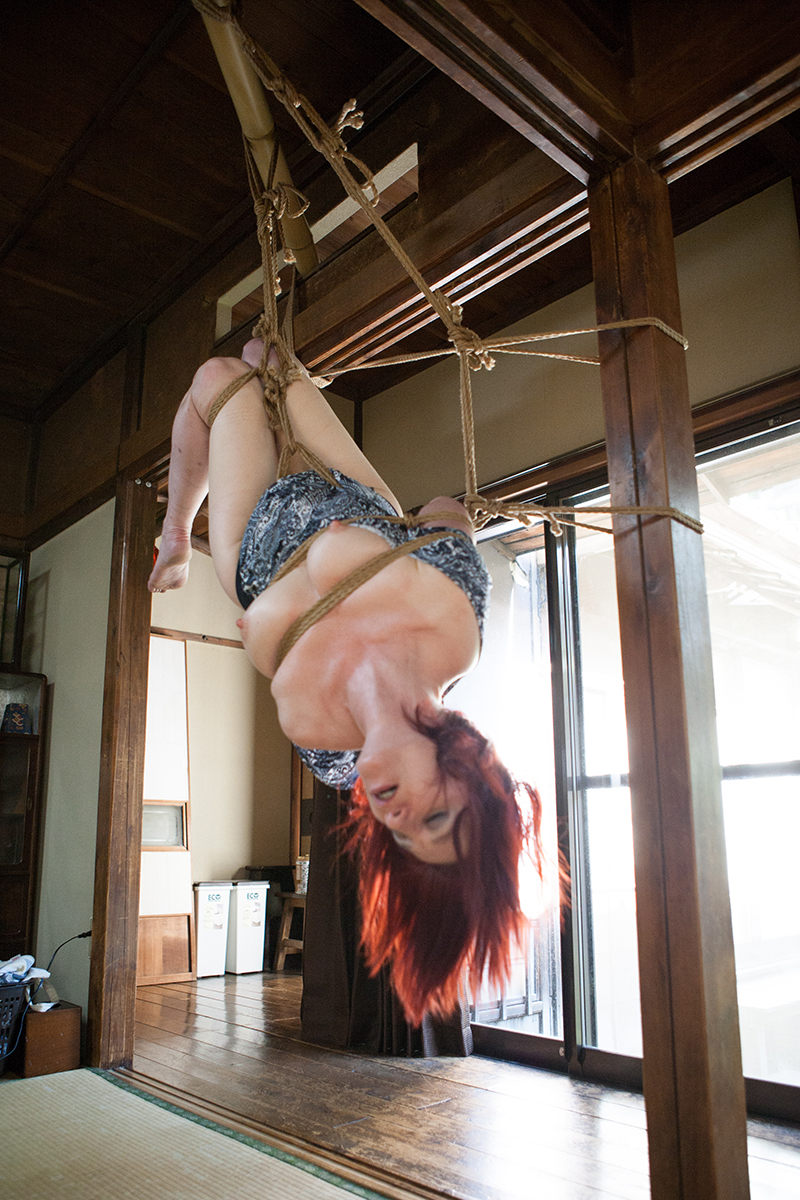
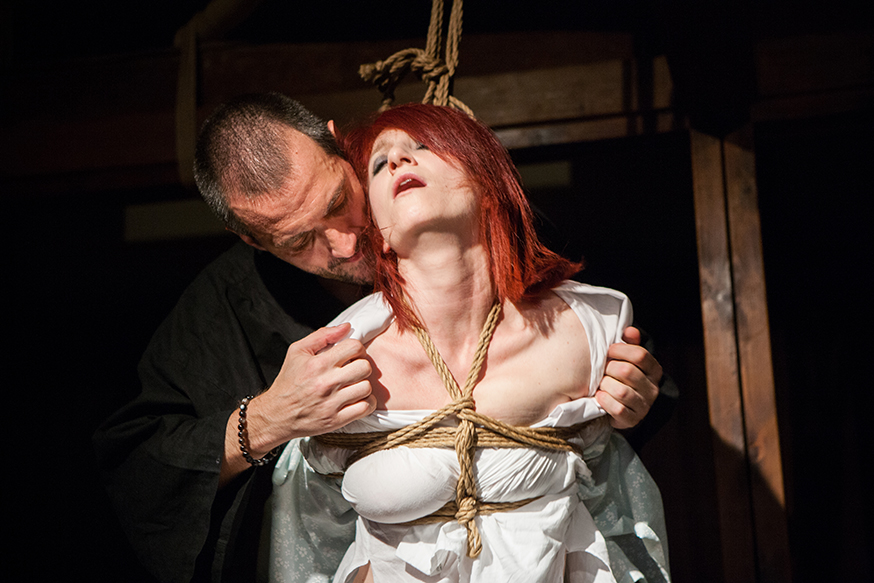
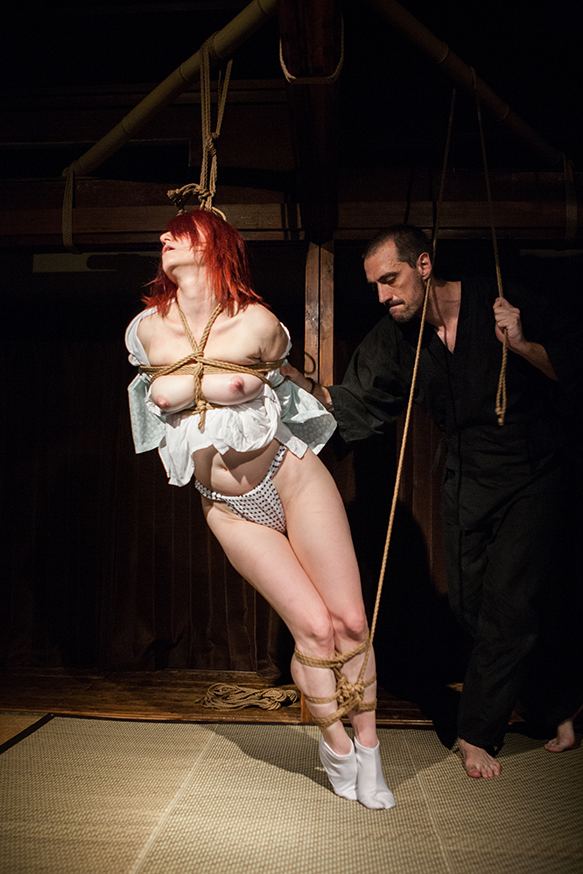
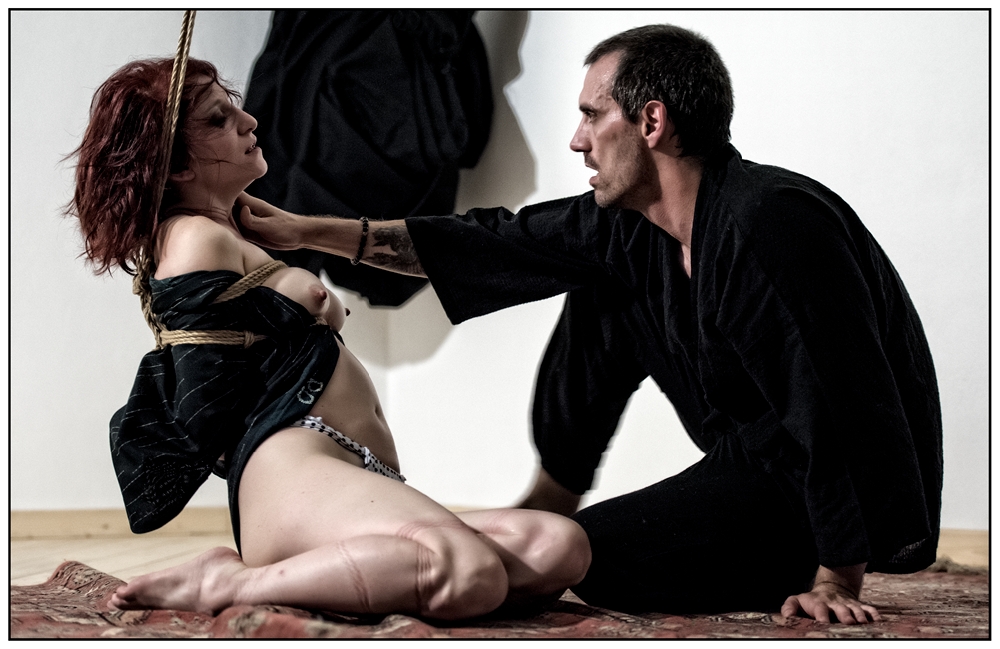
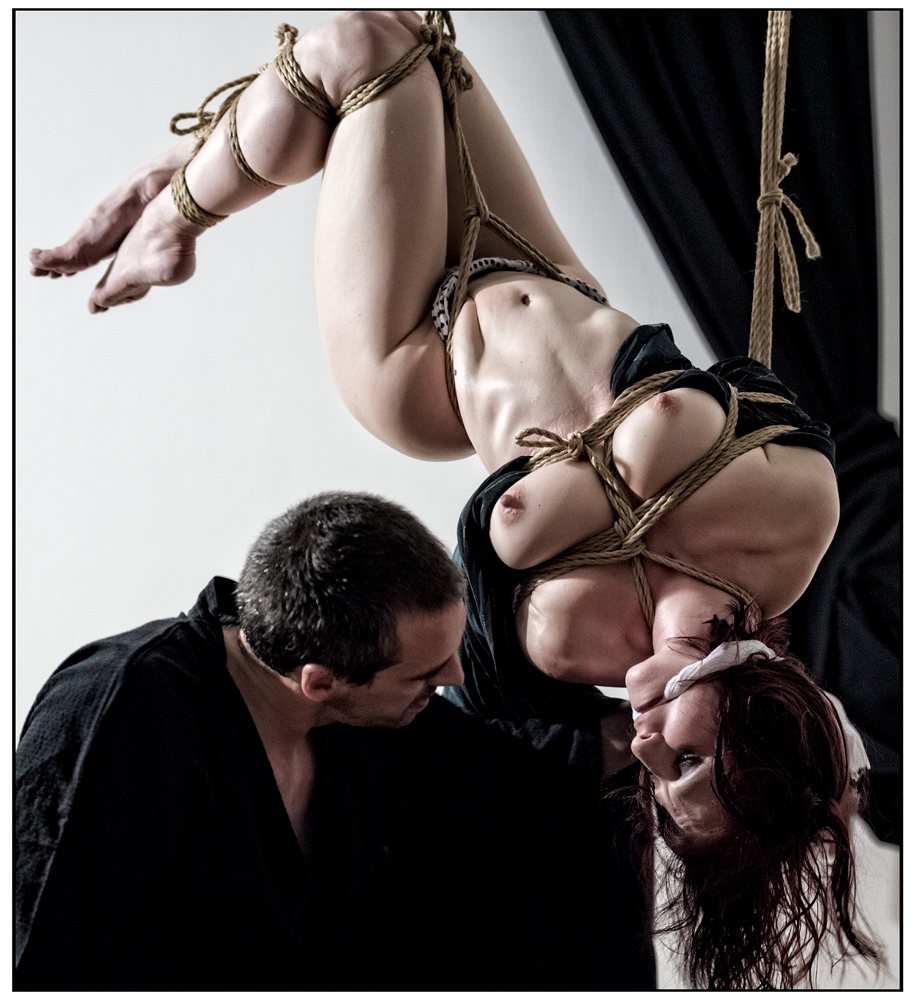
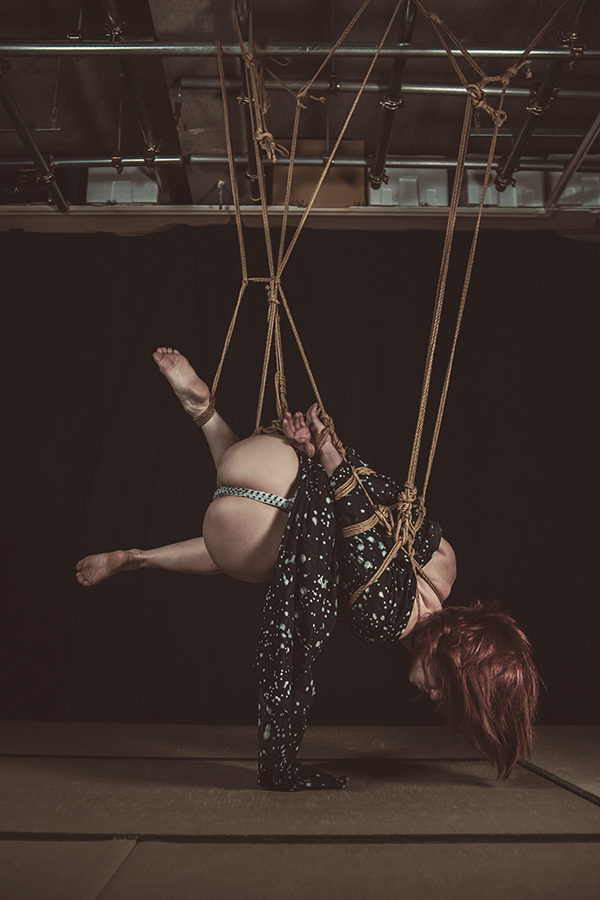
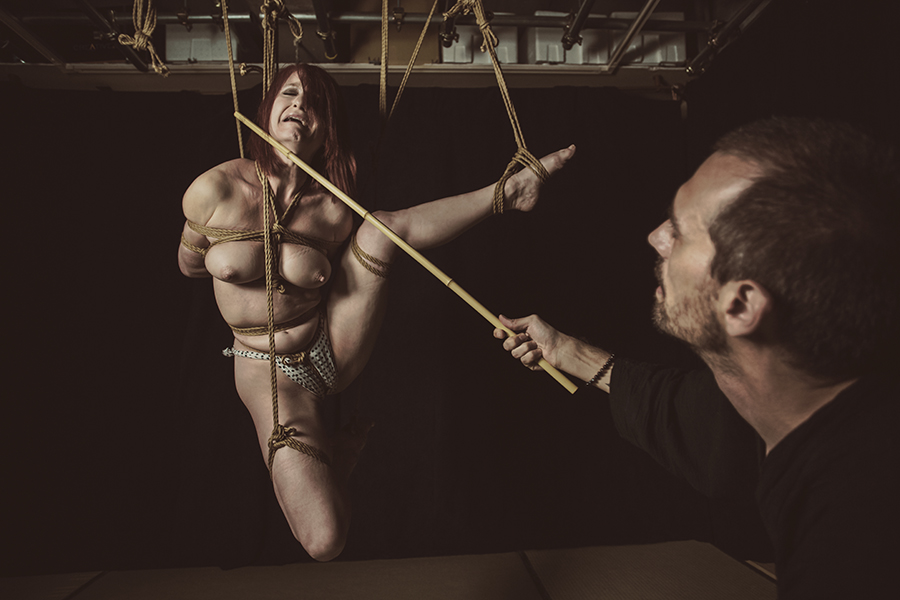
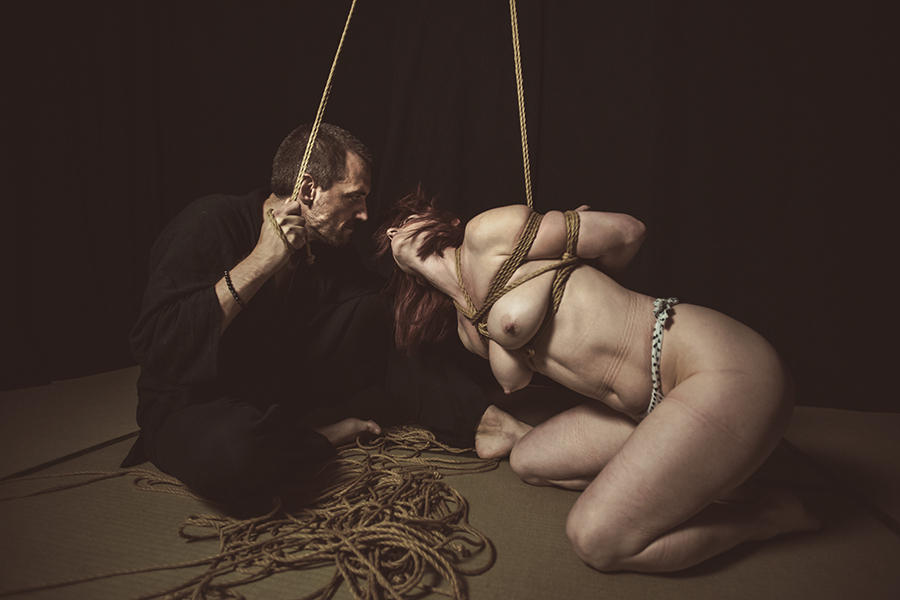
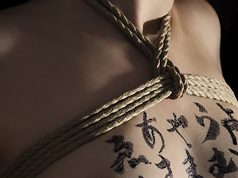
The photographs in this gallery therefore document a practitioner working at an important intersection in the international development of kinbaku. Wildties’ rope reflects the rapid exchange that was taking place between Japanese bakushi and European practitioners during this period, while also showing how those influences were being interpreted and developed within a distinct European rope culture.
Photography and rope by Riccardo Wildties.
‘