Gaho Fuzoku Kitan
October 1960
← Back to magazine archive
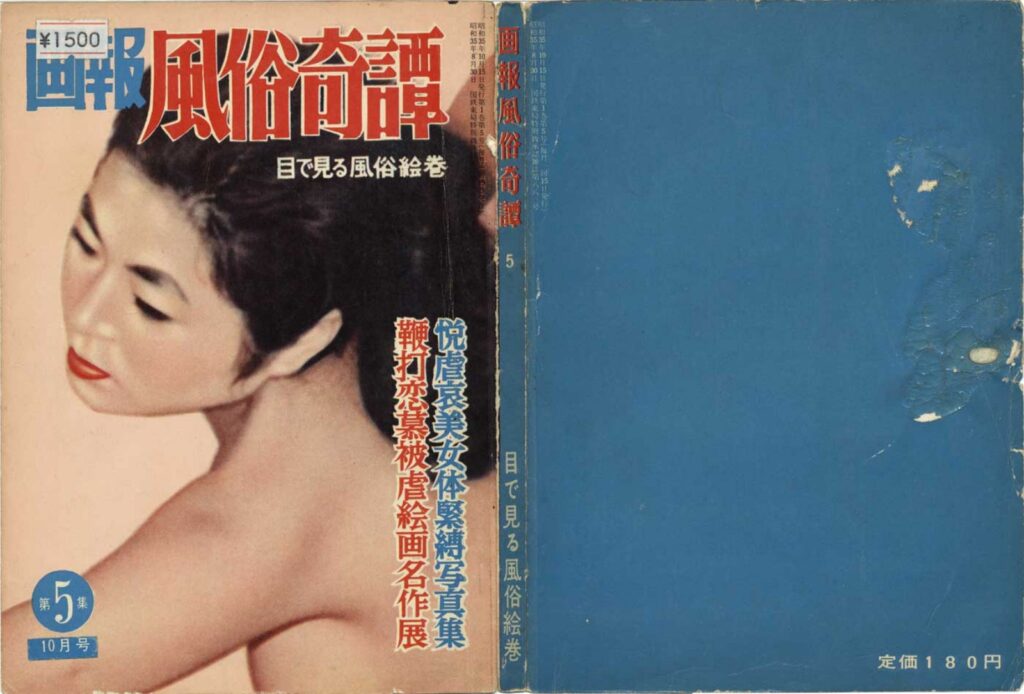
Issue Details
- Issue
- 5
- PDF pages
- 127
Summary
The fifth collection of Gaho Fuzoku Kitan is organized as a densely illustrated survey of bondage photography, punishment imagery, erotic art, translated libertine literature, historical melodrama, crime reportage, and sensational foreign narratives. Its opening color portfolio places restrained women against weathered stone, shadowed interiors, garden architecture, and an outdoor veranda. The formal contents spread then divides the issue into three major gravure groups, illustrated portfolios, literary adaptations, documentary pieces, and historical fiction.
Read full summary Close full summary
Table of Contents 40 items
-
A Melancholy Moment
Summary
A photographic vignette presents a woman bound with rope around the torso and legs, seated in a reflective, melancholy pose amid cushions and drapery.
-
Midday Is Quiet
Summary
This photographic sequence depicts a rope-bound woman posed quietly in reclined and seated positions in a garden-like domestic setting, with poetic captions emphasizing midday stillness and solitude.
-
White Fish at the Stand
Summary
A photographic feature presents a woman in white lingerie tied in elaborate rope configurations, shifting between staged interior and nighttime settings under the metaphor of a white fish at a stand.
-
Bound with Her Back to a Pillar
Summary
A photographic bondage feature depicts a woman restrained upright with rope against a pillar, including views of her bound torso and limbs in an outdoor setting.
-
Chair-Top Cruelty
Summary
This photographic feature stages a woman bound in varied positions around a chair, emphasizing immobilized limbs, awkward posture, and the visual drama of furniture-based restraint.
-
Receiving the Rope Marks
Summary
A multi-page kinbaku portfolio shows a woman receiving elaborate rough-rope bindings in seated, reclining, and floor-based positions, with close views of the rope patterns and restraint.
-
Hanging-Neck Doll
Summary
A photographic bondage sequence presents a woman tied in various outdoor positions as a “hanging doll,” combining rope restraint with the imagery of helpless suspension and manipulated movement.
-
Pole Torment
Summary
A photographic feature depicts a restrained woman subjected to a large wooden pole pressed across and around her body, framing immobilization as staged torment.
-
Prepared Alive on a Tray
Summary
This photographic fantasy depicts a captured “mermaid” bound spread-eagled on a tray or platform, evoking preparation as live sashimi through staged captivity and ritualized restraint.
-
Chain Bondage
Summary
A photographic bondage feature depicts a woman secured in chains around her neck and body in a series of constricted seated and reclining poses, emphasizing the apparatus and the physicality of restraint.
-
Melancholy Flower
Summary
A poetic photographic portfolio presents a solitary woman bound with rope outdoors among trees and flowers, framing her restrained body as a melancholy white “flower” and emphasizing isolation and reverie.
-
A Cast-Aside Posture
Summary
A photographic feature portrays a woman tied and discarded across floors, railings, and furniture in strained, vulnerable positions, accompanied by text evoking physical collapse and fantasies of cruelty.
-
An Unusual Wooden Horse
Summary
A photographic feature presents a woman bound and posed over a specially constructed wooden horse, demonstrating several restrictive positions and the apparatus’s unusual physical effects.
-
Rock Sliding
Summary
This visual feature depicts a woman tightly rope-bound in contorted poses associated with a rocky or stone-like setting, emphasizing discomfort, immobilization, and dramatic presentation.
-
Cargo in a Basket
Summary
A photographic sequence shows a bound woman treated as “cargo,” first enclosed or arranged in a basket and then displayed in tightly restrained floor poses, turning transport and containment into a bondage scenario.
-
Attack of the Karasu-Tengu
Summary
A dark erotic fantasy imagines a karasu-tengu abducting and binding a beautiful woman, with accompanying staged images depicting captivity and cruel menace.
-
Steam Torment
Summary
A photographic bondage scene places a bound woman in a steamy setting, presenting the softened sensation of rope and the resulting erotic intoxication.
-
Inverted Hair Suspension
Summary
An erotic illustration depicts a woman inverted and suspended by her hair and one leg, emphasizing the intense pain and bodily extremity of the pose.
-
Wrist Suspension
Summary
An illustrated bondage study depicts a woman suspended by both wrists, emphasizing the unstable posture and the strain of supporting her full body weight in midair.
-
Flower-Wheel Torment Device
Summary
An illustrated apparatus feature shows a woman secured against a wooden frame with her hands tied behind her to a bar connected by ropes and pulleys, so movement activates the torment device.
-
Eat the Rats
Summary
A dark erotic illustration shows a bound captive sprawled on the floor beside a rat, while the accompanying text taunts her to stop struggling and presents the dead rat as a fitting meal.
-
Rear-Hand Suspension
Summary
A photographic feature depicts a woman suspended by ropes with her arms bound behind her back, emphasizing the technique and visual drama of rear-hand suspension.
-
A Scene with a Piano
Summary
This photographic portfolio stages a rope-bound woman around a piano, showing varied seated and reclining restraints that combine musical interiors with erotic bondage imagery.
-
A Delicate Mystery of the Female Body
Summary
A photographic essay presents rope-bound women in poses of sensory restriction and apparent distress, framing nose-pinching and constrained postures as a transformation of discomfort into erotic intensity.
-
Inverted Shrimp Suspension
Summary
A photographic feature depicts a woman bound in inverted and suspended positions, with blindfolding and gagging used to restrict sight, speech, and movement.
-
A Pose Awaiting Cruelty
Summary
This photo essay presents women held in cramped, uncomfortable bondage positions, emphasizing prolonged bodily strain and chains pressing against the body.
-
A Delicate Mystery of the Female Body
Summary
A photographic sequence portrays deliberately humiliating poses in which a woman is gagged, bound with rope or chains, and made to endure exposed and physically restrictive postures.
-
Cold Tile
Summary
A one-page photographic feature presents a woman bound in an uncomfortable floor-level pose, emphasizing the visual drama and apparent pain of rope restraint.
-
Abnormal Secret-Picture Exhibition
Summary
This illustrated exhibition feature surveys bizarre erotic drawings, photographs, costumes, corsets, footwear, gags, and elaborate restraint devices, presenting fetishistic and surreal imagery by artists including John Willie.
-
Cruelty Created Through Tricks
Summary
Sasamura Hiroshi examines shocking photographs and illustrations that appear to depict torture, death, hanging, and other cruel scenes, explaining how staging, props, perspective, and photographic tricks create their sensational effects rather than documenting actual violence.
-
The Prosperities of Vice, Continued
Summary
A continuation of Marquis de Sade’s libertine fiction depicts aristocratic sexual violence, captivity, torture, and murder inflicted on several women by male perpetrators. The narrative emphasizes sadistic experimentation and the destruction of its victims.
-
The Massacre of Five Hundred Thousand
Summary
This historical sensational account describes wartime mass atrocities in Croatia, including organized killings, executions, and the persecution of civilians amid conflict between military and partisan forces.
-
Women of Strange Customs
Summary
An illustrated captivity narrative follows a young woman seized and restrained by men, subjected to coercive sexualized handling, humiliation, and elaborate rope bondage including suspension and forced exposure.
-
Love's Obsession Becomes a Serpent
Summary
An illustrated erotic adventure follows treasure-seekers into a deadly valley, where encounters with poisonous scorpions, pirates, captivity, and bound women turn their quest into a struggle for survival.
-
Human Steak
Summary
This illustrated captivity narrative depicts women seized and restrained aboard a pirate vessel, subjected to coercive sexual violence and sadistic treatment by their captors.
-
Journey Through the Desert of Death
Summary
An illustrated erotic adventure of peril and imprisonment portrays captives subjected to elaborate rope restraints, humiliation, and violent domination amid a hostile journey.
-
The Ice Field Crazed by Lust
Summary
A contents-page listing identifies an erotic fantasy set against an icy landscape, centered on desire and psychological disturbance; the article text itself is not included in the supplied pages.
-
The Beauty on the Guillotine
Summary
This staged photo-narrative depicts a woman abducted and repeatedly restrained with rope, drugged or rendered unconscious, and subjected to escalating coercion by a male captor in domestic and workplace settings.
-
Gruesome Murder Scenes That Make One Cover the Eyes
Summary
A sensational sequence of photographic tableaux presents increasingly harsh bondage and abuse, including blood, forced positions, foot and neck pressure, humiliation, and demands for further torment.
-
The Torment of Kichiya's Mad Love
Summary
This illustrated feature presents a dark erotic fantasy involving a demon king, Adam and Eve, a pleasure palace, torture, executions, and prisoners, accompanied by historical-style erotic illustrations and staged photographs of a woman in several restrained poses. The sequence contrasts forbidden desire and punishment with visualized bondage scenarios.
Highlights
- The color frontispieces juxtapose bound women with stone walls, shadowed rooms, garden architecture, and veranda scenery, establishing a restrained yet theatrical visual mood. (PDF pp. 3–6).
- The formal contents spread organizes the issue into three gravure groups, illustrated punishment portfolios, translated literature, reportage, and historical fiction. (PDF p. 8).
- The first gravure presents garden, bar, chair, pillar, and veranda bondage as a sequence of psychological tableaux centered on isolation and bodily display. (PDF pp. 9–25).
- The second gravure introduces cot restraint, chains, basket confinement, trees, rocks, and improvised wooden devices, creating the issue's most varied photographic catalogue of apparatus. (PDF pp. 26–41).
- Tagami Keiko and Ema Miku contribute a sequence of punishment illustrations involving steam, inverted suspension, wrist suspension, pulley restraint, and rats. (PDF pp. 42–47).
- The third gravure moves through piano, tatami, and tiled-bath settings, combining elegant posing with blindfolding, pressure, interrogation, and staged exhaustion. (PDF pp. 48–63).
- The abnormal secret-picture exhibition surveys whipping, public punishment, colonial violence, execution, humiliation, and grotesque comic imagery from international sources. (PDF pp. 64–79).
- Sasamura Hiroshi's illustrated essay examines how stage tricks, suspension effects, theatrical lighting, and performance can create an impression of cruelty. (PDF pp. 80–82).
- The continuation of The Prosperities of Vice provides a sustained literary treatment of libertinism and institutionalized cruelty. (PDF pp. 83–88).
- The closing third ranges from massacre and foreign peril to staged murder reportage and richly illustrated Edo-period tales of jealousy, obsession, and supernatural revenge. (PDF pp. 89–127).
Contributors
Named contributors represented in this issue: