Kitan Club
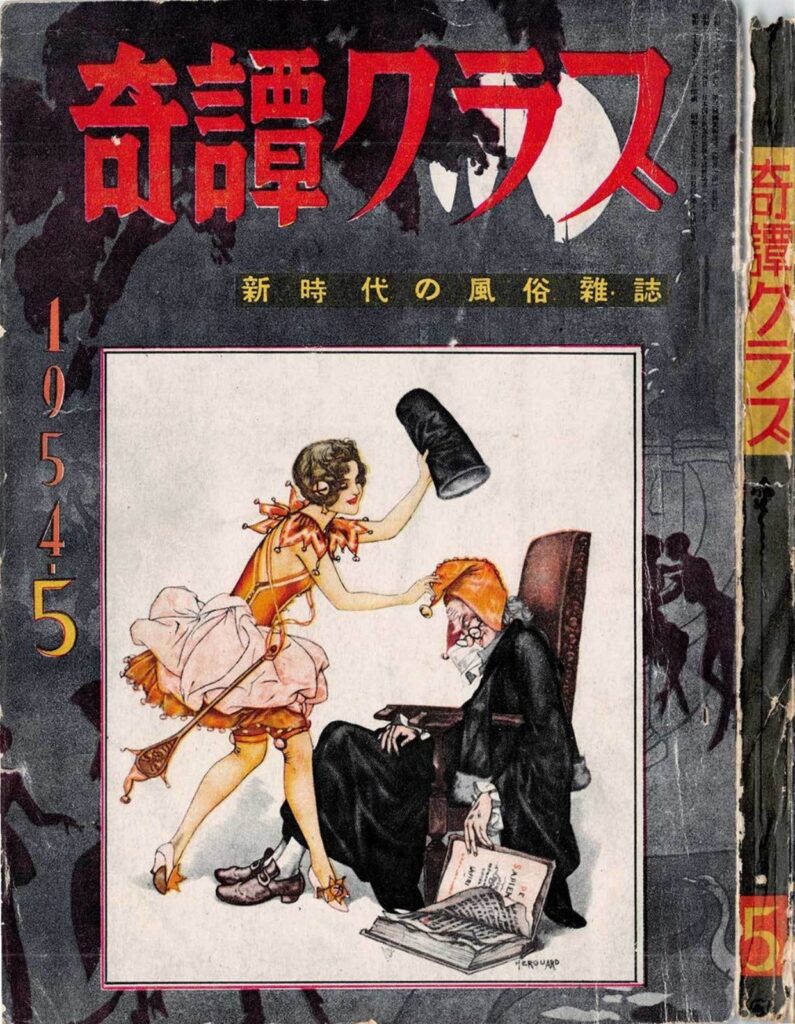
May 1954
← Back to magazine archive
Issue Details
- PDF pages
- 207
Summary
The May 1954 issue of Kitan Club combines a substantial opening portfolio of rope illustration and photography with prison memoir, enclosed-room fiction, translated sexual literature, masochistic testimony, queer confession, discussions of bodily transformation, historical accounts of slavery and punishment, transvestic desire, equestrian female dominance, seppuku research, and several long narratives.
Read full summary Close full summary
Table of Contents 42 items
-
Binding Methods Using Posts and Stakes
Summary
An illustrated practical guide demonstrates methods of tying a person to upright posts and stakes, presenting several restraint positions and rope arrangements. The feature emphasizes hands-on binding technique and the visual staging of restrained bodies.
-
The North-Facing Jizō of Awa
Summary
Itō Seiu presents an illustrated account or legend associated with the north-facing Jizō of Awa. The accompanying scene depicts figures restraining and abusing a woman outdoors, combining historical/local lore with strongly sexualized coercion and bondage imagery.
-
Four Female Seppuku Fantasies
Summary
An illustrated fantasy feature presenting four female seppuku scenarios through staged scenes of women bound in varied positions, including floor, bathroom, and seated restraints. The accompanying Japanese text discusses different purposes and degrees of tying, from total immobilization to more limited restraint.
-
American-Style Training, Part Two
Summary
The second installment of an illustrated “American-style training” feature depicts a woman harnessed, led, and posed as a small horse in a series of staged outdoor and domestic scenes. Captions and commentary emphasize reins, bodily posture, facial expression, and the performance of submissive training.
-
Narayama Play-Dream
Summary
An illustrated erotic fantasy inspired by Narayama, depicting women in elaborate rope restraints and dramatic staged bondage scenes, including outdoor and suspended or otherwise constrained positions.
-
Seppuku Fantasy
Summary
An erotic illustration built around a seppuku fantasy, presenting a stylized ritualized scene of bound women, a sword, blood, and impending or enacted self-disembowelment. The imagery treats death and ritual sacrifice as theatrical erotic motifs rather than reportage.
-
Female-Dominance Fantasies
Summary
An erotic illustration depicting a dominant woman armed with a sword and wearing a cross, attended by a submissive nude male figure and a winged Cupid. The composition presents female authority and male submission as fantasy imagery.
-
Chair Binding
Summary
A photographic feature demonstrating chair binding, showing a woman restrained in a chair while attended by another person. The image emphasizes seated positional restraint in a staged erotic setting.
-
Foreign Bondage Photographs
Summary
A photographic feature presenting foreign bondage imagery, including a woman restrained in a kneeling position with her elbows secured by a belt beneath the knees. The accompanying note highlights the unusual restraint arrangement as an inventive form of bondage.
-
Three Forms of Hands-Behind Binding
Summary
A photographic instructional feature demonstrating two forms of hands-behind binding. The images show variations involving wrist rope, neck restraint, and ankle binding, emphasizing the arrangement and positioning of the restrained body.
-
American-Style Torment, Part Two
Summary
An illustrated and photographic feature presenting “American-style” torment scenes, with women subjected to elaborate restraints, fixed postures, and punishment-oriented tableaux using specialized apparatus. The accompanying images emphasize staged erotic spectacle and bodily immobilization.
-
Trampling and Whipping
Summary
A photographic feature centered on trampling and whipping, including scenes in which a restrained or prostrate male subject is made to submit to women’s boots and physical discipline. Captions and images stress humiliation, footwear, and dominant female control.
-
Pillar Restraint
Summary
A staged photographic demonstration of a woman blindfolded and secured in a seated or kneeling position against a pillar. The image emphasizes immobilization through rope binding and the use of a fixed household support.
-
Hands-and-Feet Suspension and Single-Rope Binding
Summary
A photographic instructional feature demonstrating hands-and-feet suspension and a single-rope binding method. The images show rope arrangements that restrict the limbs and suspend or secure the subject in a floor-based pose.
-
Storehouse
Summary
A sequence of erotic illustrations set around a storehouse depicts women in vulnerable, physically constrained positions, including figures bound near or against wooden structures. The scenes emphasize staged restraint and helplessness rather than explanatory text.
-
The Drunken Demon
Summary
An illustrated dramatic sequence titled “The Drunken Demon” portrays a predatory man and several women in an outdoor setting, with scenes of sexual menace, vulnerability, restraint, and flight. The visual narrative uses coercive erotic fantasy and the presence of witnesses or bystanders to heighten the threat.
-
A Juvenile Prison Record
Summary
A first-person record of life in a juvenile prison, recounting the narrator’s arrest, confinement, harsh institutional discipline, forced labor, surveillance, beatings, and humiliating treatment by guards and fellow inmates. The illustrated narrative emphasizes the psychological and bodily effects of prolonged captivity and punishment.
-
The Room of Evil
Summary
A serialized erotic fantasy set around a sinister “room of evil,” where characters manipulate, threaten, bind, and attempt to subjugate one another. The narrative emphasizes coercive encounters, captivity, rope restraint, humiliation, and shifting struggles for dominance between the female and male protagonists.
-
Sentimental Education: Confession of a Woman Prisoner
Summary
A woman recounts a marriage marked by coercive sexual demands, bondage, beatings, humiliation, and her husband’s sadistic violence. Framed as a psychological and social discussion, the confession and accompanying illustrations consider consent, women’s autonomy, marital power, and the normalization of abuse.
-
From a Masochist’s Notebook
Summary
A masochistic notebook combining historical anecdotes, imagined scenes, and reflections on eroticized domination, restraint, humiliation, and female authority. The text ranges across Chinese and European historical settings while treating bondage devices and coercive scenarios as objects of fantasy and interpretation.
-
Slavery and Cruelty: A Scene from a Dreadful History
Summary
A historical account of slavery and cruelty, focusing on the capture, transport, forced labor, punishment, sexual violence, and resistance of enslaved people, particularly in the Americas. Illustrated scenes emphasize the brutality of slaveholders and the suffering of enslaved men and women.
-
Confession of a Male Homosexual
Summary
A first-person account by a Japanese man describing the development of his same-sex desire, relationships with younger men, emotional attachments, and the social pressures surrounding secrecy, work, and domestic life. The confession presents homosexual experience as an ongoing personal struggle within postwar Japanese society.
-
In Praise of Perversion
Summary
A polemical essay that praises sexual “perversion” as a condition exceeding ordinary sexuality and interprets it as a sign of psychological, cultural, and even philosophical development. Across several chapters, the author contrasts conventional and unconventional desire, discusses sexual variation through literary and visual examples, and challenges social condemnation of nonnormative sexuality.
-
Two-Hundred-Character Hymns
Summary
A serialized erotic narrative follows a shop owner’s increasingly intimate encounters with Kazuko and a married couple, moving from flirtation and employment into elaborate scenes of rope binding, restraint, commands, and domestic sexual power. The story emphasizes psychological tension, humiliation, and the shifting control between the participants.
-
Overseas Sadism Notes: The Gag, Part Two
Summary
The second installment of Azuma Shin’s “Overseas Sadism Notes” examines gagging in Western and Japanese sadistic imagery. It compares gag types and their visual effects, discusses rope and cloth restraints, and considers examples from imported comics, films, and erotic illustrations alongside Japanese representations.
-
Madame Diana
Summary
A long first-person erotic reportage attributed to Madame Diana, describing her intense involvement with horseback riding, riding instruction, and equestrian circles. The account links riding technique, bodily exertion, gendered power, and sexual sensation, including encounters and conversations involving married women, military men, and other riders.
-
Continued: Longing for Women’s Clothing
Summary
A first-person continuation about a man’s longstanding desire to wear women’s clothing and his wife’s involvement in helping him dress, apply makeup, and assemble an elaborate feminine appearance. The account culminates in staged posing and photography, presenting cross-dressing as both a private marital practice and a carefully cultivated visual performance.
-
The Man I Sought, Part Five
Summary
The fifth installment of Matsui Raikō’s first-person serialized narrative follows the narrator’s shifting romantic and erotic fascinations through encounters at cinemas, cafés, theatrical companies, and performance events. Her attraction to performers and artistic milieus culminates in staged scenes of coercion, rope restraint, captivity, and theatricalized suffering, blending personal confession with erotic fantasy.
-
Seppuku Research Night Talk, Part Four
Summary
The fourth installment of a research talk examines Japanese seppuku and related forms of female self-disembowelment through historical cases, literary sources, medical observations, and period illustrations. It discusses ritual procedure, wounds and bodily effects, differences between male and female practice, and the ways such deaths were represented in eroticized historical narratives and imagery.
-
MS Play
Summary
A first-person account of an M/S relationship between a medical student and a sadistic woman, developing through correspondence, meetings, and increasingly elaborate scenes of rope bondage, gagging, blindfolding, suspension, and domestic restraint. The narrative presents these encounters as both erotic experimentation and a negotiated exchange of dominance and submission.
-
Sexual Fluids
Summary
A historical erotic narrative that returns to Meiji-era theater and popular entertainment, portraying onnagata performance, provincial social life, erotic intrigue, arranged marriage, and coercive relationships. The text is accompanied by dramatic erotic illustrations depicting theatrical and bondage-oriented scenes.
-
The Virgin Writer
Summary
A fictionalized editorial encounter follows a young, sexually inexperienced writer whose sensational manuscript combines murder, striptease, coercion, and imagined sexual violence. The surrounding narrative contrasts literary ambition and editorial judgment with the writer’s dependence on erotic fantasy and his uncertain engagement with lived experience.
-
Bull Castration
Summary
A first-person account of a young factory worker subjected to coercive discipline, humiliation, and violent punishment by a female supervisor and fellow workers. The narrative combines workplace control, bodily punishment, and eroticized submission within a wartime industrial setting.
-
Memoir of a Former Military Policeman
Summary
A former military policeman recounts wartime encounters involving the detention, abuse, sexual violation, and killing of women in occupied territory. The memoir presents military violence and atrocity through sensational testimony, including the treatment of women as captives and the destruction of evidence.
-
Sorrowful Tale of a Northern Hot-Spring Town
Summary
A fictional tale set at a snowbound northern hot-spring inn, where a brutal proprietor exploits and confines women associated with the bathhouse. Attempts at escape lead to pursuit, capture, rope restraint, humiliation, and further abuse amid the isolated winter setting.
-
Confession of a Feminized Man
Summary
A first-person confession by a man who describes being raised among sisters, developing a strongly feminine identity, and wearing women’s clothing from childhood onward. He recounts cross-dressing, family and social responses, and his later efforts to live openly in a feminized role.
-
My Etsugyaku Notebook
Summary
An autobiographical account of the author’s development of sadistic interests, beginning in childhood through exposure to newspaper reports, fiction, illustrations, and imagined scenes of abuse. The narrative also describes later fantasies and experiences involving restraint, punishment, and the domestic expression of these desires.
-
Obsessed with Eye Bandages
Summary
A first-person fetish autobiography about the author’s longstanding fascination with women wearing eye bandages and related forms of visual concealment. He traces the interest from childhood impressions through magazine images, encounters with women in everyday life, and its continuing place in his marital and sexual imagination.
-
Endless Defeat: A Tombstone for a Dead Dog
Summary
A dark erotic narrative framed as a memorial for a dead dog, in which the narrator revisits a psychologically charged relationship with Misao and another woman. The story develops themes of female cruelty, emotional domination, humiliation, and remembered bodily submission through dramatic dialogue and scenes of restraint.
-
Cruel Women
Summary
Morimoto Aizō translates and explains passages from the 1901 German illustrated book Das Grausame Weib, presenting anecdotes of women exercising violent authority over male servants, prisoners, and dependents. The article emphasizes whipping, riding crops, coercive punishment, and the sensationalized cultural image of the cruel woman.
-
Kyōko’s Floating Bag
Summary
A first-person erotic narrative follows Kyōko’s experiments with introducing air into her body to produce an increasingly swollen, “floating” abdomen. The account combines bodily transformation, pressure, discomfort, and fetishistic attention to intestinal and anal sensations.
-
Awards, Retrospective Indexes, Editorial Material, and Advertisements
Summary
A mixed editorial and community section announces prize-winning works, reproduces or discusses reader submissions and correspondence, and provides publication, subscription, and advertising information. It documents the magazine’s contests, editorial operations, and relationship with its specialist readership.
Highlights
- Binding Methods Using Posts and Stakes uses vertical and horizontal supports to present restraint as a geometric system rather than a single act (PDF p. 7).
- The north-facing Jizō illustration places punishment within a crowded historical environment of buildings, spectators, ladders, and public violence (PDF p. 8).
- The female-seppuku studies reduce abdominal cutting to a series of comparable poses, blades, and bodily angles (PDF pp. 9–10).
- The imported American-style plates transform bridling and equestrian control into a sexualized vocabulary of reins, heels, and forced movement (PDF pp. 11–12).
- The hands-behind photographic studies isolate gagging, torso angle, and rope placement against a dark studio background (PDF pp. 19–20).
- The domestic punishment photographs use trampling, whipping, a floor pillar, and low suspension to construct an escalating visual sequence (PDF pp. 23–26).
- A Juvenile Prison Record turns prison into a complete hierarchy of surveillance, discipline, and internalized obedience (PDF pp. 33–39).
- From a Masochist’s Notebook presents masochism as a continuing intellectual and literary identity rather than merely a diagnosis (PDF pp. 63–68).
- Confession of a Male Homosexual gives queer experience an extended first-person narrative involving youth, urban life, secrecy, and social constraint (PDF pp. 74–76).
- Two-Hundred-Character Hymns assembles numerous short voices into a miniature erotic public of confessions, memories, and specialized fixations (PDF pp. 81–94).
- Madame Diana uses riding, whipping, marriage, wealth, and training to present female dominance as a durable personal identity (PDF pp. 101–114).
- Seppuku Research Night Talk transforms fetish interest into archival labor through bibliographies, historical documents, and reproduced illustrations (PDF pp. 129–136).
- Confession of a Feminized Man provides a rare first-person account of gender variance within the magazine’s historically specific vocabulary (PDF pp. 179–183).
- Obsessed with Eye Bandages demonstrates Kitan Club’s willingness to give an extremely narrow fetish a sustained autobiographical analysis (PDF pp. 188–190).
- Kyōko’s Floating Bag is the actual concluding story, continuing through PDF page 203 before four pages of awards, indexes, editorial material, and advertisements (PDF pp. 198–207).
Contributors
Named contributors represented in this issue:
- artist credit unclear
- Awami Ichirō, romanization uncertain
- Azuma Shin
- Azuma Shinsaku; illustrated by Kurihara Shin
- composition by Sugiura Kōji
- composition by Tsujimura Takashi
- Futamata Shizuko
- Hamura Kyōko
- Hayashida Maki
- Itō Seiu
- Kawano Shirō; illustrations by Sugiura Kōji
- Kazuhisa, artist credit reading uncertain
- Masago Jūshirō
- Matsui Raikō
- Nakatani Reiichi
- Nakayasu Hiromichi
- Nikone Kōji
- Norisugi Kiyoko
- Numa Shōzō
- Oda Masaharu
- Oniyama Yakusaku, romanization uncertain
- Sasagawa Yūko
- Shigeta Masakazu
- Shinohara Sakue, romanization uncertain
- Shinohara Yukio
- Sugano Sakurō
- Takiko
- translated and explained by Morimoto Aizō
- Tsumaki Mitsuzō
- Yoshino Asao