Kitan Club
July 1950
← Back to magazine archive
Issue Details
- Issue
- 32
- PDF pages
- 98
Summary
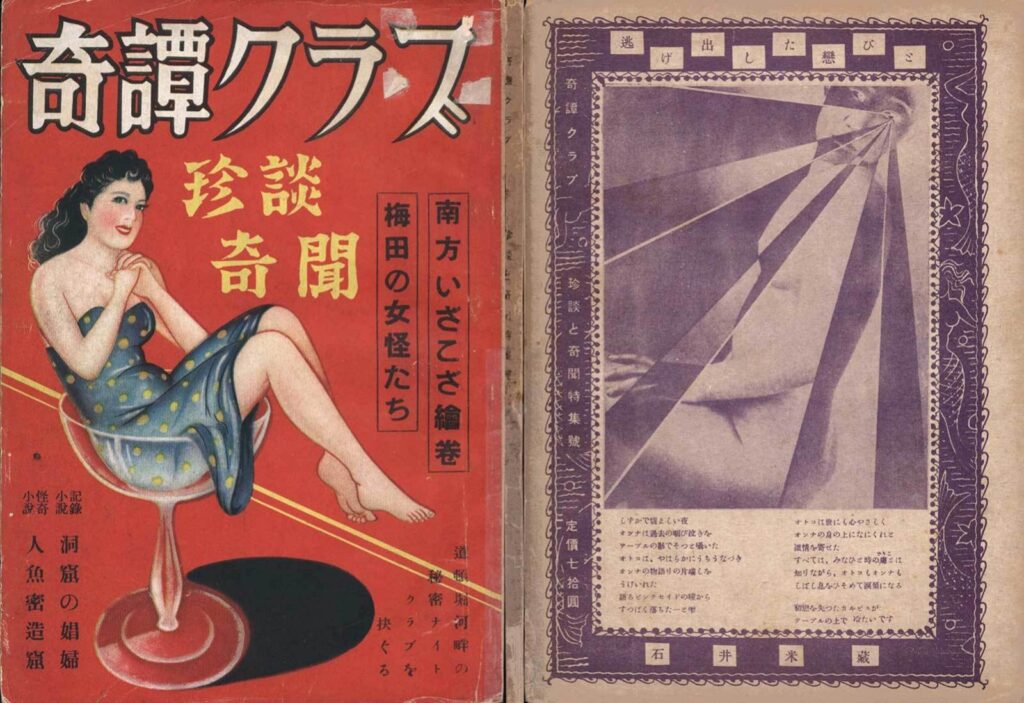
The July 1950 issue of Kitan Club, identified in its publication information as the thirty-second collection, presents the magazine in an early postwar form that mixes sensational reportage, erotic and grotesque fiction, humorous miscellany, urban vice reporting, illustrated anecdotes, advice, reader-oriented curiosities, and sexually charged social observation. The cover announces a special collection of strange tales and curiosities, while the opening pages immediately establish the issue’s hybrid visual style through photographic street reportage, cartoon-like drawings, handwritten captions, and short comic or anecdotal items. A photographic feature follows a woman through entertainment and pleasure districts, while illustrated pages survey sexual customs, prostitution, illness, marriage, infidelity, and other subjects in a deliberately informal scrapbook-like format.
Read full summary Close full summary
Table of Contents 25 items
-
The Streets of the Flesh
Summary
A photographic and illustrated survey of Japan’s urban pleasure districts, following streets lined with cafés, bars, lodging houses, bathhouses, and other establishments associated with commercial nightlife and sexual entertainment. Maps, storefront photographs, captions, and a recurring female guide create a documentary-style tour of these “flesh streets.”
-
A Collection of Japanese Erotic Tales
Summary
A sequential-art collection of erotic anecdotes depicting sexual encounters, illicit affairs, geisha and domestic settings, and negotiations between men and women. The episodes combine sensual imagery with comic dialogue and references to contraception, pregnancy anxiety, illness, and social propriety.
-
Strange Talks and Curious News
Summary
A wide-ranging miscellany of curious anecdotes, humorous correspondence, advice exchanges, relationship and sexual questions, dream interpretation, odd news, and illustrated comic scenes. The section also includes recreational features such as shogi problems, riddles, puzzles, and reader-participation questions.
-
The Fallen Diseased Leaf
Summary
An illustrated melodramatic narrative follows Yasuko, a young woman whose relationships, marriage, economic hardship, and encounters with predatory or unreliable men lead her through emotional and sexual exploitation. The story presents her shifting attempts to secure affection, independence, and a livable future amid postwar urban and domestic life.
-
God of Lust
Summary
An illustrated erotic fiction serial centers on Abudora, Imam, and their associates as jealousy, marital suspicion, deception, and sexual rivalry intensify through clandestine encounters. The narrative uses comic dialogue and sensational scenes to explore lust, possessiveness, and the instability of intimate relationships.
-
Mermaid Manufacturing Den
Summary
A sensational pulp mystery set in Kobe follows a narrator who encounters a series of uncanny locations and criminal enterprises, including a green-lit house, a factory producing grotesque animals, and a secret workshop associated with mermaid-making. The serialized narrative combines urban night wandering, investigation, pursuit, and horror imagery.
-
Erotic Hell
Summary
A sensational crime narrative centered on abduction, sexual violence, captivity, and escape, presented in the lurid style of mid-century erotic true-crime fiction. The page also includes a boxed anecdote about a woman’s chastity belt, extending the article’s interest in sexual control and bizarre criminal episodes.
-
The Truth About Temple Commerce: Osaka's Back Streets Swirling with Money and Sex
Summary
An investigative report on Osaka’s temple-district back streets, describing the entanglement of sexual commerce, installment schemes, dubious lending, fake real-estate and marriage introductions, and other forms of financial exploitation. Through reported cases and dialogues, it portrays how advertising, debt, and personal desperation sustain an urban underground economy.
-
Three Tales of Dramatic Medicine
Summary
A feature on three dangerous or sensational drugs associated with postwar pleasure culture: illicit Hiropon (methamphetamine), Adorm sleeping pills and overdose or suicide attempts, and purported aphrodisiac products. The article combines reported incidents with warnings about drug abuse, fraudulent claims, and the social harms surrounding these substances.
-
The Slothful Robber Appears
Summary
An illustrated comic sketch depicts a would-be robber confronting a woman in the street, with the encounter unfolding through exaggerated dialogue and slapstick reversals. The piece treats attempted robbery as humorous social satire rather than as a factual report.
-
A Discussion of Male and Female Pickpockets
Summary
A nonfiction-style discussion examines male and female pickpockets in postwar Osaka, including estimates of criminal activity, gang organization, common targets, stealing techniques, and the changing economic conditions of the trade. It also uses reported or dramatized cases to contrast the methods and circumstances of men and women pickpockets and concludes with warnings about vigilance and prevention.
-
The Prostitute in the Cave
Summary
A wartime fiction set amid the fighting in Okinawa, where a Japanese soldier encounters a woman sheltering in a cave. Their tense, intimate exchange unfolds against bombardment, hunger, displacement, and the brutal collapse of the battlefield world.
-
The Strange Tale of the Man Who Drinks a Lady's Urine
Summary
A grotesque short story about a man whose illness and unconventional treatment become entangled with his fixation on drinking a woman’s urine. The narrative presents urine drinking through a mixture of erotic fetishism, medical rationalization, secrecy, and psychological disturbance.
-
A Collection of Japanese Erotic Tales
Summary
An anthology of short Japanese erotic tales combining marital and adulterous encounters with folklore, supernatural transformations, religious transgression, and tragic or violent consequences. The stories are framed as sensational historical and popular narratives rather than factual accounts.
-
The Noblewoman Who Toys with a Virgin
Summary
An erotic fiction narrative centered on a socially superior woman who seduces and exercises power over an inexperienced young man. The illustrated story emphasizes sexual initiation, class hierarchy, manipulation, and the atmosphere of nighttime urban pleasure districts.
-
Nighttime Street Slashing
Summary
A dramatic period tale about a nighttime sword attack at a bridge, followed by pursuit and combat between samurai figures. The narrative emphasizes suspense, ambush, and martial confrontation in a historical setting.
-
The Sorrow of Consanguineous Marriage
Summary
A case-style narrative about a family formed through prohibited close-kin relationships and the tragic consequences for several children. It discusses hereditary abnormality, including albinism, alongside sexualized illustrated scenes and moral reflections on incest and family suffering.
-
Office Romance
Summary
An erotic office-romance narrative about flirtation, jealousy, and sexual tension among coworkers, including an attempted reconciliation and a forgotten handbag that helps drive the encounter. The story presents workplace intimacy as a setting for secret relationships and emotional manipulation.
-
Rendezvous Kitan
Summary
An erotic short story depicting a chance nighttime encounter that develops into a fleeting sexual relationship, followed by emotional uncertainty and separation. The narrative emphasizes transient desire, seduction, and the melancholy aftermath of an affair.
-
Behind the Flower-and-Willow World: The Female Beggar of Gōri Shinchi
Summary
A social-realist account of a female beggar living around Gōri Shinchi, tracing how a woman associated with beauty and respectable origins came to poverty and street begging. The article reflects on her family circumstances, appearance, and treatment within the pleasure district.
-
We Are Shoe Shiners
Summary
A colloquial first-person-style account of street shoe shiners, describing their work, customers, tools, earnings, and precarious everyday lives. The piece gives voice to working-class youth and emphasizes the hardships and social marginality of informal street labor.
-
Courtship Techniques
Summary
A practical, sometimes humorous guide to winning the attention of unfamiliar women and developing romantic intimacy. It discusses grooming and appearance, conversation, social behavior, timing, psychological tactics, and general rules for courtship.
-
Secrets of an Affair
Summary
An erotic first-person narrative about clandestine affairs and sexual encounters, presenting secret meetings, seduction, and escalating sexual experimentation through sensational prose and accompanying illustrations. The feature combines confessional storytelling with motifs of secrecy, erotic pursuit, and sexual transgression.
-
Love Spy: The Secret of the Sulfuric-Acid Affair
Summary
A sensational Love Spy mystery follows an investigation into a dangerous sulfuric-acid-related affair, involving concealed violence, threatened women, deception, and pursuit. The narrative uses melodramatic dialogue and lurid illustrations to develop its crime-and-romance intrigue.
-
The Strange Women of Umeda
Summary
A serialized pulp narrative about the “strange women of Umeda” follows encounters among urban women, male patrons, nightlife venues, rented rooms, and domestic spaces. Episodes portray seduction, sexual bargaining, jealousy, coercion, physical confrontation, and shifting power between men and women.
Highlights
- The opening visual feature uses photographs, hand-drawn commentary, maps, and street scenes to tour entertainment and pleasure districts, establishing the magazine's documentary yet playful treatment of the erotic city. (PDF pp. 3–6).
- A sequence of illustrated miscellany pages combines sexual customs, prostitution, illness, marriage, infidelity, and popular humor in a scrapbook-like graphic format characteristic of the issue's early visual identity. (PDF pp. 7–17).
- The Fallen Diseased Leaf by Suzuki Michi is a substantial early story centered on a troubled young woman, family conflict, illness, sexuality, and postwar social instability. (PDF pp. 19–24).
- God of Lust by Tsukiya Shizushi uses a South Seas setting and encounters with local sexual customs to create an exoticized erotic adventure typical of postwar pulp fiction. (PDF pp. 25–30).
- Mermaid Manufacturing Den by Satomi Teruharu is one of the issue's most overtly grotesque fantasies, involving a hidden establishment and the artificial creation of human-mermaid forms. (PDF pp. 31–35).
- The Truth About Temple Commerce: Osaka's Back Streets Swirling with Money and Sex examines illicit finance, housing arrangements, commerce, and sexual exploitation in postwar Osaka. (PDF pp. 37–40).
- Men and Women Pickpockets by Murano Shōji describes organized pickpocketing, criminal methods, gender roles within theft rings, and the economics of urban crime. (PDF pp. 45–50).
- The Prostitute in the Cave by Hinata Michio places prostitution within a wartime environment, combining battlefield imagery, sexual desperation, and human-interest storytelling. (PDF pp. 51–54).
- The Strange Tale of the Man Who Drinks a Lady's Urine treats fetishistic behavior through a mixture of sensational narrative, medical anxiety, religion, obsession, and attempted treatment. (PDF pp. 55–58).
- The Strange Women of Umeda, near the end of the issue, returns to Osaka street life and presents unusual female figures encountered around Umeda as part of the magazine's recurring fascination with sexuality and the modern city. (PDF pp. 91–97).
Contributors
Named contributors represented in this issue: