Fuzoku Soshi
July 1953
← Back to magazine archive
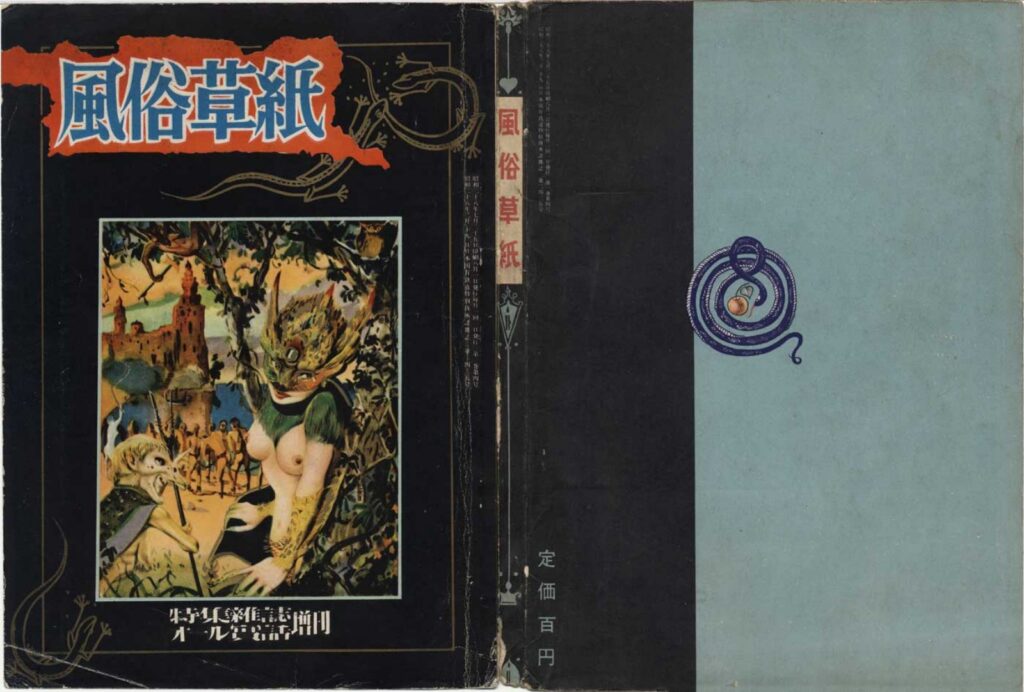
Issue Details
- PDF pages
- 173
Summary
The July 1953 issue of Fūzoku Sōshi shows the magazine operating as a broad laboratory of postwar erotic culture. Bondage and seme sit beside sexology, crime, confession, fetishism, homosexuality, prostitution, medicalized “perversion,” reader correspondence, and illustrated fiction. Rather than presenting SM as a self-contained practice, the issue builds a dense network in which restraint, cruelty, bodily response, spectatorship, and abnormal desire repeatedly overlap.
Read full summary Close full summary
Table of Contents 30 items
-
Fūzoku Art Museum
Summary
A richly illustrated survey of erotic and “fūzoku” art, combining historical paintings, prints, and staged photographs with commentary on sexual desire, seduction, exhibitionism, self-love, and changing ideals of male and female sexuality. The feature juxtaposes Japanese and Western imagery and treats erotic art as a record of social attitudes and sexual psychology.
-
Three States of a Woman Being Tormented
Summary
An illustrated feature presenting three depictions of women subjected to sexual coercion or torment, including scenes of pursuit, restraint, and assault drawn from historical Japanese-style imagery. Captions and accompanying text emphasize the contrast between male aggression and female fear, resistance, or vulnerability.
-
Torture in the Women’s Prison at Kodenmachō
Summary
A historical account of torture and interrogation practices imposed on women imprisoned at Kodenmachō during the Edo period. Drawing on criminal records and related sources, it describes procedures such as restraint, water torture, beatings, and other forms of coercion, accompanied by dramatic illustrations.
-
The Allure of Dangerous Play
Summary
An essay on the appeal of risky amusements and transgressive behavior among modern young women, especially students. It examines thrill-seeking through nightlife, dancing, flirtation, fashion, swimming, and other activities, presenting these behaviors as products of changing social attitudes and youth culture.
-
Male-Love Café
Summary
An essay on male-love cafés as social spaces for men attracted to men, describing their clientele, coded categories, urban locations, manners, and changing place in postwar Japanese nightlife. It combines sociological commentary with literary and visual references to café culture and male same-sex sociability.
-
New Torments, Old Torments
Summary
An illustrated essay comparing contemporary and historical forms of sexualized torment, bondage, and punishment. It contrasts modern fetish practices and imagery with older Japanese disciplinary and torture methods, focusing on bodily control, humiliation, and the changing cultural presentation of violence.
-
No Virgins in Tokyo!
Summary
A satirical account of young women and men navigating modern Tokyo’s dating and sexual culture. Through encounters involving university students, nightlife, drinking, fashion, and changing courtship expectations, it contrasts contemporary urban behavior with older social ideals.
-
The Room of Ecstatic Cruelty
Summary
An erotic narrative centered on a couple’s private room, where artistic imagery, bodily display, restraint, and psychological domination become intertwined. The accompanying illustrations and prose explore sadomasochistic desire, fetishism, voyeurism, and unequal sexual power.
-
Western Clothes, Automobiles, and the Rendezvous House
Summary
A social commentary on office girls and other young women whose modern identities are expressed through Western dress, automobiles, cafés, and rendezvous culture. Through anecdotes and satirical observations, it examines consumer aspirations, class display, flirtation, changing gender relations, and anxieties about contemporary urban manners.
-
Married Women Who Have Abortions
Summary
A report and interview-style discussion of married women who terminate pregnancies, presenting personal cases and medical perspectives on the reasons, procedures, costs, and consequences of abortion. The article emphasizes poverty, family responsibilities, health concerns, pregnancy spacing, and the stigma surrounding reproductive decisions.
-
The Swan of Ecstasy
Summary
A decadent erotic fiction centered on Yukari, a beautiful young wife whose sensual presence fascinates and destabilizes the people around her. Set amid elite domestic and tea-room environments, the narrative develops through marital tension, voyeuristic fascination, jealousy, and increasingly transgressive desire, accompanied by stylized erotic illustrations.
-
Women of the Secret Vice District
Summary
An investigative feature on women and commercial sex in Tokyo’s postwar red-light districts, including the organization of brothels, recruitment and treatment of women, customer behavior, and the economic and social conditions surrounding the trade. Interviews and observations portray the district as a structured, exploitative business rather than an isolated moral failing.
-
The Woman I Tortured
Summary
A fictionalized first-person wartime confession in which a Japanese military man recounts the capture, interrogation, torture, and sexual abuse of a Chinese woman, alongside the complicity of other soldiers. The narrative emphasizes brutality, coercive military power, trauma, and the narrator’s later recollection of his responsibility.
-
A Hundred Scenes of Married Women
Summary
An illustrated literary feature presenting a series of episodes and observations about married women, focusing on their domestic circumstances, appearance, relationships, desire, and encounters with men. The piece blends social commentary with melodramatic and eroticized depictions of marriage, infidelity, and gendered expectations.
-
The Chair of Needles
Summary
A heavily illustrated fantasy scene titled “The Chair of Needles,” depicting a woman bound or restrained on an ornate chair amid needle-like objects. The accompanying prose frames the image as a frightening, surreal, eroticized scenario involving vulnerability, coercion, and imagined torture.
-
The City of Beautiful Youths
Summary
A fictional account of young men navigating Tokyo’s cinemas, cafés, shops, and nightlife, focusing on their striking appearance, fashionable self-presentation, rivalry, and attraction. The story explores the social performance of masculine beauty and the fascination surrounding youthful male charisma in the postwar city.
-
Ten Forms of Edo Punishment
Summary
An illustrated historical feature presenting ten forms of punishment used in Edo-period Japan. The sequence depicts bound and publicly exposed figures undergoing harsh corporal and humiliating penalties, emphasizing the spectacle and severity of premodern criminal justice.
-
Women I Met at a Marriage Bureau
Summary
A journalist reports on encounters with women seeking spouses through a marriage consultation bureau, describing their personal circumstances, appearance, expectations, and interactions with prospective matches. The piece also examines matchmaking advertisements, fees, screening practices, and the tensions between romantic hopes, economic realities, and social status.
-
The House of the Whip
Summary
An erotic suspense narrative set around a mysterious household in which a woman becomes entangled in coercive encounters involving male authority, surveillance, punishment, and sexual domination. Repeated scenes of bondage, whipping, humiliation, fear, and psychological submission shape the story’s exploration of violence and fetishized power.
-
Conversations on Erotic Implements
Summary
Nakano Eizō discusses erotic implements through historical anecdotes, changing sexual customs, and contemporary examples, considering their uses, appeal, social context, and potential dangers. The essay also comments on the movement from handmade or traditional objects toward commercially manufactured and electrically operated devices.
-
The Pleasure of Peeping
Summary
A mixed illustrated erotic narrative about the pleasures and anxieties of peeping, told through recollections of voyeuristic encounters in domestic and public settings. Its episodes trace sexual curiosity from childhood into adulthood, emphasizing forbidden observation, bodily exposure, secrecy, and the psychological charge of looking without being seen.
-
Pathological Tendencies in Postwar Sex Crimes
Summary
A criminological and social analysis of postwar sex crimes, arguing that social upheaval, weakened moral restraints, and changing youth culture contributed to sexual offenses. It surveys cases involving rape, sexual assault, murder, juvenile offenders, and other forms of sexual deviance, including same-sex relations, presenting them as symptoms of broader social and psychological disorder.
-
The Lament of an Urning
Summary
A first-person lament by a man describing his attraction to other men, his difficulty finding companionship, and the loneliness and stigma produced by social prejudice. The mixed text and illustrations portray homosexual desire, urban nightlife, attempts to meet partners, and the tension between private identity and public conformity.
-
Yasuna’s Madness
Summary
A dramatic account centered on a traditional Japanese dance performance of “Yasuna Kyōran,” describing rehearsal, stage performance, and the complicated relationship between a dance teacher and dancer. The narrative also explores erotic tension, gender-role ambiguity, and same-sex desire within the dance world.
-
The Wife Who Fled
Summary
An erotic melodrama about a troubled marriage in which suspicion, sexual jealousy, infidelity, and emotional instability culminate in the wife’s flight. The story develops through intimate encounters, confrontation, and escalating threats within a precarious urban domestic setting.
-
Lesbos Correspondence
Summary
A reader-correspondence section addressing women’s same-sex love, with personal accounts and questions about attraction, intimacy, secrecy, and emotional uncertainty. The editors respond in an advisory and supportive tone, inviting readers to submit further experiences and concerns.
-
Sodomia Correspondence
Summary
A male same-sex correspondence section presenting autobiographical accounts of attraction, relationships, sexual experiences, and emotional conflict from adolescence through adulthood. Editorial commentary considers the psychology of male homosexuality, social pressures, relationship difficulties, and the importance of candid consultation.
-
Fantasy Murder
Summary
A psychological mystery set around an isolated Karuizawa villa, whose history includes the delayed discovery of a German former owner’s suicide. Marital jealousy, eerie apparitions, paintings, and the presence of a dog blur the boundaries between memory, hallucination, imagined revenge, and murder.
-
Recollections of Splendid Cruelty
Summary
An autobiographical recollection tracing the author’s early fascination with cruelty—from tormenting goldfish and other small creatures to increasingly deliberate acts of sadistic violence. The narrative presents these memories through vivid animal and domestic scenes, linking childhood cruelty to later psychological and erotic impulses.
-
A Sadist’s Wandering Record
Summary
A personal record of sadistic experiences and fantasies, including episodes of intimidation, physical punishment, and violent spectacle. The author also reflects on the emergence of his adult sadistic sexuality, attributing its development in part to a former wife’s masochistic tendencies and describing practices of domination and restraint.
Highlights
- “Fūzoku Art Museum” reframes European images of abduction, coercion, resistance, voyeurism, and female self-regard as part of the magazine’s erotic archive (PDF pp. 3–7).
- “Three States of the Tormented Woman” presents three bondage scenes attributed to Kita Reiko, turning female suffering into a comparative visual taxonomy (PDF pp. 8–10).
- A swordsman-and-captives scene depicts two restrained women as historical drama, blending jidaigeki imagery with erotic helplessness (PDF p. 9).
- “A Woman Who Suffers” uses drunkenness and bodily collapse to eroticize vulnerability outside a formal bondage scene (PDF p. 11).
- “New Torment and Old Torment” explicitly compares older and newer forms of seme, supported by photographs of tightly bound women (PDF pp. 32–36).
- “The Dangerous Allure of Theater” examines stage performance as a space where female bodies, danger, and voyeuristic excitement converge (PDF pp. 23–26).
- “Male Café” surveys urban male same-sex subculture as part of the issue’s broader map of modern sexual difference (PDF pp. 27–31).
- “No Virgin in Tokyo!” treats urban female sexuality through sensational reportage and the rhetoric of modern corruption (PDF pp. 37–41).
- “A Woman’s Confession of the Room of Ecstatic Cruelty” gives etsugyaku a first-person feminine voice and links torment to reciprocal pleasure (PDF pp. 42–46).
- “Office Girl and Automobile Rendezvous” places modern work, mobility, and clandestine sexuality within the magazine’s pathology series (PDF pp. 47–51).
- “The Wives Who Absolutely Refuse Pregnancy” frames reproductive refusal as a modern sexual and social disorder (PDF pp. 52–54).
- “Women of the Red-Light District” presents prostitution as both social problem and erotic spectacle (PDF pp. 65–68).
- “The Woman I Tormented” offers a male first-person account of inflicting seme, exposing the uneasy boundary between confession and fantasy (PDF pp. 69–74).
- “Edo Punishments: Ten Forms” reconnects modern erotic imagery to historical punishment, one of the key ancestral visual sources for kinbaku (PDF pp. 89–90).
- “Lesbos Correspondence” and “Sodomia Correspondence” create print-based communities for female and male same-sex readers within the same issue (PDF pp. 128–135).
Contributors
Named contributors represented in this issue:
- Amano Tetsuji
- Arima Chizuko
- Ashio Kyōzō
- Fujii Akira
- Fukada Tetsu
- Furushō Hideo
- Hiki Kyōichirō
- Hinatsu Yukio
- Kabiya Kazuhiko
- Kagawa Senjirō
- Kijima Kōji
- Kita Reiko
- Kuromaru Keiji
- Mashita Kōji
- Mogami Kyōko
- Nakano Eizō
- Nezu Meiji
- Nishijima Minoru
- Onogi Osamu
- Shibata Toshio
- Shima Yukio
- Shindō Eriko
- Sonomura Keiko
- Sugawa Natsue
- Toba Eiko
- Ueda Seishirō
- Yanome Gen’ichi