Fuzoku Soshi
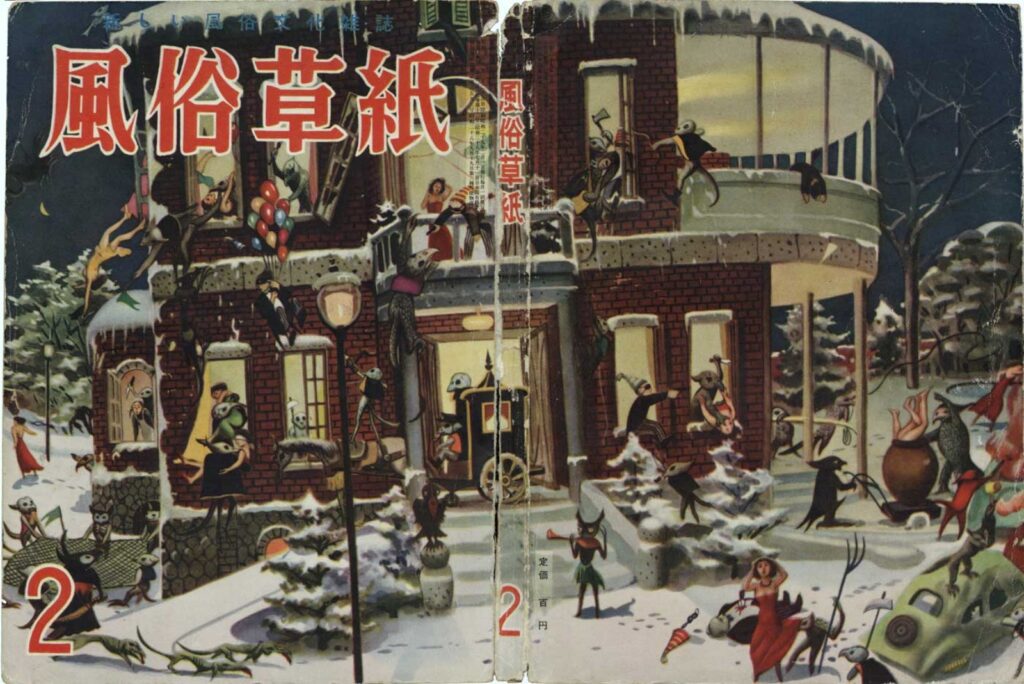
February 1954
← Back to magazine archive
Issue Details
- PDF pages
- 183
Summary
The February 1954 issue of Fūzoku Sōshi offers a vivid snapshot of the magazine at the height of its early postwar development. By this point, it was no longer merely a general “curiosity” magazine that occasionally wandered into bondage or sadism. Its 164 printed pages bring together rope photography, erotic illustration, crime fiction, first-person confession, medicalized sexuality, lesbian and homosexual correspondence, fetish commentary, and serialized fantasies of coercion. The result is less a conventional magazine than a paper labyrinth in which art, pathology, fantasy, testimony, and sexual subculture continually bleed into one another.
Read full summary Close full summary
Table of Contents 27 items
-
Beautiful Dog
Summary
A color erotic illustration depicts a woman posed as a restrained “beautiful dog,” with ropes, collaring, and animal-like positioning central to the composition. The image combines fantasy, submission, and stylized bondage imagery.
-
Bound Princess
Summary
A photographic feature presents a costumed “bound princess” in a series of staged rope-restraint scenes, including seated, kneeling, and standing poses in a traditional Japanese interior. Captions emphasize helplessness, humiliation, and the aesthetic display of elaborate bindings and costume.
-
Pleasurable Torment
Summary
An erotic illustration feature depicting people subjected to elaborate rope and positional restraints, emphasizing bodily control, forced postures, and the visual drama of bondage. The sequence presents restraint as a source of torment and pleasure within staged erotic scenes.
-
The Beautiful Prey
Summary
An illustrated erotic captivity narrative about a beautiful young woman treated as prey, captured and bound while enduring escalating torment, including suspension and other forms of physical coercion. The accompanying prose intensifies the themes of helplessness, fear, and sadistic fantasy.
-
Demons of the Basement
Summary
A visual feature presenting Nakagawa Ayako’s illustrated “Demons of the Basement,” depicting nude figures in staged scenes of rope restraint, coercive domination, and forced drinking. The accompanying text emphasizes the grotesque atmosphere and the victim’s distress and submission.
-
The Rainbow of the Insect Demon
Summary
An illustrated grotesque fantasy centered on an eccentric sculptor and his mysterious gallery of human figures. The narrative blends eroticized sculpture, bodily transformation, uncanny dolls, nocturnal encounters, and macabre supernatural imagery.
-
Buttocks Holy Night
Summary
A serialized SM fantasy in which a teacher subjects A-ko to elaborate bondage, exposure, and corporal punishment, with sustained attention to her buttocks and bodily reactions. The illustrated narrative escalates through rope restraint, positional immobilization, striking, sensory stimulation, and other coercive tortures within a continuing erotic scenario.
-
The Rain of Lust Does Not Cease, Part Two
Summary
This serialized SM fiction continues a psychologically charged story of desire, jealousy, and coercion, in which characters arrange and endure elaborate scenes of bondage, punishment, and bodily control. The narrative incorporates rope restraint, sensory deprivation, medical instruments, electric shocks, and voyeuristic observation as part of its escalating erotic fantasy.
-
Punishment-Picture Wanderings
Summary
Nagaoka Hen’ichirō reflects on his lifelong fascination with “punishment pictures,” tracing encounters with erotic illustrations, novels, magazines, films, and theatrical imagery from his youth through the postwar period. The essay combines personal memoir with commentary on changing representations of female beauty, bondage, cruelty, and spectatorship in Japanese and imported visual culture.
-
Hunting Adulteresses
Summary
A first-person erotic narrative in which the narrator pursues married and adulterous women, beginning with an encounter involving his pregnant sister-in-law and continuing through seduction, voyeuristic observation, and clandestine sexual meetings. The illustrated story emphasizes forbidden desire, pregnancy-related erotic fascination, and the narrator’s calculated pursuit of women in domestic and commercial settings.
-
The She-Leopard of the Amazon
Summary
A completed SM fiction following Ted, an American-connected man drawn into a coercive relationship with the sadistic Renko, who dominates, humiliates, restrains, and physically disciplines him. The narrative develops a fantasy of female control and male masochistic submission through staged encounters, commands, punishment, and captivity-like situations.
-
Prostitute Demon
Summary
An illustrated erotic crime fantasy in which a woman encounters a sinister, fetishistic man and is abducted, bound, gagged, and subjected to escalating coercive control. The narrative combines threatening captivity and sadistic menace with recurring imagery of ropes, restraints, and sensory restriction.
-
Breast Mania
Summary
Shimokawa Jōichi presents an extended essay on men’s fascination with women’s breasts, combining personal observations with informal sexual-psychological classifications of breast size, shape, color, nipples, and lactation. The article is accompanied by erotic illustrations depicting breast-focused encounters and fantasies.
-
Homosexual Love Fetishism
Summary
Takahashi Tetsu discusses male same-sex desire through collected anecdotes, letters, and eroticized observations of foreign men’s body hair and genital proportions. The piece frames homosexual fetishism as a field of intense personal fantasy and international erotic imagery.
-
Distorted Adolescence: A Sexual Confession
Summary
A first-person sexual confession recounts the narrator’s developing adolescent fixation on women’s bodies, clothing, and private moments, followed by increasingly deliberate voyeuristic and fetishistic encounters. The narrative presents these experiences as a psychologically troubled account of secret desire and erotic self-discovery.
-
Belly Torment: A Punishment Experience
Summary
A first-person account describes a woman subjected to an extended abdominal punishment session involving restraint, heat, pressure, paddling, and other forms of sadistic torment. The accompanying illustrations and detailed procedural narration emphasize the mechanics and escalating intensity of the punishment.
-
Reiko’s Twelve Months: Plum
Summary
The “Plum” installment of Reiko’s twelve-month series presents a coercive erotic narrative in which a woman is abducted, stripped, restrained, gagged, and subjected to forced bodily examination and humiliation by a male antagonist. Illustrations reinforce the scene’s staged captivity and bondage imagery.
-
Soak the Shoes!
Summary
A first-person confession traces the narrator’s long-standing erotic obsession with women’s shoes, especially high heels, including their appearance, scent, texture, and the acts of wearing, handling, licking, and possessing them. The accompanying illustrations stage scenes of shoe-centered fetish play and domination, presenting the fixation as both personal experience and erotic fantasy.
-
Mirror Demon Tale, Part One: The Mirror Woman
Summary
The first installment of a supernatural erotic tale follows the mirror demon and the men and women drawn into her uncanny, violent domain. Illustrated scenes depict seduction, transformation, restraint, humiliation, and occult confrontation within a grotesque fantasy narrative.
-
Sodomite Correspondence
Summary
A correspondence and advice feature responding to male same-sex desire, gender expression, sexual behavior, and anxieties about relationships, marriage, and social acceptance. The editor frames readers’ personal experiences through psychological and sexological commentary.
-
The Grotesque in Crimes of Passion
Summary
An illustrated crime-reportage series recounting bizarre crimes of passion, including murders, concealed or abandoned bodies, water-related deaths, and police investigations. Its sensational narratives emphasize grotesque bodily imagery, sexual motives, deception, and the macabre discovery of victims.
-
Lesbos Correspondence
Summary
“Lesbos Correspondence” presents an advice-and-testimonial column about women’s same-sex relationships, featuring exchanges among women discussing desire, sexual intimacy, secrecy, marriage, and encounters with men. The illustrated correspondence combines personal disclosures with eroticized scenes and reflections on lesbian identity and community.
-
Tormenting a Virgin, Continued
Summary
This serialized fiction continuation depicts a man abducting and confining a young woman, then subjecting her to escalating restraint, interrogation, humiliation, and corporal punishment. The narrative later expands to involve her sister and further coercive encounters, emphasizing domination, captivity, and retaliatory erotic fantasy.
-
A Strange Tale of Bath Torture
Summary
An erotic fiction narrative centered on a woman subjected to coercive bathhouse punishment, including restraint, heat, washing, and humiliating commands. The accompanying illustrations emphasize the staged ritual of domination and bodily vulnerability.
-
Dirty Panties
Summary
An erotic fetish narrative about a man’s intense fascination with women’s worn and soiled panties, developed through observation, handling, laundering, and controlling encounters. The story combines clothing fetishism with voyeuristic spectatorship and humiliation.
-
Strange Passions
Summary
A translated erotic fiction serial depicting “strange passions” through encounters involving seduction, coercion, captivity, restraint, humiliation, and violent sexual domination. The narrative shifts among urban and outdoor settings and emphasizes the protagonists’ psychological and bodily responses to sadistic control.
-
The Defiled White Swan
Summary
An illustrated erotic-SM fiction follows Yumiko and Sachiko as they are drawn into an instructor’s coercive training exercises at a specialized facility. The narrative emphasizes confinement, staged punishment, bodily display, and escalating psychological submission, accompanied by several explicit bondage illustrations.
Highlights
- “The Beautiful Dog” opens the issue with a color image of a nearly nude woman restrained at wrists and ankles under male control. PDF p. 3
- Historical-costume bondage photography presents a woman in elaborate dress tied in kneeling, compressed, and standing positions. PDF pp. 4–7
- Early bondage portfolio displays women tied to architectural supports and restrained in several comparative poses. PDF pp. 8–10
- “The Demons of the Basement” uses an underground setting to stage captivity, interrogation, and coercive display. PDF pp. 13–15
- “Red Moth” turns crime, abduction, and secrecy into the narrative machinery that produces restraint. PDF pp. 19–30
- “Holy Night of the Buttocks” uses rope and furniture to isolate the lower body as a fetishized site of punishment. PDF pp. 31–40
- A first-person wandering account of torment blends confession, fantasy, and images of suspended or inverted women. PDF pp. 52–58
- “The Amazon’s She-Leopard” combines female physical dominance, exotic fantasy, and erotic violence. PDF pp. 66–74
- “Breast Mania” treats bodily fixation through pseudo-confession, explanation, and restraint imagery. PDF pp. 85–90
- “Symptoms” classifies unusual erotic tendencies within the magazine’s broader taxonomy of desire. PDF pp. 91–92
- “Distorted Adolescence” presents hidden desire through confession, secrecy, and sexual awakening. PDF pp. 93–99
- “Abdominal Torment” expands seme beyond rope through localized bodily pressure and sensory control. PDF pp. 100–105
- “Reiko’s Twelve Months: Plum” continues Kita Reiko’s calendrical series, transforming seasonal punishment into serialized seme. PDF pp. 106–107
- “The Enchanted Mirror” combines historical fantasy, supernatural danger, restraint, and erotic spectacle. PDF pp. 114–122
- “Sodomia Correspondence” and “Lesbos Correspondence” show the magazine creating distinct reader publics through same-sex confession and communication. PDF pp. 123–127 and pp. 134–139
Contributors
Named contributors represented in this issue:
- Akada Hiroshi
- Fujii Akira
- Hadō Eirō; illustrations by Yoshinami Eijirō
- Hinatsu Yukio; illustrations by Mizusawa Miyuki
- Kita Reiko
- Kitatsuji Ichirō; illustrations by Takikawa Hajime
- Kitō Kōichirō
- Matsui Raiko; illustrations by Hamada Minoru
- Mitani Shōsuke
- Muchioka Mafuyu
- Nagaoka Hen’ichirō
- Nakagawa Ayako
- Oda Akio
- Oniyama Kenraku
- R. Deveira; translated by Miyake Ichirō
- Ryūtanji Yū
- Shikibu Kōji
- Shimamoto Haruo; illustrations by Nakajima Haruo
- Shimokawa Jōichi
- Sonomura Keiko
- Takahashi Tetsu
- Takatsuki Daizō
- Takeuchi Keijirō
- Tōma Eirō