Gaho Fuzoku Kitan
November 1960
← Back to magazine archive
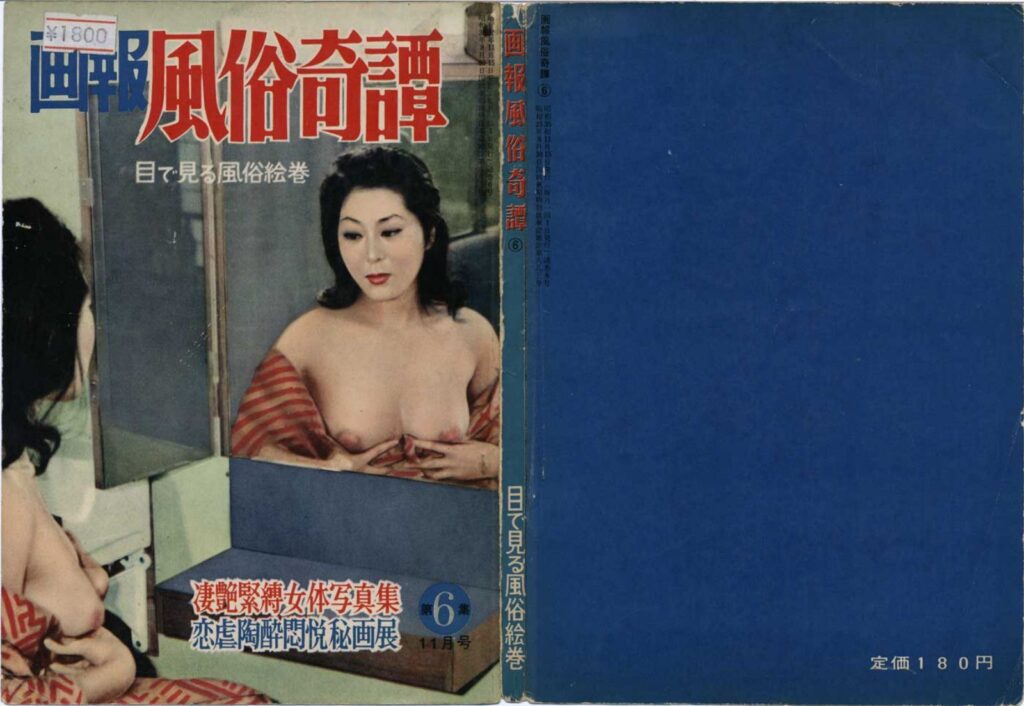
Issue Details
- Issue
- 6
- PDF pages
- 117
Summary
The November 1960 issue of Gaho Fuzoku Kitan combines three extensive bondage gravures with illustrated punishment fantasies, imported fetish art, serialized erotic fiction, reader correspondence, and a concluding theatrical portfolio. Its editorial identity rests on the movement between Japanese domestic settings and a deliberately international repertoire of restraints, costumes, apparatus, and melodramatic scenarios.
Read full summary Close full summary
Table of Contents 19 items
-
First Gravure
Summary
A photographic gravure feature presents a woman in a series of staged rope- and chain-restraint scenes, including indoor and outdoor settings, seated and reclining positions, and gagged or otherwise sensory-restricted poses. The accompanying captions emphasize the visual and tactile effects of colored ropes, bodily confinement, and staged helplessness.
-
Second Gravure
Summary
A photographic portfolio presents staged nude rope-bondage tableaux in tatami rooms, gardens, and architectural settings, emphasizing varied positions, restraints, and sculptural compositions.
-
Seven Scenes in Sodom's Frames
Summary
A sequence of seven illustrated SM scenes depicts bound women subjected to varied forms of restraint, suspension, corporal punishment, and sensory provocation in theatrical settings.
-
Tickled While Suspended
Summary
This illustrated scene shows a bound woman held in a raised suspended position while another figure tickles her, framing restraint and involuntary sensation as a staged SM tableau.
-
Ant Torment
Summary
An erotic illustrated scene depicts a nude woman bound and tormented while honey is applied to her body and ants crawl over her.
-
Log Floating
Summary
An erotic illustration shows a woman tightly bound with rope and floating or lying in cold water on a log, emphasizing exposure, helplessness, and sensory distress.
-
At the End of Love and Hate
Summary
An erotic illustration portrays a woman tied up and struck by a stern man, framing physical punishment as the violent culmination of love turning into hatred.
-
Pillar Bondage
Summary
An erotic illustration depicts a woman bound to a pillar with rope, emphasizing her disheveled hair, exposed skin, and the pain of tightening restraint.
-
Marks of the Whip
Summary
An erotic illustration portrays a bound woman covered with red whip marks and bleeding wounds, presenting whipping as an intensely punitive scene.
-
The Belt That Encircles the Skin
Summary
An erotic illustration shows a woman tightly encircled by belts whose pressure leaves patterned marks across her bare skin.
-
Third Gravure
Summary
A photographic gravure portfolio presents staged rope-bondage tableaux of a woman posed outdoors on a swing, on a go board, among trees, and with a vintage automobile, emphasizing varied restraints, positions, and contrasting expressions. Captions frame the images as studies in elegant bondage, concealed versus visible restraint, and the movement of a bound body through different settings.
-
Abnormal Photograph Collection and John Willie Art Portfolio
Summary
A visual feature combining staged bondage photographs with a John Willie art portfolio, depicting corset training, gagging, immobilization, elaborate restraint devices, fantasy costumes, and theatrical erotic scenes.
-
Sally's Experience
Summary
A serialized erotic narrative follows Sally as she is lured into an increasingly coercive program of restraint, discipline, and corporal punishment by Tom and other participants, accompanied by elaborate bondage illustrations.
-
The True Identity of Mummy
Summary
This narrative presents the supposed true identity and background of “Mummy,” tracing a woman’s involvement with a perverse club and its rituals of abduction, restraint, humiliation, and violent punishment.
-
The Heaven of Pleasurable Cruelty
Summary
Hattori Tetsuji describes the practices and atmosphere of an SM club whose members stage elaborate scenes of bondage, suspension, whipping, and other forms of pleasurable cruelty involving both women and men.
-
Readers' Forum
Summary
A readers’ forum presents correspondence, reader opinions, publication feedback, and contributions concerning the magazine’s erotic imagery and bondage-oriented material, emphasizing exchange between readers and editors.
-
The Drive of Terror
Summary
A serialized photo-story follows Yuri and K during a terrifying automobile outing in which threats, abduction, restraint, humiliation, and escalating physical danger unfold through staged scenes and dialogue.
-
Theatrical Bondage à la Carte
Summary
A photographic portfolio presents theatrical tableaux of women subjected to elaborate rope bondage in varied indoor and outdoor settings, including group compositions, suspended poses, and carefully arranged scenic displays.
-
Final Bondage Portrait
Summary
A full-page erotic photograph depicts a woman posed and bound with chains around her torso, wrists, and ankles; the accompanying caption describes the chains as cold and biting while expressing a masochistic attraction to their pain.
Highlights
- The opening color portfolio places bound women on a stone bridge, beside a decorative bird, and in a tatami room, blending landscaped refinement with staged captivity. (PDF pp. 3–6).
- A short visual feature surveys historical or improvised gag devices immediately before the formal contents spread. (PDF pp. 7, 9).
- The first gravure develops wall, tile, bamboo-fence, garden, shoji, chain, gag, and rubber-restraint tableaux across a varied sequence of modern and traditional settings. (PDF pp. 10–25).
- The second gravure shifts between kimono bondage, landscaped gardens, stone architecture, domestic furniture, and a staged snake encounter. (PDF pp. 26–41).
- “Seven Scenes in Sodom's Frames” presents suspension, insect torment, log restraint, pillar bondage, whipping, and belt restraint in drawings by several contributing artists. (PDF pp. 42–49).
- The third gravure uses a signpost, tatami room, platform, vegetation, and automobile as fixed points in increasingly elaborate restraint scenarios. (PDF pp. 50–60).
- The John Willie section assembles corsets, leather dresses, masks, gags, boots, gloves, and disciplinary costumes into an extended survey of Western fetish design. (PDF pp. 61–76).
- Three illustrated prose works move from a woman's coercive ordeal to disguised identity and a highly theatrical realm of organized cruelty. (PDF pp. 77–96).
- “The Drive of Terror” combines prose and staged photography to follow a bound woman through an automobile abduction and abandonment scenario. (PDF pp. 102–108).
- The concluding theatrical gallery documents suspension, inverted bondage, cages, ensemble scenes, a waterwheel, and other stage devices. (PDF pp. 109–117).
Contributors
Named contributors represented in this issue: