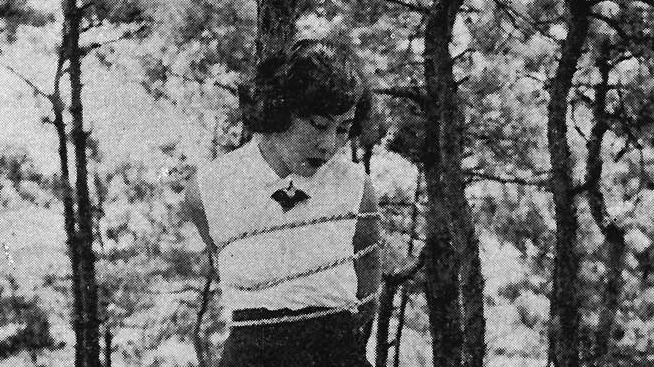
Murata Namiko (村田那美子) was one of the models who appeared in Kitan Club during the magazine’s Akebono Shobō era in the early 1950s. Unlike some of the publication’s more prominent participants, Murata reportedly entered the magazine after responding to a model recruitment call printed in Kitan Club. She described herself as a minor actress or extra associated with the film studio Shochiku.
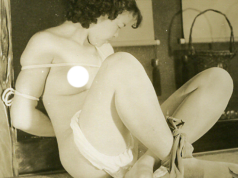
Murata first appeared in the magazine in July 1953 and became one of the models featured in the photo series Utsukushiki Imashime (“Beautiful Bondage”), a collection documenting staged bondage photography. Contemporary accounts note that, compared with some other models, Murata was considered to have a relatively low masochistic inclination, making her participation more oriented toward modeling and performance than personal interest in SM practices.
One memorable episode from her time with the magazine occurred during an outdoor photo shoot in Kasagi Town, Kyoto Prefecture, when she accidentally slipped into a river near a waterfall while filming, nearly causing a serious accident, revealing how experimental and sometimes unpredictable the magazine’s photo sessions could be. During a 1953 outdoor location shoot near a waterfall in Kasagi Town in Kyoto Prefecture, Murata reportedly slipped and fell into the river while the crew was preparing photographs. According to later recollections in the magazine, the accident nearly became a serious incident before she was pulled out safely. The episode highlights the unusual circumstances surrounding early bondage photography, which often took place outside controlled studio environments as photographers sought dramatic natural settings for their images. Murata’s experience reflects the improvisational character of these early shoots, when photographers, editors, and models were still experimenting with how to stage and document bondage imagery for the magazine.
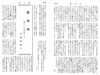
Murata later reflected on her experiences in a personal essay titled “First Time Being Bound,” published in the April 1954 issue of Kitan Club. Her brief but documented participation illustrates how the magazine recruited and worked with a range of women, some drawn by curiosity, others by modeling opportunities, during the formative years of postwar Japanese bondage photography.
Murata Namiko also participated in the September 1953 Kitan Club feature “Roundtable of Bound Women,” a discussion among several models about their experiences posing for bondage photography. The conversation brought together participants such as Kawabata Tanako and other regular contributors to the magazine. Murata appears in the discussion as one of the newer models, reflecting the experience of women who entered the magazine after responding to its calls for participants. The roundtable provides a rare glimpse into how early Kitan Club models understood their roles and illustrates the collaborative community that developed around the magazine’s photography and writing.
Although Murata Namiko appeared in several Kitan Club photo features during 1953 and participated in the magazine’s roundtable discussion among bondage models, she remained primarily a photographic model. By contrast, Kawabata Tanako became both a model and a regular contributor of essays and diary-style reflections. This difference in visibility and authorship likely explains why Tanako later became the better-documented figure in the history of early Kitan Club bondage photography, while Murata’s role is preserved mainly through the images and features in which she appeared.
Murata Namiko’s appearances in Kitan Club place her within the small group of women who helped shape the magazine’s early visual culture in the early 1950s. Alongside figures such as Kawabata Tanako and several other recurring models, Murata participated in the experimental photo shoots, discussions, and features that defined the magazine during this period. Although she did not become as prominent a contributor as some of her contemporaries, her work as a model reflects the collaborative and exploratory atmosphere that surrounded the magazine’s early bondage photography. Together, these women formed a network of participants whose images and stories helped establish the aesthetic and community that would later influence the development of Japanese kinbaku culture.