← Back to the Nureki Chimuo Archive
Kyainou
The Takejaku Troupe closed the Tsurukame Theater and relocated to the Shirahige Theater in Mukojima, Sumida Ward.
In turn, the Tsuruzou Troupe, which had previously performed at the Shiragige Theater, would now perform at the Tsurukame Theater.
I am very curious now about what kind of plays the Tsuruzou troupe was performing during this period, but back then, I was just a lowly rookie actor. I was also very young.
I was busy attending to the personal needs and errands of my master, Ichikawa Fukunosuke, and had no mental space to record the Tsuruzou Troupe’s performances. It’s a regret.
Just like the Takejaku Troupe, the Tsuruzou Troupe must have also selected rare plays only seen in small theaters, showcasing their skilled artistry.
Just jotting down the titles and cast lists of the plays performed by the Takejaku Troupe was all I could manage.
The plays performed by the Takejaku Troupe at the Shirahige Theater were:
1. Rare: Konjiki Yasha (Golden Demon) Two Scenes
Hazama Kan’ichi………Kawabe Saburo Miya……………Fushimi Yoko Director……………Kataoka Tobei
2. The Lover’s Wife’s Parting Ties: Shigeno’s Parting at the Well. One Act
Shigenoi……………Bando Takejaku Akaji……………Sawamura Tetsuzaburo
Jinenjo’s Mitsuyoshi……Bando Emiko Maid One……………Bando Sakiko Maid Two……………Ichikawa Fukujiro
3. Comedy. The Borrowed Wife. One Act
Nishiyama Ryokichi……………Bando Takejaku Wife Ocho……………Bando Sakiko Okimi……………Bando Yoko First Wife Otaka……………Bando Harue Geisha Momoko……………Fushimi Yoko Ikakeya Masajiro………Sawamura Tetsuzaburo Wife Miko……………Onoe Otojo
As I have written, I previously wrote a script and showed it to Toyama, the backstage manager at Tsurukame Theater.
It was a play performed by the troupe of Soganoya Goro, a leading figure in Osaka’s comedy world, and the script itself was written by Goro under the pen name Issakai Gyojin.
It was essentially plagiarism. I arbitrarily rewrote the script from one published in the Soganoya Goro Comedy Complete Works collection, setting the background in the immediate postwar period and depicting the customs of the common people.
Yet Toyama read it promptly, declared it “interesting,” and handed me the script fee in an envelope.
I was delighted. And I was grateful for the money.
From then on, Toyama never looked down on me as a youngster, but treated me as an aspiring actor with dreams of becoming a playwright.
I believe Toyama was around forty at the time. Rumor had it he’d avoided going to war because of tuberculosis.
Looking back now, he had the very look of a literary young man.
I felt something akin to admiration, a desire to get closer to him, to interact more. Yet he also had an air of being difficult and unapproachable, and at sixteen, I couldn’t bring myself to speak to him casually.
In truth, both “Golden Demon” and “Mountain Maiden,” along with several other comedies later staged at Tsurukame Theater and Shirahige Theater, were rewritten by me, fundamentally reworking the scripts from the Goro plays.
Though they should be memorable works, having been staged commercially for script fees, I have forgotten the contents of every single one of those scripts I wrote.
Well, judging by their content, they were all just shallow sentimental comedies centered on the old-fashioned affection between parents and children or husbands and wives.
It was an era before convenient machines like photocopiers existed.
If only the mimeographed scripts had survived, but they didn’t.
It was an era without the custom of giving actors individual copies of the script in the first place.
Instead of a full script, actors received only the lines they had to deliver, written on scraps of paper handed to them by the stage manager or the lead actor.
If I told Ebizo, Kikunosuke, Somegoro, Kantaro, Schichinosuke, or Matsugyoku this now, they probably wouldn’t believe me.
They’d say, “What kind of rehearsal can you do with a script that only has your own lines?”
But that’s how it used to be, even in Grand Kabuki productions.
Proof of this can be found in the “Dictionary of Kabuki Terms” (Kodansha, supervised by Yukio Hattori, written by Haruaki Akasaka).
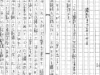
「書抜」(かきぬき)
Kakinuki
Refers to a script where a playwright extracts only the lines for a single actor’s role (or multiple
roles) from the full script, writes them out by hand with a brush, and binds them into a separate
volume for each act. In the Kansai region, this was called “serifu-kaki.” An actor receiving a
“kakinuki” signified acceptance of the role. Upon receiving it, the actor memorized the lines from
the kakinuki and devised their performance plan. However, in modern times, similar to
contemporary theater, stage directions are included, and the text is printed after text-regie (text
editing) is completed, serving as the performance script. Kakinuki are no longer created unless
specifically requested by an actor.
The role I was given in this production was that of the lady-in-waiting, the second maid, who appears in the scene “The Lover’s Wife’s Parting Ties: Shige’s Parting with Iko.”
The first lady-in-waiting was Bando Sakiko, a veteran actress from the Kotobuki Theater days.
What was handed to me by Toyama, who was both the stage manager and the playwright, was a piece of washi paper cut to a quarter of its original size, bearing only the following two lines written in his own hand:
Maid 2: “Come on out!”
Maid 2: “Let the show begin!”
We say all these lines, in unison, with Bando Sakiko playing the other maid.
Just two lines written on washi paper about half the size of the fortune slips sold at shrines and temples.
On a slightly different note, there’s a classic rakugo story titled “Kyainou.”
I can really relate to the feelings of the protagonist of this rakugo, a low-ranking actor.
I can’t help but feel deeply connected to the protagonist of “Kyainou.”
(If you’re familiar with rakugo, you’re probably laughing right now.)
There’s no way this single scrap of paper could possibly convey the content of a fairly long play like “The Lover’s Wife’s Parting Ties.”
But watching the cast gather together, rehearsing earnestly in the narrow, long corridor of the dressing room, the play’s sequence and key scenes gradually become clear.
Even though it was a small play, I loved the sometimes fiery, intense atmosphere of the rehearsal space, which strictly adhered to Kabuki tradition.
I felt intoxicated and entranced by the uncompromising tension of the professionals, something absent from Hitachi’s public relations troupe.
“Let’s do this part like Koraiya does it,” or “I absolutely want to do this part using Tachibanaya style,” or, “Ah, you’ll do it that way? Then I’ll respond like this here.”
And so on. They would casually sprinkle in these cryptic phrases, like secret codes or hidden language, while rehearsal continued with practiced hands and feet.
Watching this from the far end of the corridor, seated stiffly in seiza position, the dressing room of this small theater in a corner of Tokyo, spared by the fires, began to feel like some unimaginable, otherworldly dimension.
Surrounded by a dull, otherworldly hue, I fell into the illusion that my entire body was being completely consumed by a bittersweet liquid. Yet, deep within my chest, I murmured, “Ah, I’m still alive. I’m glad I’m alive.”
Just three months earlier, I endured relentless American bombing raids from the sky, days filled with the sight of charred corpses and a constant sense of dread. How could such a life, soaked in this sweet feeling, appear before me again so soon? The reversal of my fate was something I simply couldn’t believe.