← Back to the Nureki Chimuo Archive
About the Tsurukame Theater
When I was fifteen, I saw many human corpses.
Not in pictures or photographs.
I saw them in reality, with my own eyes. Up close.
I even walked over corpses.
The road was completely covered with corpses piled on top of each other, overflowing. I couldn’t move forward without stepping on them.
Searching for family members who had scattered and fled in all directions, I wandered through the scorched town center for about ten square kilometers.
Within that area alone, there were thousands of corpses.
They were all men, women, children, and infants who had been alive just moments before.
There were others like me, survivors wandering around searching for someone.
However, many people have written about these circumstances from that time.
Photographs and other records also remain.
There’s probably no need for me to write about it here now.
Or rather, no matter how precisely I describe the reality of those few days, my ability is insufficient to fully convey it, and I could never possibly communicate that reality to someone who did not experience it.
I’ve given up.
Even if it’s said that passing on the story is the duty of the living, I have no desire to convey it now.
I have resigned myself to the fact that even if I tried to convey it, it would never truly be understood.
I do not have faith in the next generation.
I know it is foolish, yet I believe in the human habit, or perhaps nature, that repeats this foolishness in the same way. I remain silent.
My family was fortunate to survive and had moved to a remote area far from the city center in Matsudo City, Chiba Prefecture.
And I worked at a small theater converted from a movie house called the Tsurukama Theater, near the Kameari Station on the Tokiwa Line.
October 1945. I was still only fifteen years old.
I carelessly wrote “worked,” but can that really be called working?
I had become an apprentice to a kabuki actor named Ichikawa Fukunosuke, who specialized in female roles.
It was only two months after the war had ended.
I didn’t really feel like I was “working.”
What were my days back then, I wonder?
What was I thinking about as I lived?
It seems I spent those days without thinking about anything, in a vague or even dazed state. Yet, in the end, it could be said that those experiences from that time continued to have a significant influence on my subsequent life and how I perceive things.
But, well, I don’t really know. After all, I was only fifteen.
The school I attended was destroyed by American bombing raids (not burned to the ground, but destroyed. It was no wonder, considering they had installed five anti-aircraft guns on the roof to shoot down American planes). There was no prospect of rebuilding it.
It feels like a time when my mind was blank, yet conversely, I also feel like there were no other days in my life so full, so packed with so many things inside me.
During this period, as if to fill the void left by losing my school, I kept a remarkably detailed diary.
I still possess that diary today, never having discarded it or lost it.
“If you have such a diary, include it in the ‘Talking Theater’ too. I’m incredibly interested in what kind of thoughts and life you had as a teenager,” R-san said.
“But come on,” I replied. “I was just a fifteen-year-old kid. I had no life, no thoughts. It was an era of nothing but hunger and despair in a Tokyo full of burnt ruins, with nothing to eat.”
“I’m still interested in what fifteen-year-old Nureki-san was doing in that Tokyo full of burnt ruins.”
“You might be interested, but I doubt anyone else is.”
“I think they would be. Write about that time. Didn’t you say you wanted to write about it someday?” R-san repeated, speaking earnestly.
So that’s how I started writing this. But personally, rather than recounting such old tales, I really want to write about my affair with Tsuruka Rakka-san.
(Even now, it continues passionately, more intensely and deeply than ever before. When I write about Rakka-san, youthful blood surges back into my body, my heart races, and I get aroused.)
Yet, for some reason, R-san keeps insisting I write about my younger days, nagging me to write, write.
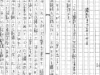
She was so insistent that the other day, I showed her one of the dozen or so tattered old diaries I keep.
Then, “Wow, amazing, amazing! What is this diary? Showa 15 (1940), Imperial Era 2600, student diary… Wow, the text is printed horizontally, from right to left. This antiquity is incredible. I’m so moved!” she exclaimed, her eyes wide open.
I love seeing people get moved.
The moment I saw R-san’s expression of astonishment, deep emotion, and pure joy, I resolved, no matter how embarrassing it might be, I must write.
Of course, I too had always wanted to write about this era at least once.
I wanted to write it before I died.
I felt that if I didn’t write this, I wouldn’t have truly lived in this world.
(Not that writing it will change anything…)
The Kotobuki Theater in Honjo Midoricho was destroyed by fire during an American air raid on the night of March 9, 1945 (Showa 20).
As a result, the “Hanagata Kabuki Troupe,” which had been based at the Kotobuki Theater, lost their place of work.
Even actors caught in the catastrophic situation of the war’s final days could not earn a living without work.
The relatively younger actors, excluding the theater’s leading actors Ichikawa Shinnosuke and Matsumoto Korainosuke, banded together and formed a new troupe.
They named themselves the “New Hanagata Kabuki” and began performances at the Tsurukame Theater in Adachi Ward, which had escaped the air raid damage.
The leaders were Bando Tsuruzo and Bando Chikuwaka, both highly skilled and popular actors second only to Shinnosuke and Korainosuke.
For the onnagata (female roles), Ichikawa Fukunosuke, the leading onnagata of the Kotobuki Theater, joined the troupe.
Most other members were also actors with careers and popularity dating back to the Kotobuki Theater.
In essence, it was as if the actors whose Kotobuki Theater had been burned down had relocated to the Tsurukame Theater.
Naturally, fans who loved and supported the “Hanagata Kabuki Troupe” in Honjo Midoricho also became patrons of this theater, taking the Tokiwa train from Ueno and disembarking at Kameari Station.
At that time, to my fifteen-year-old eyes, only the actors’ movements were visible.
In other words, I could only grasp the superficial changes.
As a child, I couldn’t understand what the people managing the entire operation did on the business side during those turbulent postwar years.
All I could grasp was what directly met my eyes and touched my skin.
It was only much later that I learned about the powerful entertainment organization, Okawa Geinosha, which controlled the entire downtown area at the time. It was through the efforts of its president that the actors were able to make a return to the stage, however precarious, just over half a year after losing their base.
Okawa Geinosha owned not only the Tsurukame Theater but also a small theater called the Shirahige Theater on the east side of the Sumida River.
This theater, too, was originally a movie theater that had been remodeled.
The indiscriminate bombing by the American Air Force was particularly severe from Honjo to Fukagawa, causing many deaths, but this corner of Mukojima miraculously survived the flames.
They expanded the stage, extended a small hanamichi, and added a curtain to make it suitable for plays.
Okawa Geinosha divided its former “Hanagata Kabuki Troupe” into two parts, alternating performances between these two small theaters.
They separated the two leading actors, Bando Tsuruzo and Bando Takejaku, assigning actors to each to form separate troupes.
In other words, the “new” Hanagata Kabuki became two troupes, one led by Tsuruzo and one led by Takejaku.
They then staged performances at the Tsurukame Theater and the Shirahige Theater, alternating weekly.
Ichikawa Fukunosuke was an onnagata in the Bando Takejaku troupe.
Consequently, as Fukunosuke’s disciple, I naturally became a member of the Takejaku troupe.
Regarding Ichikawa Fukunosuke, the theater magazine “Engekikai” published the following entry in its “Kabuki Actor Directory” in 1980. It includes a photograph.
Real Name: Mizutori Haruo Generation: Third Generation
Address: 2-15-3 Omori Honcho, Ota Ward Stage Name: Naritaya Constant Mark/Alternate Crest: Gourd and Foxglove Tree Date of Birth: March 21, 1904 Birthplace: Dabioji-cho, Shimanouchi, Osaka Father’s Name/Occupation: Asai Hidematsu, Printing Business Master’s Name: Ichikawa Udanji II, Ichikawa Danjuro the 10th Height: 1.54 meters Weight: 48 kilograms Career Highlights: 1920-1921: Debuted as the town maiden in “Rokuhara Monogatari” at Nakaza under the name Ichikawa Tsurunosuke. 1932-1933: Promoted to named actor for roles as O-san and Koharu in “Shigure no Kotatsu” at Miyadoza. 1935: Changed stage name to Ichikawa Fukunosuke.