← Back to the Nureki Chimuo Archive
Letter from Katsuya Kasai-san
2008.7.7 濡木痴夢男のおしゃべり芝居 第四十五回 Nureki Chimuo’s Talking Theater Chapter 45 枷井克哉氏の手紙 Letter from Katsua Kasai-san The sixth volume from Kawade Bunko, “Bondage: As Long as I Live,” was actually the first completed book I looked through, and I thought, “This isn’t very good.” I haven’t been able to fully express my true feelings. Not only is it incomplete, but you can see my flattery and fawning toward the magazine serializing this piece. Looking up “to fawn” in the dictionary yields: “To curry favor with someone by trying to please them. To flatter.” I’m too embarrassed to write down exactly where that spot is right now. Actually, there are plenty of them. For a writer, being mindful of the reader is only natural. If you weren’t mindful of the reader, you couldn’t write anything. There would be no need to write. But writing while constantly watching the magazine editor’s mood is utterly unacceptable. It shows a base character. You could call it despicable. Meanwhile, I’m currently writing the “Talking Theater.” This is not intended for publication in magazines or other printed materials at this time. Therefore, I write whatever I want without worrying about pleasing sponsors. However, I will not write anything that might hurt anyone’s feelings. When writing such things, I deliberately obscure the details, expressing them in a way that even the person themselves wouldn’t recognize. That’s why I can write honestly.
This “Bondage: As Long as I Live” just doesn’t feel quite satisfying. I’d been thinking I hadn’t quite captured the real essence of it. Yet, just like the five paperback volumes published so far, I’ve received warm feedback from many readers. I’ve gotten a lot of encouraging letters too. As I read through those letters, a sense of confidence gradually began to take root within me. (I hate that there are so many parts of myself that feel inadequate, that seem cheap and fawning, but I’ve come to think, well, this is just how it is, and that’s okay.) It is common for writers to become self-deprecating or despairing, to reflect on themselves, and sometimes to become overconfident and arrogant. At this point, I would like to share the feedback we received from Katsuya Kasai-san, since you’ve written quite a bit of praise about the contents of my paperback book, (What the hell, that Nureki guy’s started bragging again. All self-promotion. What a jerk.) You might think so. I am aware that this may be perceived as such, but I will proceed with the reprinting. * * * I recently had the opportunity to read Nureki Sensei’s “Bondage: As Long as I Live,” published by Kawade Shobo Shinsha. The first thing you notice is that this book consists of two elements. One is a “record” of the daily practice of “kinbaku” that Nureki Sensei has tirelessly and unwaveringly continued to this day, underpinned by passion and affection. It is also, at the same time, writing so meticulous and vividly immersive that it could be called a “confession.” It comes at us with such force that we, the readers, feel as if we ourselves are right there on the scene. Additionally, the other piece is an essay by Nakahara Rutsu-san of the Sex Museum, written as an “explanation.” Titled “The Other Face of Nureki Chimuo: A Life of Fierce Writing,” it traces not only his role as a “bondage artist” but also the long history of his seasoned, masterful writing skills. Truly worthy of being called “masterful.” It is a precious and affectionate piece. This new book by Nureki Sensei is a compilation of the serialized work from “SM Sniper” magazine.
Starting with the woman from Beppu and culminating in the top-secret footage of Hide Ishitan, I’m amazed at how vividly the sensations of binding fourteen models, every moment of their movements, have been captured with such palpable realism. Even if some notes were taken, the surprise at its realism remains unchanged. Moreover, the fact that it even documents aspects that could be described as one’s own sexual impulses is truly outstanding. The way it sharply expresses the relationship between the bondage artist and the model in writing is truly masterful. I have long been an avid reader of Nureki Sensei’s crisp, sharp writing, whether in Tokyo Sansesha’s SM Select magazine’s “Shooting Companion Notes” or the novel SM Select magazines’s “Nureki’s Bondage Diary: Various Models.” Reading this book, “Bondage: As Long as I Live,” which combines elements of both, I truly felt the breadth of his writing skills. I am utterly captivated by his unparalleled writing skills, combined with his rope work, often praised as “artistic bondage beauty.” Next is the commentary written by Nakahara Rutsu-san. “As stated in ‘The Other Face of Nureki Chimuo: A Life of Fierce Writing,’ this work traces the footsteps of Master Nureki, both bondage artist and writer, drawing upon over 17,000 magazines, books, and other materials, including those from the “Kitan Club” collection housed at the Sex Museum, to capture his past as a “life of fierce writing.” It also chronicles Nureki Sensei’s over fifty year history as a writer and the rise and fall of various SM magazines. His pen names include Aoyama Mieyoshi, Maki Fujio, Fujimi Iku, Fujiki Senji, Yagiri Shuhachi, Shiratori Okura, and countless others. Nakahara Rutsu-san passionately traces this lineage, weaving in the footsteps of magazines like “Kitan Club” and “Uramado,” as he produced an enormous volume of diverse writings: modern pieces, historical works, documentary texts, essays, and more. This alone serves as a testament to his passion for SM, showcasing Nakahara Rutsu’s dedication to the point of obsession as a veritable “History of SM Literature.” Nureki Sensei entrusted the commentary for his own book to Nakahara Rutsu-san, and he has responded to his heartfelt request with complete dedication. This “affection,” combined with pure fanaticism, and only after thoroughly reading numerous works and materials, is undoubtedly the “achievement” and the “work” known as commentary.
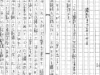
I had heard about the publication of this book some time ago. And until I picked up this book, I had expected it to be like this. Several years ago, Jiyu Kokuminsha published “A History of Japanese Bondage Photography.” Its second volume would naturally be edited around the world of Nureki Chimuo. However, the second volume remains unfinished to this day. Meanwhile, Nureki Sensei’s six-volume work in the Kawade Bunko series features Minomura Kou as a key figure in “The Artists of Kitan Club.” Then, if I were to continue from there, even if it might be somewhat difficult for you to write yourself, I thought it would naturally center around “The World of Nureki Chimuo.” Yet, as I now hold this book in my hands, I see the figure of Nureki Sensei, who, as the phrase “as long as I live” suggests, lives solely for “bondage” day after day, immersing himself in its corresponding pleasures. This can be understood as embodying the attitude of Nureki Sensei, who is known for his commitment to “working until the end of his life.” Though I may be repeating myself here, what truly deserves attention is Nakahara Rutsu-san’s “commentary.” This writing, with its passionate heart and powerful force, makes me feel the true blood of humanity living in this world coursing through its veins. The painstaking work traces the diverse flow of writing activities under the title “The Other Face of Nureki Chimuo: A Life of Fierce Writing,” meticulously examining every word and phrase to document the achievements of Nureki Sensei’s literary endeavors. This can be considered a valuable commentary that will serve as a major guide for those seeking to explore the literary world of Nureki Chimou in the future. * * * The above is the first letter regarding this book, mailed from Katsuya Kasai-san to Nureki Chimuo. The manuscript was neatly written on manuscript paper, and of course it was in his own hand. Like me, Kasai-san never uses word processors or computers.
However, after this, he sent another letter related to this book, stating, “There was still something I wanted to write.” Naturally, it was a carefully handwritten letter. I am truly grateful. I am deeply grateful. Incidentally, though it’s terribly rude to say so, since it also serves as promotion for “As Long as I Live,” I’ll take the liberty of reprinting the second letter here as well. (I plan to have R-san print out all the documents for this chapter and mail them to Kasai-san.) The following is the second letter from Katsuya Kasai-san. * * * Regarding Nureki Sensei’s writing, three things are on my mind. When it comes to writing, there are many different kinds. “Fine writing,” “good writing,” "engaging writing,” and conversely, “poor writing,” “dull writing,” and so on. Whether good or bad, various terms are used. Even if I try to write “good writing” myself right now, there isn’t really any particularly useful method that comes to mind. Though rarely heard today, there was once a saying: “Create much, observe much, deliberate much.” It seems to be about creating a lot, viewing a lot, and thinking a lot. It probably means creating a lot and appreciating a lot. In my youth, I was an avid reader of works related to haiku composition, such as Yamamoto Kenkichi’s “Modern Haiku” (Kadokawa Shinsho) and Iida Dakotsu’s “Criticism and Appreciation of Modern Haiku.” (Sogen Bunko) (However, that doesn’t mean my haiku got any better.) Now, regarding Nureki Sensei’s writing. The professor is a man of many talents and skills, but in writing, he is truly a master. In his commentary for “Bondage: As Long as I Live,” Nakahara Rutsu-san affectionately traces the literary footsteps of the author, a man who began with “Kitan Club” and “Uramado,” employed numerous pen names, and truly embodied a “fierce writing life.”
It can truly be called the “fruit” of innate ability and hard work. Among the diverse writing activities of such a multi-talented person, I particularly loved rereading works like “On Location with the Photographer,” serialized in SM Select magazine, and “Nureki’s Bondage Diary: Various Models,” serialized in the novel SM Select magazine. Each piece was precise, concise, and written in a vivid style that drew readers right into the shooting location. These writings seem to me to hold value as “records” that capture the essence of each moment of filming. It is regrettable that Sanshisha did not compile these into a single volume for posterity. This is a passage from “Bondage Diary.” It concerns a gathering of bondage enthusiasts. Centered around Nureki Sensei’s bondage, many enthusiasts gathered to learn his techniques, enjoy themselves, and converse. Among them was one man who appeared to be a distinguished gentleman, who even presented his business card. Later, when Nureki called the gentleman’s house regarding a matter he had been asked to handle, a family member answered the phone and the teacher received a harsh response. Thereupon, Nureki wrote that he had come to believe he was indeed a “shadowy person,” someone who should not show his face in the world, and finally added this line: “One business card remained in my possession.” At first glance, it seems like a casual line, yet it leaves a profound resonance, revealing just how effective this single line truly is. Seichi Funahashi once said, “If you start a piece with suspense, the rest is easy.” But I believe that, just as much or even more so, the final line or phrase is truly what matters. From this single line by Nureki Sensei, I believe I learned one trick for writing. Published in July 2004 as part of the Kawade Bunko series, the volume “The Illustrators of ‘Kitan Club’” includes a chapter titled “The Rope, The Flames, and the End” at its conclusion.
When Nureki Sensei launched the “Kinbiken Newsletter,” two congratulatory letters (totaling six pages) sent to him by Minomura Kou-san (Suma Toshiyuki) were included in the publication.
After falling ill and becoming partially paralyzed, he wrote this with desperate determination on manuscript paper. The letters are jumbled enough to be barely legible. You can tell they were written with every ounce of strength. This is a heartfelt letter addressed to Nureki-san from a close ally who has shared both joys and sorrows since the days of “Kitan Club” and “Uramado.” Each and every character, handwritten in pen, is printed and published exactly as written, and it comes at you with an indescribable sense of reality. In “Bondage: As Long as I Live,” Nureki-san writes that if something represents a true connection between people, no matter how small or insignificant it may seem, it should be treasured and kept safe. A handwritten letter from an irreplaceable ally, all the more so. This letter from Minomura Kou-san and the heartfelt sincerity and genuine attitude of Nureki Sensei in his response overwhelmed me.
I was deeply moved and brought to tears by how glad I was to have acquired this volume from the Kawade Bunko series. And I envy Nureki Sensei for having such an exceptional ally. In the world of SM, true allies are surprisingly few. Even when enthusiasts gather together, each devotee remains at the bottom of a deep, solitary abyss. No, it’s not just enthusiasts, that might be the true nature of humanity. I apologize for bringing up a personal matter, but I would also like to note the following. This concerns the reprint of my novel, “The Tragic Song of the Bee’s Body,” which was once published in the monthly magazine “SM Select” by the Third Generation Publishing Company. In the terminology used by editors and printing companies, a reprint is referred to as a “proof print.” Although it is likely a portion of a book or magazine printed separately, I will also refer to the aforementioned item I received from Nureki Sensei as a “reprint.”
A cover was attached, bearing the words “The Tragic Song of the Bee’s Body” written in Nureki Sensei’s handwriting. This piece is the last of three I wrote under the name “Asano Miki,” which can be read as either a male or female name. The story of a maniacal obsession with artificially slimming a woman’s waist to an extreme degree, I think of the broad-mindedness of Hiroshi Senda-san, the editor-in-chief at the time who published this novel. I am truly grateful. Regarding the publication of this volume, Editor-in-Chief Senda wrote in his editor’s note, “At a time when bondage, spanking, suspension, and enemas are considered the four major forms of SM, this should offer a breath of fresh air.” Later, I received that reprint from Nureki Sensei. I am grateful for his thoughtfulness. A letter sent from Minomura Kou-san on his sickbed to Nureki Sensei. It is said that Nureki Sensei treasures that letter above all else. In the same way, I too carefully store away this reprint of “The Tragic Song of the Bee’s Body.” * * * That is all. As many of you may know, Katsua Kasai is a photographer. I can confidently state that he is the best photographer in Japan (though I can’t speak for the world) when it comes to taking bondage photos. I hereby declare this in writing. I’ve been doing this work for fifty years and know many professional photographers who shoot bondage, but no one else puts as much soul into their bondage photography as Katsuya Kasai. Many of his photographic works are published in SM magazines. Currently, the only place where they can be viewed is the Sex Industry Museum. The intense erotic novel “The Tragic Song of the Bee’s Body,” written under the pen name Miki Asano, can now only be read at the Sex Industry Museum. And when I think about it, the only trace left of my own footsteps, those of Nureki Chimuo, remains in the Sex Industry Museum.