← Back to the Nureki Chimuo Archive
I See, I See, I See!
Director Nakahara gave a blunt critique right in front of me of the “Talking Theater” I’d been writing over the past month or two.
“Sensei, please go back to the substance of your early ‘Talking Theater,’ from when you first started writing them.”
“Huh? What? Has my ‘Talking Theater’ changed that much lately? I hadn’t noticed. Wow, really?”
“Go ahead and reread them,” Director Nakahara said with a stern expression. It was a website that had been launched based on her idea and under her guidance.
“Uh-huh, I understand.”
I don’t really think they’ve changed that much, though… I returned to my office, steadied my unsteady legs, a result of my advancing age, and climbed onto my desk.
Then, from among the dozen or so large paper bags hanging high up on the wall, just below the ceiling directly above the desk, I pulled out a bound volume containing issues one through ten of “Talking Theater.”
It may sound like I’m repeating myself, but since all my manuscripts are handwritten, Director Nakahara types them up one by one on a word processor, formats them for the computer, and publishes them for me.
It was also Director Nakahara who went to the trouble of printing them out, folding each sheet of paper, aligning them and binding them, all to create a beautifully bound book.
In terms of character count, that comes to 400 x 2,800 = 112,000 characters.
She moved her fingers 112,000 times just for the manuscripts I wrote (though her eyes probably got more tired than her fingers).
I am so grateful. I can’t find the words to express my thanks.
I took a booklet, a collection of chapters 1 through 10 of “Talking Theater,” a meticulously handcrafted volume where thoughtful attention to detail is evident in every corner, out of my bag for the first time in a long while. When I opened it with both hands, the warmth of its texture made a wave of emotion well up in my chest.
I could sense Director Nakahara’s intention to preserve my humble writings as a record of this negative world, as one more piece of reference material for SM enthusiasts.
Even though I wrote it myself, when I hold this booklet in my hands again and see the tireless, soul-pouring effort Director Nakahara put into it, I realize it’s a volume I simply cannot take lightly.
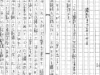
(The character “ada” here is written as “徒”)
Director Nakahara said to me with a slightly stern expression, “Why don’t you read what you wrote back in the early days?”
To be honest, I’ve already forgotten what I wrote back then. (I’m sorry!)
When I say “the early days,” it was quite a long time ago.
So, I opened the volume I’d painstakingly taken down from the ceiling and, feeling a bit timid, began to read.
It’s dated August 11, 2007. That means I wrote it six years ago. It must have been during the heat of summer.
…Wow, this is interesting!
I know it sounds silly to praise my own writing so unreservedly, but it really is interesting.
Just look at the youthful energy in this piece!
Was I really writing such interesting, dynamic, and stimulating prose back then?
It’s not just entertaining. It has a raw, vivid realism that feels intensely alive, and there are sharp insights that dig deep into the human psyche.
Hmm, Nureki Chimuo, looking at it this way, I realize he’s no ordinary guy.
That’s what self-praise is all about.
I know. I’m just a boastful, arrogant fool.
But I also fully understood what Director Nakahara was saying.
I see, I see, I see!
That’s exactly right.
I see, I see, I see, I see!
…I’ve been writing about my bondage play with Rakka-san in quite a persistent and detailed manner.
(I absolutely hate this term “play.” It’s far too simplistic, shallow, vulgar, and trite, but since there’s no other suitable expression, I have no choice but to use it.)
What made me think “I see” is that even though the descriptions are quite explicit, that is, blatant, there isn’t much of a sense of vulgar eroticism.
Just look at the unclouded brightness of this writing and the light, rhythmic flow of the expression.
Despite the relentless detail, the overall impression is one of subtle, muted tones. It’s passionate yet cool-headed. Brilliant.
I’m impressed (yet again, I’m patting myself on the back).
I was reminded once again of something Minoru Yoshida, the editor-in-chief of “Kitan Club” back in the 1950s, once told me.
“No matter what you write, your novels exude a bright romanticism, which serves as a saving grace for a magazine like ours that tends to be rather grim, so please keep writing.”
I was reminded of that again.
He also told me, “If you change your pen name, I’ll publish as many stories as you want in a single issue,” so I got carried away and wrote like crazy. I was twenty-three at the time. This is the origin of my having so many pen names.
From the first to about the tenth chapter of “Talking Theater,” it was almost entirely a series of bold and adventurous bondage scenes with Rakka-san.
They are clear, energetic, and at times exhilarating. This clarity might be a reflection of my personality.
Perhaps it’s because of this clear-cut personality that I’ve been able to successfully complete over 6,000 bondage photo shoots to date (come on, now that I’ve gone this far with self-praise, I might as well say more.)
I see. So this is what she meant by “the early days of ‘Talking Theater.’” I nodded in understanding.
Okay. I’ll write it. I’ll write about what happened with Rakka-san.
Well, in my other serialized story, “Nureki Chimuo’s Testament of Obscene Pleasure,” Rakka-san still appears frequently, but lately I’ve been writing about my time with her more in connection with the plays we’ve seen together. I’m putting more effort into describing the plays than the sessions.
I am actually quite fond of plays, that is, theater. Since that world is more closely tied to reality for me, I can’t help but write about plays.
Even when I spend a day out with Rakka-san, our time gets taken up by plays and movies.
But writing is my calling, too. If I’m told to write, I have to write. Isn’t it a blessing to still be asked to write?
…All right, it’s decided!
This time, without seeing any plays or movies, once we meet at our usual spot let’s head straight, without hesitation, to a love hotel!
And let’s spend the whole day there, at that love hotel with the hinoki cypress bath!
Why didn’t I think of something this simple before? It’s because Rakka-san also loves theater and movies. She loves them even more than I do. Whenever an actor she wants to see comes near our territory, her feet just naturally head in that direction.
But the moment we meet at our usual spot this time, I’ll say this:
“Today, let’s skip Terushi, Shingo, Harunojo, Tsukinosuke, Takeshi, and Sentaro. Let’s go straight to a love hotel and be alone together!”
Ah, at my age, what a clueless blockhead I was, unable to understand the feelings of my comrades. What a tasteless person I was. As someone named Nureki Chimuo, I’m ashamed.
…That’s the story, Director Nakahara.
Next time, I’ll write a scene like that, one that’s all about Rakka-san, with no drama.
When it comes to Rakka-san, I’m the kind of person who can’t write about it unless I actually do it.
…Please rest assured.
Whether I turn eighty or ninety, as long as I have a single rope, I can spend the whole day dreaming of the Pure Land15 with her.
Huh? You already know that?
That’s right, you did know, didn’t you?
There’s no way Director Nakahara wouldn’t know. Or perhaps you know even better than Rakka-san herself.
After all, you are the director of the Sex Industry Museum, a woman of both intellect and emotion, capable of seeing beauty in ugliness, a woman who possesses both form and substance.
Ah, that’s a great suggestion.
Let’s do it!
15
Essentially, the Mahayana Buddhist heaven.