← Back to the Nureki Chimuo Archive
The Prostitute Otoyo’s Poem
I occasionally send faxes to Rakka-san.
(I still don’t have a cell phone.)
Though I’m technologically challenged, I can manage to use the phone and the fax machine attached to it.
My pleasurable relationship with Rakka-san isn’t just about locking ourselves in a love hotel room and doing things.
(Of course not.)
We spend more time on heart-to-heart communication, meaning uninterrupted conversation where we pour out our thoughts and feelings, than on physically demanding activities.
And sometimes, this time spent talking is actually more pleasurable.
Both she and I become incredibly talkative when it’s just the two of us.
We talk so much it feels almost obsessive, even to me. We talk until we’re practically foaming at the mouth.
There’s always a mountain of things we want to talk about and it never ends.
(Though the subject is always doubts about SM. Her depth of knowledge on SM is extraordinary. There are times I can’t keep up.)
Our discussions aren’t limited to love hotels.
The faxes I send to Rakka-san arrive at her workplace.
In one corner of the large desk she has dedicated to herself sits a receiver with a rather complex shape.
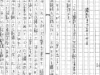
That machine activates, and the handwritten manuscript I composed arrives exactly as I wrote it.
(Of course.)
Even though it’s for Rakka-san’s exclusive use, it’s still an office within a company. Other eyes are present.
Since there’s no telling when someone other than her might see it, I’m careful with these private messages, which are essentially an extension of our discussions.
I use more honorifics than necessary, writing in a tone that appears strictly businesslike.
She always reads between the lines of my messages, cleverly and accurately discerning the true meaning I casually hide there. Sometimes I write something like poetry and send it directly to her via fax.
When she receives it, she stores it away somewhere in the drawers of her large desk.
I’m terrible at organizing or storing things, so even poems I’ve taken the trouble to write get lost immediately.
I’m stingy about everything, so I never throw things away immediately after writing them, but I don’t carefully store them either.
The reason I occasionally send Rakka-san these poetic things I write is because she is always the subject of those poems.
Essentially, those poems are like an extension of our conversations.
Since they’re like an extension of my rambling, I want to transcribe them into this “Talking Theater” too, to preserve them.
I mentioned before that I serialize something called “Nureki Chimuo’s Testament of Obscene Pleasure” in a place called Web Sniper. Actually, though the expression is slightly different, these poems might also be called my other “Testament of Obscene Pleasure.” Well, to put it simply, “A shameless person will die anyway.” I suppose that’s about right.
(I suppose this might be a bit of a nuisance for Rakka-san, who got caught up in this. My apologies.)
Shiritori6 Song 1
Though the colors bloom and fade, You to a hundred, I to ninety-nine Beating the drum with all our might The night we swore our vows, holding tight Is now but a hollow farewell The train departs, smoke lingers behind, That lingering smoke, a thorn in my side Sleep tight, sleep tight, oh sleep tight In the dead of night, I rise silently An apple cannot be eaten to the core
That one I believe risked their life A crow flies in the moonlit sky Though the crow cries, the night does not end Though the colors bloom, they scatter Shiritori Song 2 Though the colors bloom, they scatter
6
Shiritori is a Japanese word game, where the final phonetic of a sentence or phrase is used to start the next sentence. Usually played with two or more people, but it can be used as a poetic form.
Men are, after all, fickle creatures With the sharp thorns of wild rose stems They wound the woman who returns After wandering endlessly I learned the taste of suffering
This is no ordinary matter Senbei, manju, konpeito Finally, drip by drip, drop by drop
Five divorces, four children Endurance alone is my fate
Living on without giving up, yet utterly exhausted Placing my child on the balance pole I’ll sell the child who needs no care I’ll sell the cheap and sturdy child Come on, buy a child Though the colors bloom, they will scatter
Shiritori Song 3
Though the colors bloom, they will scatter At thirty six, a woman’s prime Only hardships cling to me Split at heaven, and it falls on me
Lapis and crystal shine when polished But my birth’s misfortune won’t let me
Deaf, dumb, missing a leg Mocked and kicked
What I lack, I make up in bed I make men happy
Rumors call me a wanton woman Otoyo, the prostitute whose name is known
When in a good mood, I spread my legs
On nights when vile customers enrage me
I bare my teeth and bite a man’s member With a sound that echoes, severing it with hate
Chanting sutras, I became a killer The number slain surpassed ten
Finally, I am caught Crucified on a pillar reaching to the heavens
If you don’t know, I’ll tell you The life of an unlucky woman
Serves you right, you bastards I lived my life to the fullest
The whore Otoyo lived to the fullest Though the colors bloom, they will scatter.
I’ve shared just three poems for now.
(I have many more. Sometimes when I’m in the mood, I write several at once. I write intensely, five or even ten at a time.)
The prostitute’s cry is me.
I am a man, but when I write as if I were a woman, I enter a perverted alternate world. It feels wonderful, and words flow smoothly.
Edo-period prostitutes carried rolled-up straw mats to ply their trade, while Nureki Chimuo carries a bag containing ropes to offer his body. It’s much the same thing.
Since it’s much the same thing, I can slip into the prostitutes’s mood and write effortlessly.
This is how Rakka-san and I share our pleasure.