Fuzoku Kitan
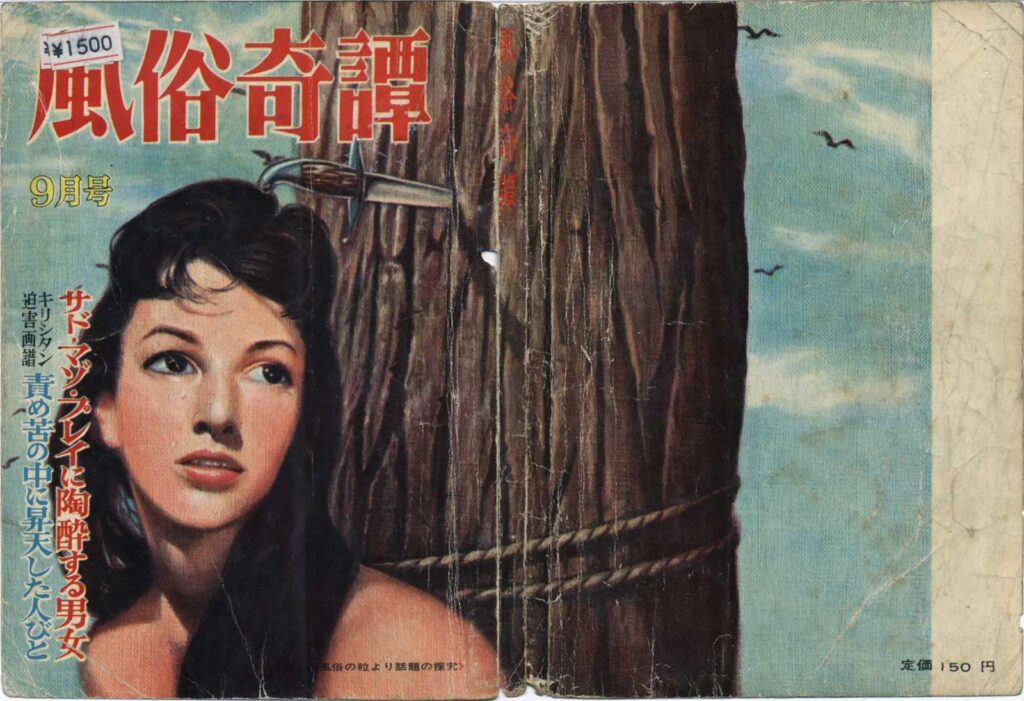
September 1961
← Back to magazine archive
Issue Details
- PDF pages
- 133
Summary
The September 1961 issue of Fuzoku Kitan is organized around an unusually large concentration of bondage photography, illustrated erotic fantasy, discussions of sadomasochistic play, historical punishment, fetish imagery, personal testimony, and reader correspondence. The opening pages are almost entirely visual. The gravure section titled Poses of Bondage moves through a sequence of domestic and outdoor rope tableaux, including women bound on tatami, beside stacked firewood, at a riverbank, in a garden, and in other staged settings. It is followed by a sepia illustrated portfolio of bound schoolgirls and a group of Western bondage photographs, including material attributed in the contents to Luis Avila. These opening portfolios make rope restraint and the posed female body the issue’s dominant visual language before the prose section begins.
Read full summary Close full summary
Table of Contents 18 items
-
Poses of BondageGravure
Summary
A photographic portfolio presents a variety of staged rope-bondage poses and scenarios, including seated, kneeling, reclining, outdoor, and furniture-based restraints, with occasional blindfolding and other sensory or positional restrictions.
-
Schoolgirl Punishment Picture ScrollColor pictorial
Summary
A visual picture-scroll feature presents eroticized punishment scenarios involving schoolgirls, including binding, exposure, forced positions, and staged captivity in indoor and outdoor settings.
-
Works by Luis AvilaColor pictorial
Summary
A portfolio of Luis Avila’s erotic illustrations depicts women and men bound with rope or other restraints in elaborate captive poses, emphasizing bodily display, helplessness, and the visual drama of bondage.
-
The Function of Abnormal Play
Summary
Ōdachi Kinji examines the psychological and social functions of sadomasochistic “abnormal play,” discussing sadism, masochism, taboo desire, and the tension between private release and social disapproval.
-
Chigi Chōkyō-zu
Summary
An illustrated erotic fiction follows Natsue as her husband subjects her to rope restraint, gagging, forced poses, humiliation, and sexualized punishment, blending domestic coercion with masochistic fantasy and dreamlike episodes.
-
The Playful Pleasure of Wrestling
Summary
This illustrated feature presents wrestling between women as a playful yet erotic contest of strength, emphasizing staged physical struggle, shifting dominance, rivalry, and the intimate excitement produced by competitive grappling.
-
The Symphony of SM
Summary
A multi-part illustrated SM feature dramatizes elaborate scenes of female-led control, including bondage, leather and riding attire, spanking, forced exercise, and other ritualized forms of erotic discipline.
-
The Pleasure of Applying Moxa to White Skin
Summary
An erotic reportage piece describes moxa cautery applied to women’s white skin, presenting heat, pain, bodily marks, and the emotional dynamics of marital sadomasochistic play.
-
Five Forms of Enema Play
Summary
A serialized practical feature presents five forms of enema play, describing equipment, positioning, injections, restraint, bodily reactions, and escalating scenarios involving couples and club participants.
-
Looking Back on People Who Ascended to Heaven Amid Torment
Summary
A historical feature recounts the persecution, torture, forced recantations, and executions of hidden Christians in early modern Japan, accompanied by illustrations of people suffering under official punishment.
-
Stolen Hair Diary Extracts
Summary
A fictional diary-style account follows a male hair fetishist whose encounters with women involve pursuit, coercion, restraint, and the stealing or cutting of their hair, set partly against a flood-disaster backdrop.
-
Queen of Masochism: Bettie PagePictorial
Summary
A photographic feature presents Bettie Page as the “Queen of Masochism,” showcasing imported staged scenes of bondage, submission, and disciplinary erotic display.
-
Blood-Tide Banquet
Summary
A historical erotic tale set amid palace warfare follows King Sarludana’s violent domination of captives, featuring elaborate rope restraint, sexualized torture, bloodshed, and execution.
-
Wandering in Ecstatic Torment, Part 5: The Woman with Scars
Summary
The fifth installment of a serialized narrative about a scarred woman recounts coercive sexual encounters, rope bondage, corporal punishment, humiliation, and her conflicted psychological responses to abuse and desire.
-
Reader Salon
Summary
A reader-correspondence section answering questions and sharing experiences about kinbaku, restraint, enema practices, same-sex desire, erotic photography, and related sexual interests, while also inviting further reader contributions.
-
Fuzoku Kitan: Notices
Summary
A multi-page back-issue and publication notice listing available issues, special numbers, illustrated books, photographic collections, and other erotic materials offered through the magazine’s agency.
-
Agency Photograph List
Summary
An agency catalog presenting model-specific photographic sets and visual offerings organized by bondage poses, nudity, fetish motifs, and other staged erotic scenes, with sample photographs and ordering information.
-
Publisher Information and Calls for Submissions
Summary
The publisher invites readers to submit manuscripts, reports, illustrations, and photographs, explains submission and return policies, and announces current photo-contest themes and editorial notices.
Highlights
- The opening Poses of Bondage gravure builds an extended visual vocabulary of rope restraint through tatami-room, riverbank, garden, and outdoor settings, making bondage photography the issue's dominant opening statement. (PDF pp. 5–23).
- The schoolgirl punishment picture scroll presents a sustained sepia-toned series of bound and tormented schoolgirls, including post restraints and elaborate rope arrangements. (PDF pp. 24–32).
- A Western photographic portfolio attributed in the contents to Luis Avila follows the Japanese schoolgirl illustrations and includes bed restraint and rope-bondage imagery, demonstrating the magazine's incorporation of foreign fetish material. (PDF pp. 33–37).
- Men and Women Intoxicated by Sadomasochistic Play forms the issue's central editorial cluster and combines essays, fiction, illustrations, personal observations, wrestling, pain play, moxibustion, and enema practices. (PDF pp. 38–74).
- Looking Back on People Who Ascended to Heaven Amid Torment surveys historical punishment and execution scenes through illustrated episodes, shifting the issue from contemporary erotic play toward retrospective punishment culture. (PDF pp. 75–82).
- The Bettie Page portfolio presents the American fetish model through imported photographs emphasizing bondage, domination, boots, restraints, and female-on-female scenes. (PDF pp. 93–100).
- Blood-Tide Banquet, subtitled The Death of the King of Salome, combines dramatic illustration with an eroticized narrative of violence, death, and spectacle. (PDF pp. 101–108).
- The fifth installment of Wandering in Ecstatic Torment, The Woman with Scars, is one of the issue's longest later narratives and centers on erotic memory, bodily marks, compulsion, and intimate relationships. (PDF pp. 110–121).
- Reader Salon occupies a substantial closing section and records reader questions, experiences, desires, and exchanges, revealing the participatory social world surrounding Fuzoku Kitan. (PDF pp. 122–126).
Contributors
Named contributors represented in this issue: