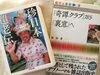
This video continues with the second half of Yamaguchi Tokiko’s “Self Bondage Classroom,” where the experiment has already moved beyond preparation and into ordeal. What began as methodical self-binding becomes more complicated, more physical, and more psychologically charged as circulation, strain, timing, and the problem of release begin to dominate the experience.
In this section, the text turns repeatedly to failure, adjustment, and endurance. Tokiko describes testing different positions, tightening and re-tightening rope, struggling with numbness, pain, and restricted movement, and confronting the growing reality that what was imagined in advance may not unfold as planned. The practical question of escape begins to loom larger, but so does something else: the emotional atmosphere created by waiting, uncertainty, self-consciousness, and the awareness of one’s own appearance and vulnerability.
What makes this portion so compelling is the way it shifts between technical detail and interior drama. Rope is still treated as procedure, but it is also clearly part of a deeper fantasy structure involving exposure, embarrassment, solitude, and the unstable line between control and helplessness.
As the night stretches on toward morning, the text becomes a record not just of self-bondage, but of persistence, improvisation, and the strange intimacy of being left alone inside one’s own design. In this video, we explore that atmosphere and historical texture, not as a guide to replicate, but as a way of understanding how rope was imagined, written, and internalized in a particular strand of Japanese erotic culture.
This follow-up section is especially revealing for how it ties together bodily sensation, fantasy, risk, and self-observation into a single sustained narrative.
In this second part of our exploration of Yamaguchi Tokiko’s Self Bondage Classroom, we continue looking at a rare and unusual text from Japan’s mid-century rope culture: one that moves between fantasy, instruction, confession, and theatrical self-observation.
Rather than treating self-bondage simply as a set of techniques, the text opens onto something more intimate and strange. It presents rope as a private stage, where preparation, anticipation, imagination, and bodily sensation all become part of the experience. The writer is not only tying the body, but arranging a scene, creating a mood, and stepping into a role that is both controlled and self-created.
Part Two deepens this atmosphere. It shows how self-bondage writing can blur the boundary between practical advice and erotic literature, between solitary practice and imagined spectatorship, between restraint and fantasy. What emerges is a glimpse into a lesser-discussed strand of kinbaku history: not the public performance, not the formal dojo, not the photographer’s studio, but the private room as a space of invention.
This video is not presented as a guide to reproduce the material. Instead, it reads the text as a historical artifact, a small but revealing window into how rope, fantasy, and self-transformation were imagined in mid-century Japanese fetish writing.